Topic
Topic author: fototoka
Posted on: 20140223110037
Adaptation system for Stereoscopy
Author: Eng. L. Paracampo (translated from Portuguese)
reference: http://www.novacon.com.br/sistereo3.htm
On the market there are adapters and lenses for stereoscopy. These devices originate from the optical adapters used for animation and shadow even during the times of the "magic lantern". These wonderful things, any of two types, which are formed from the sides of the two images in width more than the format of the frame.
Device “Stereophot” and “Sterean”marked the beginning of a generation adapters, turned conventional camera (at their nozzle on the lens) in stereoscopic camera . These adapters and adapters for cameras with a change of lens, will be the object of our research.
Leica out on the scene
The famous camera Leica widely known as a first camera 24x36mm format for 35mm . This is not true. There were other cameras in the same format film and before it appears. Actually a great merit was to create a SYSTEM CAMERA, which can be applied in many situations, to make a photo in any circumstances. That is why the system accessories for the Leica was at that time the largest of the existing ones. In this much-functionality is the reason for its fame.
Adapter system “Stereoly” presented in 1931, was one of the greatest achievements, which helped earn the fame of this product. Not only for innovative idea, ñåêîíîìèâ for 35-mm huge cash and cash equivalents in stereoscopy. This also became the school of technology for followers, among them: Kodak with a very similar device "Retina", Galileo Italian company"Condor". They were made including KMZ for his Keen and Arsenal in his Kiev, Zeiss (Ikon) to Contain and Contaflex I e II, Zeiss (Jena) for its Werra, . This system,originally designed for the ranging cameras , was used in system-“O”--or -(TLR)
Principal advantages of the products become with age disadvantages: loss of light that passes through the system of prisms or oxidation glue that joins them, makes them useless. In addition to the high cost of production.
As you may guess, the system--“O” (prismatico) , which also began with “Stereoly”, despite the fact that works in a similar way as the previous adapters “Stereophot" and "Sterean” , differs from them because only works SLR cameras, became known as the “O” or “mirror".
Model Stereoly I Leicas I (A), Leica I (B), Leica I (C), and Leica Standard (E),
post-war Ic and If. Compatible to the post-war lenses Anastigmat, Elmax, Elmar 3.5/50 e Hektor 2.5/50.
" Stereoly" were clones - identical systems, from the ensuing "Kodak stereo" and (Ferrania) Galileo "Condor Stereo".
Pictures from the booklet to the instructions in the "Stereo Kodak" and "Ferrania Condor Galileo".
In the story about the development of stereoscopy in Russia you will see a model for "Sharp" and "Kiev", 2-nd type, similar presented here.
In 1940 Leica replaced “Stereoly” invited “Stemar”
System “Stemar installed Leica. Prismatic set for viewing .
Why Leica radically changed its stereoscopic system , so now this new system is called the “OO”? Just because Zeiss Ikon presented in 1936 fantastic and much more advanced system “Stereotar “ Contax . These systems "Stemar" from Leitz, as well as "Stereotar" from the Zeiss IKON, not quite stereoscopic Adapters , but rather stereoscopic lenses.
" Stereoly" has the advantage of conveying images in the correct position, while "Stemar" when you change the position request further move to display correctly. This is the parallax phenomenon Here we will describe the crop in both systems. On medium distances pictures turn out, but near, the system Leitz difficulties in cropping due to the lack of special viewfinder. In "Stemar" is used prism with ìåæçëèíçîâûì distance of 75 mm, (which is slightly more than the human eye) that causes an effect of light Hiperestereoscópico (strabismus)
Stereo attachments and stereo lenses for various Soviet cameras.
Now we will have understanding of several types (stereo) Soviet production , which combine the best in the world of technology, which we will discuss later. We'll see that there are the best and the worst in each type , advantages and disadvantages of each of the devices at our disposal. As you can see, these devices were made for cameras “Kiev” (Man-ed "of Arsenal"), "Zorkiy" - "FED" and "Zenith”.
Stereo-lenses (as STEMAR/Stereotar) for ranging the cells in which the two lenses are mounted in one , can be used in a normal camera, some require additional viewfinder or a small nozzle for the viewfinder of the camera to simulate a new field of view .
Stereo-lens : 1-Kiev SN-5 Stereo-lens FED 1:3,8 F 38mm
Clone «Stereotar» from“ Contax Clone «Stemar» from Leitz,
Stereo set "Alert"
Stereo set "Alert" is compatible with the first models of " Zenit".
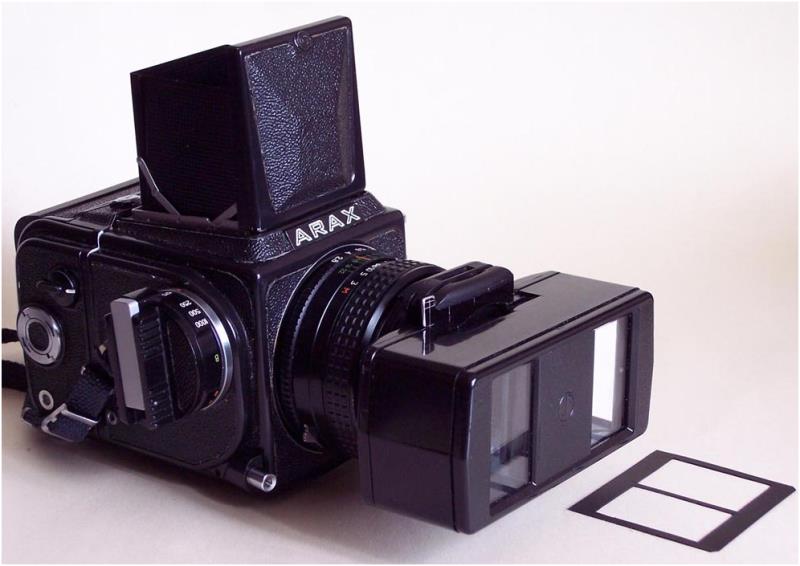
Stereo nozzle Kiev. Physically distinguished from the "Ñòåðåîêîìïëåêò Sharp", has the same internal optical components
SFK-1(Stereo Photo Kit-1) intended for SLR cameras suitable for many zenits were flown (SFK-1 on Zenit 12 XP)
Additional stereoscopy equipment:
MFN-5 and MFN 20-1 designed for macro - and micro - pictures
MFN - Micro(Macro-)
Photo Attachment
Can work with RF or SLR cameras . Model MFN 20-1 eliminates the perspective distortion, and MFN -5 replaces the picture horizontally , in which the image on the left are changed on the right. At high magnification, such as Microfoto and Astrofoto, this detail is important .
MFN -20-1 (for Zenit 122) MFN -5 (for Zenit E)
Author: Eng. L. Paracampo (translated from Portuguese)
reference: http://www.novacon.com.br/sistereo3.htm
On the market there are adapters and lenses for stereoscopy. These devices originate from the optical adapters used for animation and shadow even during the times of the "magic lantern". These wonderful things, any of two types, which are formed from the sides of the two images in width more than the format of the frame.
Device “Stereophot” and “Sterean”marked the beginning of a generation adapters, turned conventional camera (at their nozzle on the lens) in stereoscopic camera . These adapters and adapters for cameras with a change of lens, will be the object of our research.
Leica out on the scene
The famous camera Leica widely known as a first camera 24x36mm format for 35mm . This is not true. There were other cameras in the same format film and before it appears. Actually a great merit was to create a SYSTEM CAMERA, which can be applied in many situations, to make a photo in any circumstances. That is why the system accessories for the Leica was at that time the largest of the existing ones. In this much-functionality is the reason for its fame.
Adapter system “Stereoly” presented in 1931, was one of the greatest achievements, which helped earn the fame of this product. Not only for innovative idea, ñåêîíîìèâ for 35-mm huge cash and cash equivalents in stereoscopy. This also became the school of technology for followers, among them: Kodak with a very similar device "Retina", Galileo Italian company"Condor". They were made including KMZ for his Keen and Arsenal in his Kiev, Zeiss (Ikon) to Contain and Contaflex I e II, Zeiss (Jena) for its Werra, . This system,originally designed for the ranging cameras , was used in system-“O”--or -(TLR)
Principal advantages of the products become with age disadvantages: loss of light that passes through the system of prisms or oxidation glue that joins them, makes them useless. In addition to the high cost of production.
As you may guess, the system--“O” (prismatico) , which also began with “Stereoly”, despite the fact that works in a similar way as the previous adapters “Stereophot" and "Sterean” , differs from them because only works SLR cameras, became known as the “O” or “mirror".
Model Stereoly I Leicas I (A), Leica I (B), Leica I (C), and Leica Standard (E),
post-war Ic and If. Compatible to the post-war lenses Anastigmat, Elmax, Elmar 3.5/50 e Hektor 2.5/50.
" Stereoly" were clones - identical systems, from the ensuing "Kodak stereo" and (Ferrania) Galileo "Condor Stereo".
Pictures from the booklet to the instructions in the "Stereo Kodak" and "Ferrania Condor Galileo".
In the story about the development of stereoscopy in Russia you will see a model for "Sharp" and "Kiev", 2-nd type, similar presented here.
In 1940 Leica replaced “Stereoly” invited “Stemar”
System “Stemar installed Leica. Prismatic set for viewing .
Why Leica radically changed its stereoscopic system , so now this new system is called the “OO”? Just because Zeiss Ikon presented in 1936 fantastic and much more advanced system “Stereotar “ Contax . These systems "Stemar" from Leitz, as well as "Stereotar" from the Zeiss IKON, not quite stereoscopic Adapters , but rather stereoscopic lenses.
" Stereoly" has the advantage of conveying images in the correct position, while "Stemar" when you change the position request further move to display correctly. This is the parallax phenomenon Here we will describe the crop in both systems. On medium distances pictures turn out, but near, the system Leitz difficulties in cropping due to the lack of special viewfinder. In "Stemar" is used prism with ìåæçëèíçîâûì distance of 75 mm, (which is slightly more than the human eye) that causes an effect of light Hiperestereoscópico (strabismus)
Stereo attachments and stereo lenses for various Soviet cameras.
Now we will have understanding of several types (stereo) Soviet production , which combine the best in the world of technology, which we will discuss later. We'll see that there are the best and the worst in each type , advantages and disadvantages of each of the devices at our disposal. As you can see, these devices were made for cameras “Kiev” (Man-ed "of Arsenal"), "Zorkiy" - "FED" and "Zenith”.
Stereo-lenses (as STEMAR/Stereotar) for ranging the cells in which the two lenses are mounted in one , can be used in a normal camera, some require additional viewfinder or a small nozzle for the viewfinder of the camera to simulate a new field of view .
Stereo-lens : 1-Kiev SN-5 Stereo-lens FED 1:3,8 F 38mm
Clone «Stereotar» from“ Contax Clone «Stemar» from Leitz,
Stereo set "Alert"
Stereo set "Alert" is compatible with the first models of " Zenit".
Stereo nozzle Kiev. Physically distinguished from the "Ñòåðåîêîìïëåêò Sharp", has the same internal optical components
SFK-1(Stereo Photo Kit-1) intended for SLR cameras suitable for many zenits were flown (SFK-1 on Zenit 12 XP)
Additional stereoscopy equipment:
MFN-5 and MFN 20-1 designed for macro - and micro - pictures
MFN - Micro(Macro-)
Photo Attachment
Can work with RF or SLR cameras . Model MFN 20-1 eliminates the perspective distortion, and MFN -5 replaces the picture horizontally , in which the image on the left are changed on the right. At high magnification, such as Microfoto and Astrofoto, this detail is important .
MFN -20-1 (for Zenit 122) MFN -5 (for Zenit E)