
“On the question of Vladimir Ilyich's attitude to being photographed, N. K. Krupskaya notes that Vl. Ilyich did not like being photographed, but, in her exact words, ‘submitted to bitter necessity.’ Outwardly, however, Vladimir Ilyich showed the photographers no vexation, impatience or displeasure, and good-naturedly submitted to this ‘bitter necessity,’” writes G. Boltyansky in the book Lenin and Cinema.
I do not dispute it: perhaps for Vl. Ilyich being photographed really was a “bitter necessity” — but it is remarkable that in all the past years V. I. never gave us to feel it by a single word or a single movement.
I speak of the end of 1918, of '19 and '20, that period when Vl. Ilyich was so burdened and overloaded with enormous state work. A shoot was usually timed to some large event — a Party congress or a congress of the Comintern — and if one recalls that at such moments we did, occasionally, distract Vl. Ilyich's attention for the sake of a photograph, then his sensitive regard for the labor “even” of a photo-reporter becomes especially precious and unforgettable — something that, alas, cannot be said to this day of other leaders and responsible officials. Comrades who photograph at Party and Soviet congresses know how hard it is to catch comrade Zinoviev, how hard to persuade comrade Stalin or comrade Bukharin.
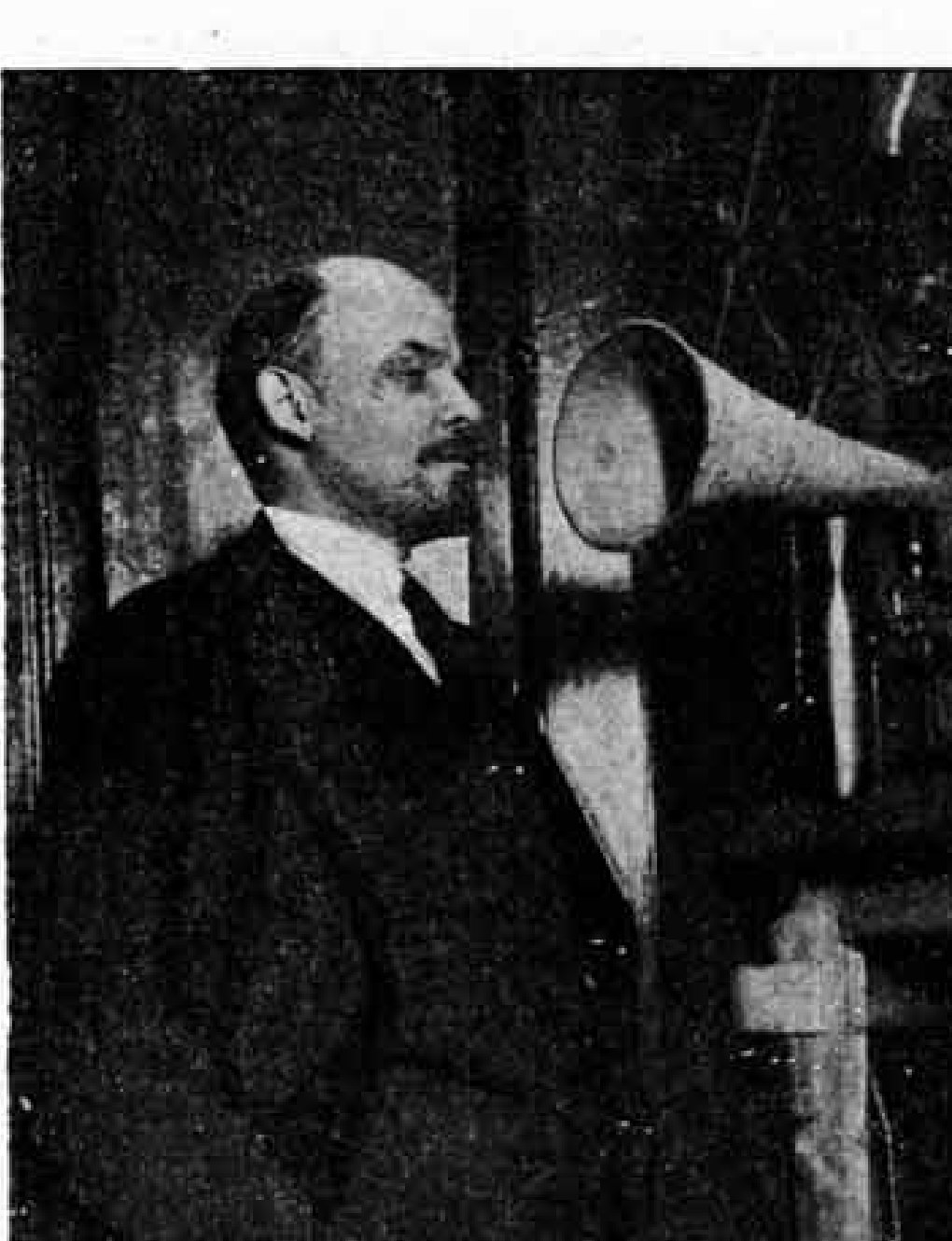
At the beginning of 1919, at “Tsentropechat,” where I headed the photo-department, Vl. Ilyich arrived one morning to record gramophone speeches. Having waited for the recording to end, I asked V. I. to be photographed at the horn. Vl. Ilyich readily agreed. Two hours later the head of “Tsentropechat,” comrade B. Malkin, on his way to the Kremlin, dropped off for Vl. Ilyich a finished print from that shot. V. I. was surprised at the speed and pleased.
That same morning Vl. Ilyich did not refuse to be photographed with the group of staff recording his speeches for the gramophone, even though every minute of his was accounted for.
During the shoot, while I was seating the group, a characteristic exchange took place between Vl. Ilyich and the specialist mechanic of gramophone apparatus who had come from Berlin. The German, Mr. Kibart, complained to Vl. Ilyich that his contract was being broken: he was to receive his salary in foreign currency, but was being paid in “russische Papierbonen” (Russian paper money). “You understand yourself, Herr Lenin, that I can buy nothing with these papers!” Vl. Ilyich calmed the German and firmly impressed on the head of the department: “One must be able to honor a contract with a foreigner. Settle this question at once at Narkomfin.” That same day the German, of course, received full satisfaction.
In that same year, 1919, in the Kremlin, in the Mitrofanyevsky Hall, a new recording of Vl. Ilyich's speeches took place. Having set up the apparatus and prepared the magnesium (it was dark), I waited for the end of the recording, during which V. I. came into a very good mood after an accidental slip of the tongue into the horn. The speech was about the revolution in Hungary. Vl. Ilyich begins: “When I spoke by radio with comrade ‘Radio’” — he repeats — “‘Radio-Kun’” (instead of “Bela Kun”) — and here he burst out laughing with all his might. The wax captured both “Radio-Kun” and Vl. Ilyich's kindly chuckle.
The head of the recording, comrade Bronstein, stopped the recording and proposed: “Vladimir Ilyich, would you like to hear what you said?” — and put on the membrane. The wax conveyed the voice, the laughter and “Radio-Kun” exactly. “This is amazing!” said Vl. Ilyich. “For the first time I hear my own voice. The impression is that it's speaking — not quite a Jew, not quite a Frenchman.” And Vl. Ilyich went on chuckling good-naturedly. As is known, V. I. pronounced the letter “r” with a burr.
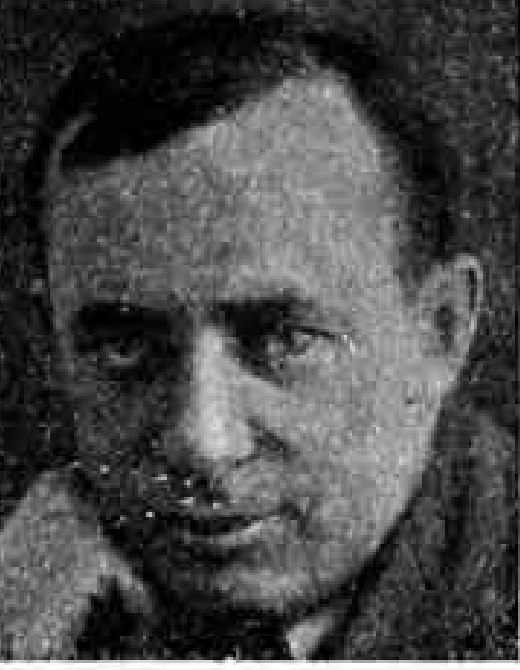
I took advantage of Vl. Ilyich's good mood and asked him to be photographed. His astrakhan cap was pulled down over his forehead, his coat thrown across his shoulders; a tired, pale face. “I have a cold,” he answered. “It's cold here, I can't take off the coat. Let's do it another time.” I did not repeat my request or insist; but evidently the astonishingly sensitive Ilyich noticed the disappointment that had involuntarily crossed my face, and at once said: “Well, all right! You want it in the coat? Take it, only be quick.” And, slipping his arms into the sleeves, V. I. adjusted his cap. Hurriedly, anxious not to delay him, I made the shot and developed it. The expression on V. I.'s face came out a little stern — quite unlike his usual surprised, good-natured look in photographs. This snapshot later became widely known.
Both before and after this I photographed Vl. Ilyich at various moments. In one shot of the group of delegates to the IX Congress of the Russian Communist Party, V. I. is smiling — a fine expression. Then came a shoot in the Kremlin, March 1920. Evening was falling, rain drizzled. A telephone call from the Party Central Committee secretariat: “Come and take pictures.” A car; in six minutes I was in the Kremlin, on the staircase of the VTsIK building, before a group of comrades returned from suppressing the Kronstadt mutiny. Vl. Ilyich stood among them, tenderly looking into the eyes of a delegate beside him — wounded at Kronstadt and all bandaged — and talking with him about something. V. I. waited patiently until someone ran upstairs to the hall for the delayed L. D. Trotsky and other comrades. The shot was taken. While the comrades were busy asking me how to get a print, V. I., having shaken everyone's hand in farewell, quickly withdrew to his quarters.
I recall one more moment. On the day of Y. M. Sverdlov's funeral, in the evening, the IX Congress of the RKP opened. All were in a depressed state; Vl. Ilyich and the other comrades were very tired. It felt awkward even to mention a shoot. Yet the professional feeling in me gained the upper hand. Without any hope of success, during the break I timidly asked Vl. Ilyich for permission to photograph the presidium, then very fully represented by the Leninist core (some twenty people). I was struck by the mild tone of his answer: “Comrade, not now — at the end of the session you may take it.” And so I did.
Until now I have spoken of the moments when, in my work, I was lucky enough to come into direct contact with Vl. Ilyich and to photograph him with his prior knowledge. But on the street, on Red Square and the other squares, during celebrations and anniversaries, we always strove to make the shoot of Vl. Ilyich and other comrades unnoticeable. The completeness of the picture, the naturalness of positions and poses, of course gained greatly from this.
Of the portraits of V. I. Lenin, popular in the office are the bust of V. I. — a photograph by M. S. Nappelbaum (1917) — and “Ilyich at Pravda” by P. Otsup. Of the outdoor shots of Vl. Ilyich kept at the Lenin Institute, the works of a number of Moscow comrades are of enormous historical interest. Special mention must go to the work of the finest artist among the photo-reporters — the late A. I. Savelyev. A great deal of conscientious work, and fine negatives, were also left by comrades V. A. Bystrov (deceased), G. P. Goldstein, N. Alekseev, K. Kuznetsov, P. Usov and V. Loboda, and the Leningrad comrades Ya. V. Steinberg and the Bulla brothers.
Together with the constant bitterness and grief that Ilyich is no longer with us, we photographers are happy that fate brought us into such close contact with our leader, the great Lenin.
— L. Leonidov
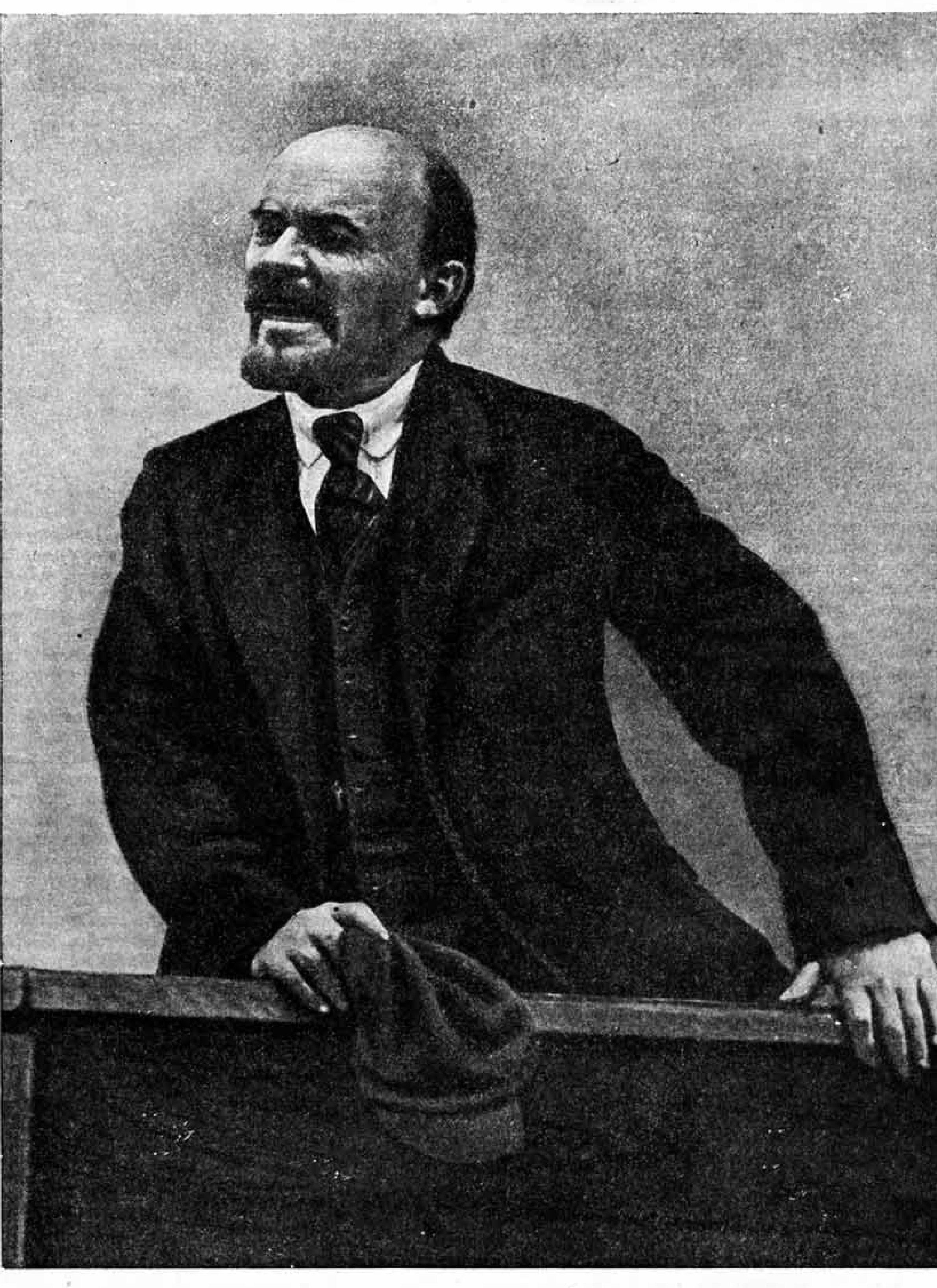
The portrait reproduced on the following page is a detail singled out from the photograph “V. I. Lenin's Speech on Sverdlov Square on the Day Troops Were Sent to the Polish Front,” taken on 5 May 1920 by L. Leonidov. Of this picture G. Boltyansky — who mistakenly attributed it to Goldstein — says: “The figure of Ilyich, bent in an impulse of will, and the general view clearly bring out the gravity of the moment and convey the heightened mood of the masses gathered somewhere behind the tribune. There is something uplifting and powerful in this photograph-picture. It is a truly artistic picture that, through the documentary quality of photography, conveys with extraordinary vividness the whole drama of the moment. I know of no single artistic painting in which Ilyich — the leader, the stern judge and unmasker of the imperialists — is revealed as he is in this photograph.”