
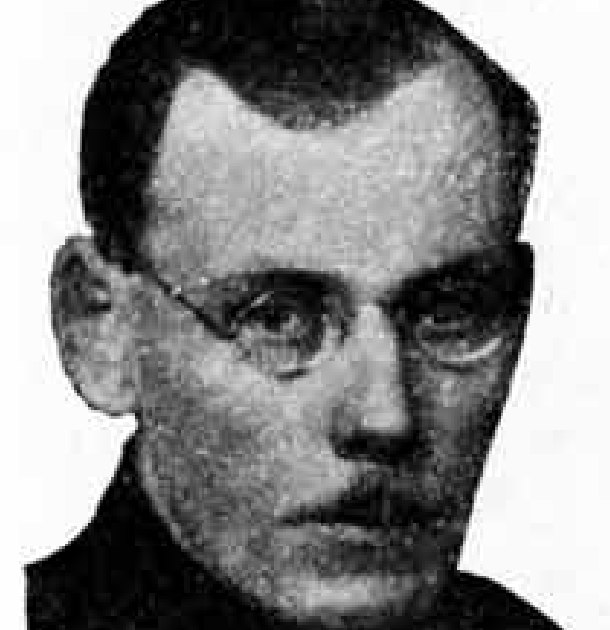

1. P. I. Grokhovsky (“Rabochaya Gazeta”)
A photo-reporter is first of all a “photographer for everything.” Almost every kind of photography is used in photo-reportage.
In first place — instantaneous photography. Sport makes great demands. To shoot, in summer, an athlete leaping from a tower into the water is hard; and to shoot a ski-jump in overcast winter weather is a whole task in itself. A moving object darts across the field of the lens faster than the time needed to release the shutter.
Often one must shoot under artificial light — under high-wattage lamps, “jupiters,” or magnesium flashes. Reproduction photography too demands special optics, plates and processes. At an exhibition you cannot take a picture down off its nail, and wherever the picture hangs and however it is lit, the editors do not care. Here is the Diamond Fund exhibition — now try to shoot the diamonds through the glass of the display cases!
And a portrait? You almost always photograph a busy, preoccupied person, in the most unsuitable conditions of light and space. An office. The businessman you need sits with his back to the window and insists you shoot him at work. Just try to work out how to hang black cardboard on the window right behind his head, and slip more white paper onto the desk!
From theme to theme, from one kind of shoot to another, all day long, sometimes from morning till late at night. In my practice there was a day like this: early morning I shot barge-haulers on the Volga (Tver); around eleven, work at a railcar-building plant; at two in the afternoon, dressed in a hospital gown, I photographed a rejuvenation operation in the city hospital; toward five I shot thoroughbred stallions of the Tver stud farm and copied their equine pedigrees; in the evening, by magnesium, I shot the circle sessions of an aero-club; at night I returned to Moscow — and in the morning, back to work.
To be only a good photographer is little, very little, for a photo-reporter. He must be a “newspaper man,” not merely reading the papers but close to editorial work. He must use the calendar of events, the advance theme-plan, the dispatches of the telegraph agencies, well-established newspaper contacts; he must have open eyes, unsleeping ears and a camera in his pocket. And even that is not all.
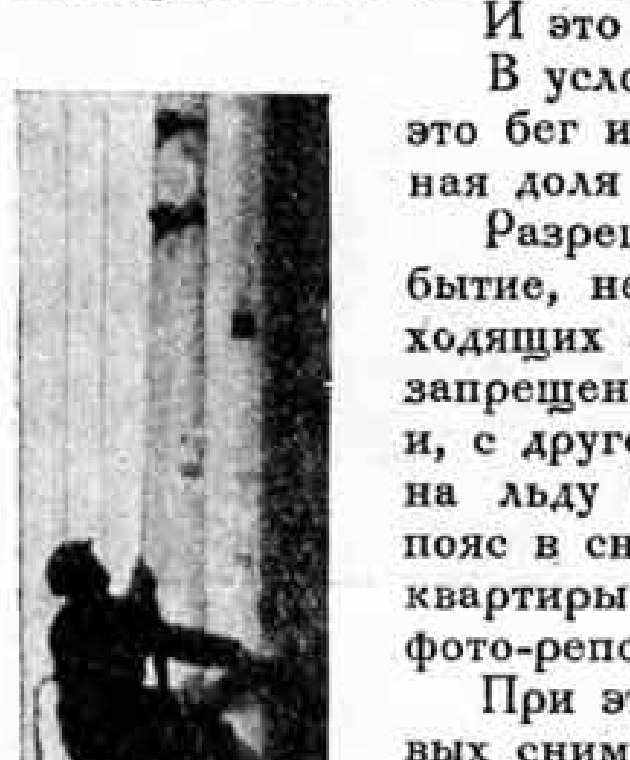
In the conditions of our reality, photo-reportage is a steeplechase of running and jumping — and in that lies much of its allure. Permission to shoot, a pass to a ceremony or event, the need to be at two or three things happening at once, an evening shoot at a meeting where burning magnesium is forbidden and no “jupiter” can be set up — and, on the other hand, shooting from under a football or on the ice beneath a hockey stick, at ski sport waist-deep in snow, from the roof of a five- or six-story house or through the window-pane of someone else's flat: this is what the photo-reporter must deal with. And all the while the editors demand new and ever-newer shots — in framing, in fresh vantage points, in special dynamism and variety.
Photo-reportage is many-sided and in the highest degree demanding. It develops and forms a special cadre of energetic, receptive, tireless workers; it topples the weak and the lagging, and tempers those who give themselves to it with their whole being.
— P. Grokhovsky