
High-aperture lenses
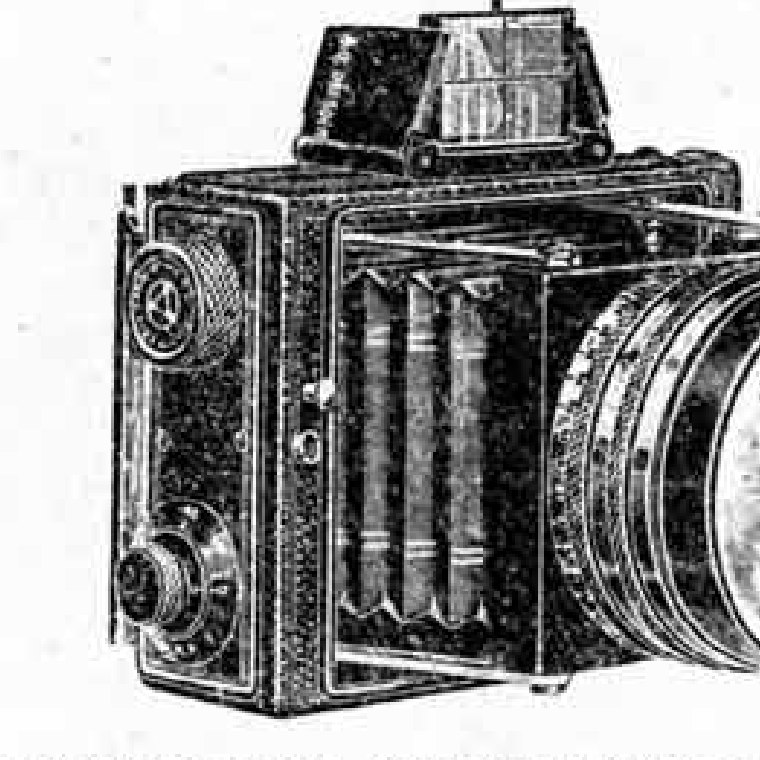
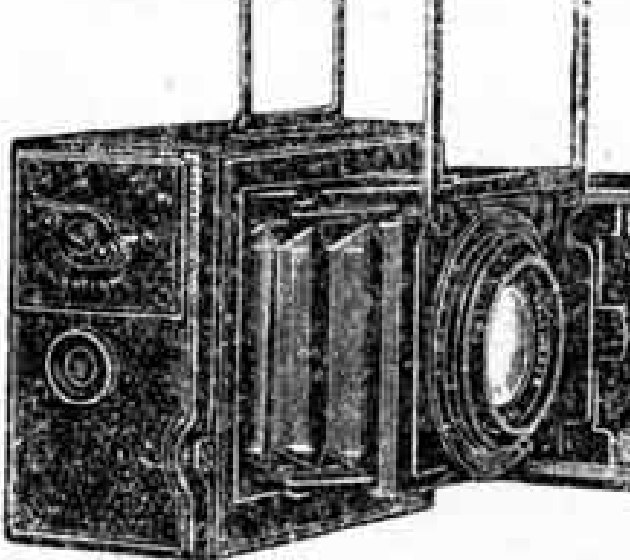
In 1924 and 1925 several German and English firms released high-aperture lenses. Their light-gathering power — 5–6 times higher than that of the Tessar F/4.5! — can be fully exploited only with plates of very high sensitivity. These lenses are suited to special purposes, such as portrait work in a closed room; they give a shallow depth of field, are extremely expensive, and belong to the category of things that give the photographer pleasure twice: when he buys them and when he sells them. A detailed article on high-aperture optics will appear in one of the near issues.
Sun shades
Lately, with the cinema's light touch, photographers working in the open air have taken to using so-called “sun shades” — devices fitted over the lens to protect it from direct sunlight and internal reflection. When properly made, these shades make it possible to shoot against the light and, in all cases, lend greater brightness to the image, since they exclude stray light. Soviet photographers use homemade shades; we give two drawings of shades released in recent years in England. The sun shades made by the firm Turner protect mainly against light from above and are markedly inferior to the box-shaped shades of the firm Adams. We can recommend our photographers to use Adams-type shades, lining them inside with black velvet — the shots gain considerably in sharpness and brightness.
Vertical enlargers
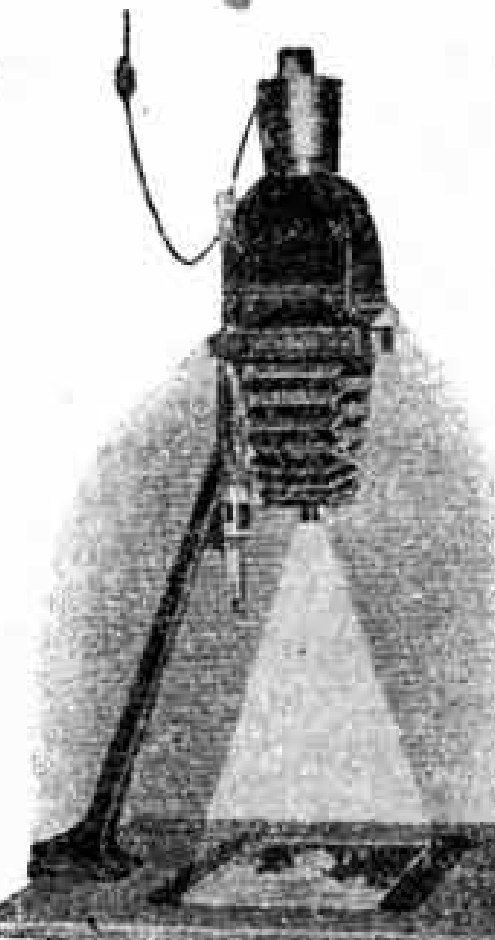
The vertical enlargers that appeared in the post-war years offer substantial conveniences. The absence of a condenser (replaced by milk glass) makes them considerably cheaper, and they take up very little table space compared with ordinary enlarging lanterns. Amateur models, moreover, have automatic focusing: by moving the rack the photographer sets only the size of the image he wants, while the focusing is done at the same time by itself, so that in any position the apparatus automatically gives a sharp image.
A rotary machine for the automatic printing of positives
The English firm Graber has designed a series of machines for the automatic positive process. Our drawing shows an installation of three joined machines: on the left, “Acme,” which automatically exposes from a negative onto rolled bromide-silver paper and at the same time prints on its reverse (important for postcards) the required text — the name of the subject, the firm and so on — typographically. In the center, “Ideal,” which automatically develops, fixes and washes the prints coming from the first machine. Finally, “Eclipse” (on the right) automatically dries and cuts the prints and stacks them in bundles. The throughput of such an installation, depending on the size and type of the machines, is from 1,500 to 8,000 fully finished postcards an hour. The machines are driven by electric current and are used with success for the mass production of postcards.