
Photography is supplanting painting. Painting resists and will not surrender. Hence the struggle — begun a hundred years ago, at the moment the camera was invented, and destined to end when photography knocks painting out of its last everyday positions.*
Photographers proclaimed: “Accuracy, speed, cheapness.” These were their advantages, and with them they beat the painter-competitors — first of all in the portrait. No painter, however talented, can give such a likeness as the camera; no artist, however fast, can make a portrait in a few minutes; the cheapest painting is dearer than the dearest photo-frame. From the portrait they moved to landscapes, reproductions, genre scenes — and always the same advertisement: “Accuracy, speed, cheapness.”
The painters saw the danger. Photography's success was enormous; urgent measures were needed, an intensified agitation campaign against it. Against cheapness and speed it was hard to argue — the camera works cheaper and faster. But against “accuracy” one could argue, and there the blow was aimed. Photography is colourless; a painting is many-coloured; so a painting conveys the object more accurately, and on this point it is beyond competition. So the painters reasoned, and so they convinced the consumer. But they were mistaken, and many are mistaken to this day.
True, in life we see objects coloured, and in a painting objects have colour. But these colours are different, not the same. Painting cannot convey real colours; it can only imitate, more or less approximately, the colouring we see in nature. And the point is not the painter's talent but the very essence of painterly work: the material paints (oil, watercolour, glue) with which the painter works act on our sight differently from the light rays that colour objects in their diverse hues. However he tries, the painter cannot leap out of the narrow limits of his palette; he cannot give in a painting the colourfulness — qualitative and quantitative — that we receive from real nature. So colour in a painting does not make the rendering of nature more precise; on the contrary it distorts nature, conveying it in a colouring objects do not have in reality. Photography so far conveys no colour at all — but at least it does not distort the object with a false colouring. That is already a plus, and no small one.
The most sensitive and advanced painters long ago grasped that the “accuracy” of colour is not smooth, that the principles of painterly colouring do not coincide with those of real colouring, and declared: “Accuracy is not the point.” The painter's task, they say, is not to convey the object as it is, but to recreate it on the canvas by other, purely painterly laws. What do we care what the object is in reality? Let observers and photographers care about that; we painters make paintings, for which nature is not an object but only a pretext. The painter not only has the right to reshape reality — he is obliged to; otherwise he is no painter but a bad copyist — a photographer.
To convey life in a painting is impossible; to imitate it is senseless; one must, then, rebuild it on the canvas in one's own, painterly way. In this lies the sense of the artistic theories and schools that arose from the mid-19th century under the names of impressionism, cubism, suprematism and many more. The refusal to convey nature drew a sharp line between photography and painting: they proved to have different, incommensurable tasks. Each does its own thing — the photographer fixes life, the painter makes paintings. Photography conveys no colour at all; a painting consciously gives objects a different, non-real colouring.
The situation would seem clear. Yet here in Soviet Russia a curious artistic phenomenon appears — an attempt by painters to win back the ceded positions and take up, alongside photography, the rendering of reality. Witness to it is the activity of AKhRR. Its social roots are quite clear: first, the huge demand for fixing the new way of life; second, the mass of painters left without work, because there is no one to buy paintings; and third, the sharp lowering of the consumer's artistic culture, so that he does not distinguish a precise rendering of an object from a very approximate one.
The attempt of AKhRR to resurrect so-called painterly realism is hopeless. At one of the debates a defender of AKhRR said: “As long as photography is still insufficiently developed with us, realistic painting is needed.” In this “as long as” lies the whole sense of AKhRR's work. As long as we lack enough automobiles, one must ride on a cart — but sooner or later we shall all ride in automobiles.
The photographer fixes the way of life and events more cheaply, quickly and accurately than painting. In this is his strength, his enormous social significance, and no relapse of painterly handicraft is a threat to him. But the photographers themselves do not understand their social significance. They know they are doing some needed, important work, yet it seems to them they are mere artisans, modest toilers, far below the artists, the painters — the creators.
That the painter works not on commission but “for himself”; that paintings are shown at great exhibitions with vernissages, catalogues, music, a buffet and speeches; that about every little painting and every painter long articles are written, with detailed analysis of composition, texture, brushstroke and “colour gamut”; that such an exhibition is reckoned a cultural event — all this makes a stunning impression on photographers and confirms them in the thought that painting is real art while photography is a homely craft. Hence every photographer's dream: to achieve a “painterly effect” in his shots. Hence the attempts to shoot and work up the frame “artistically”: “So that it looks like a reproduction of a painting.”
The photographer does not understand that in this chase after artistry, this slavish imitation of the painting, he degrades his craft and strips it of the very strength on which its social significance rests. He steps away from the precise fixing of nature and falls under the power of aesthetic laws that distort that nature. The photographer wants to win the same public recognition the painter enjoys. This is an entirely legitimate wish — but it is achieved not by the photographer reaching after the painter, but by his setting his own art against the painter's.
Proceeding from the basic principle of his craft — the precise fixing of nature — the photographer must create things, photo-frames, that in their force upon the viewer yield to the paintings of no painter. He must show that it is not only life rebuilt by aesthetic laws that impresses, but living, real life itself, fixed in a technically perfect photo-frame. In the struggle against the aesthetic deformation of nature the photographer will win his right to public recognition — not in the fruitless effort to somehow imitate painterly models alien to photography.
This path is not easy, but it is the only true one. It is not easy because neither here nor in the West is there yet even the rudiments of a theory of photographic art — the art of making highly qualified photo-frames. All that is said and written on the question reduces either to technical advice and recipes, or to instructions on how to achieve “painterly effects,” how to make photography not look like photography.
And yet there are already people — among photographers, among cultural workers, and among artists who have abandoned painting for photography — who understand that photography has its own tasks, aims and paths of development, and who, working in this field, have already achieved some results. These people must somehow share their experience, come to agreement, and unite their efforts for common work — for a common struggle against the “artistic” dominance in photography, for the creation of their own theory of photographic art, independent of painterly laws.
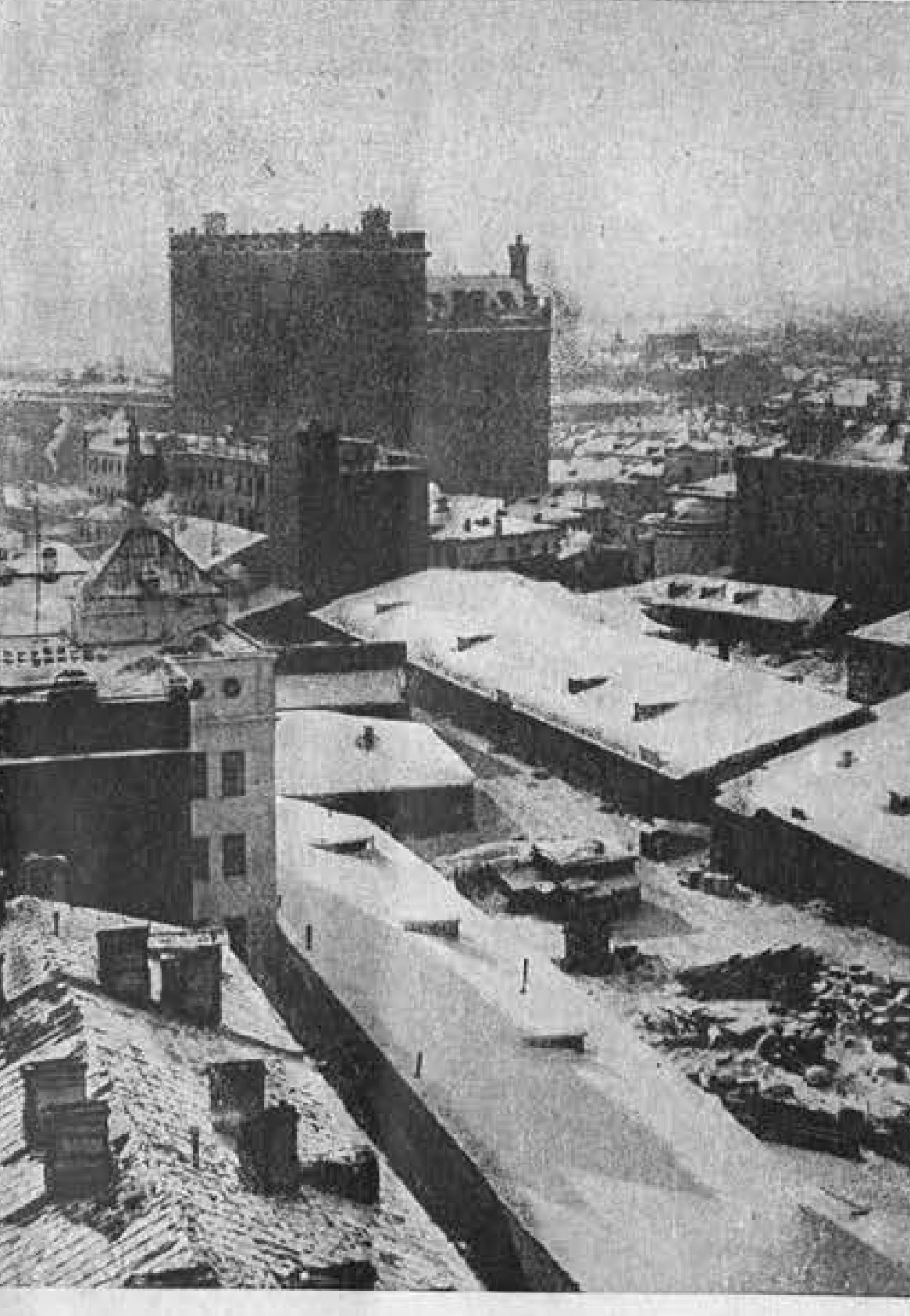
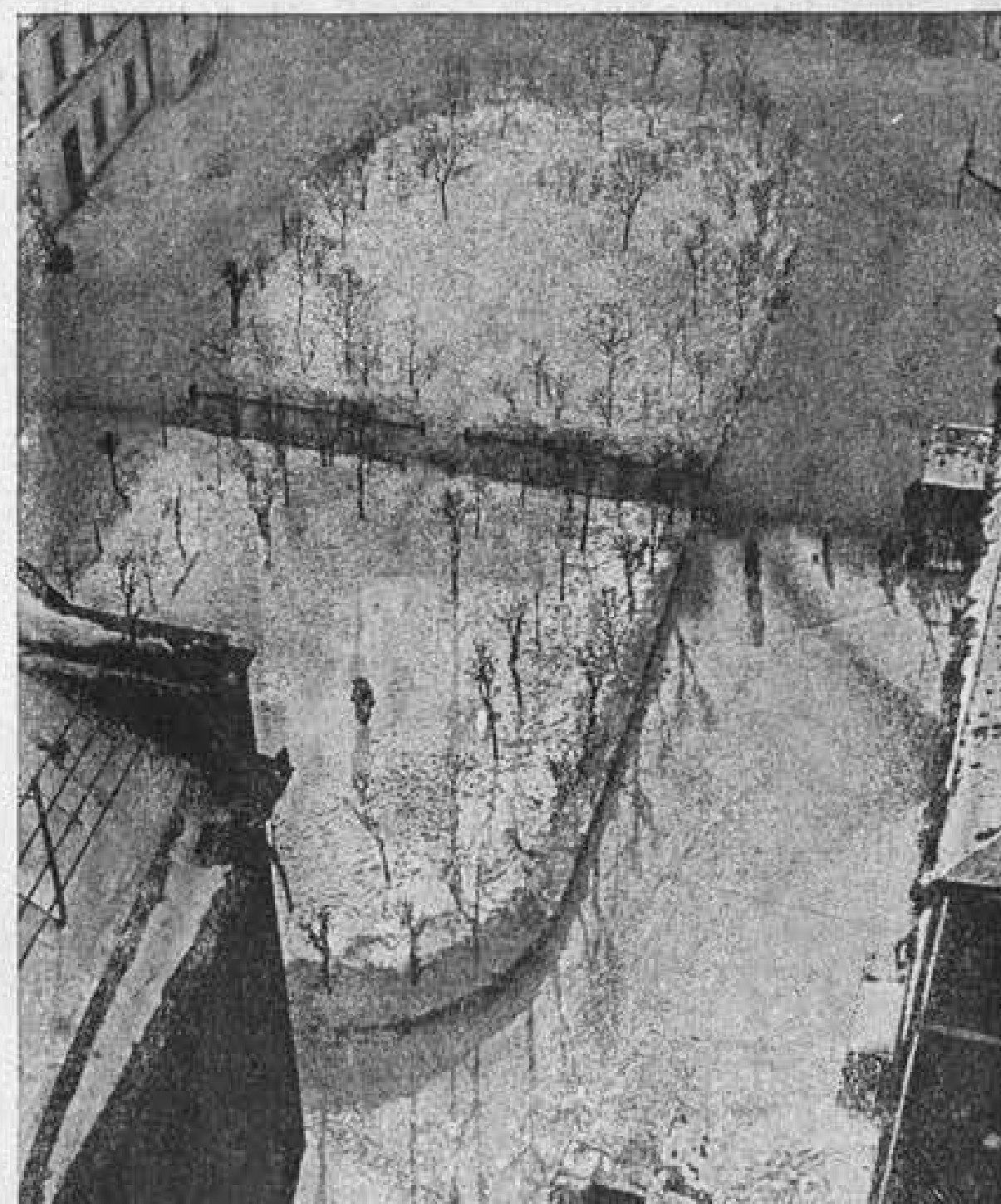
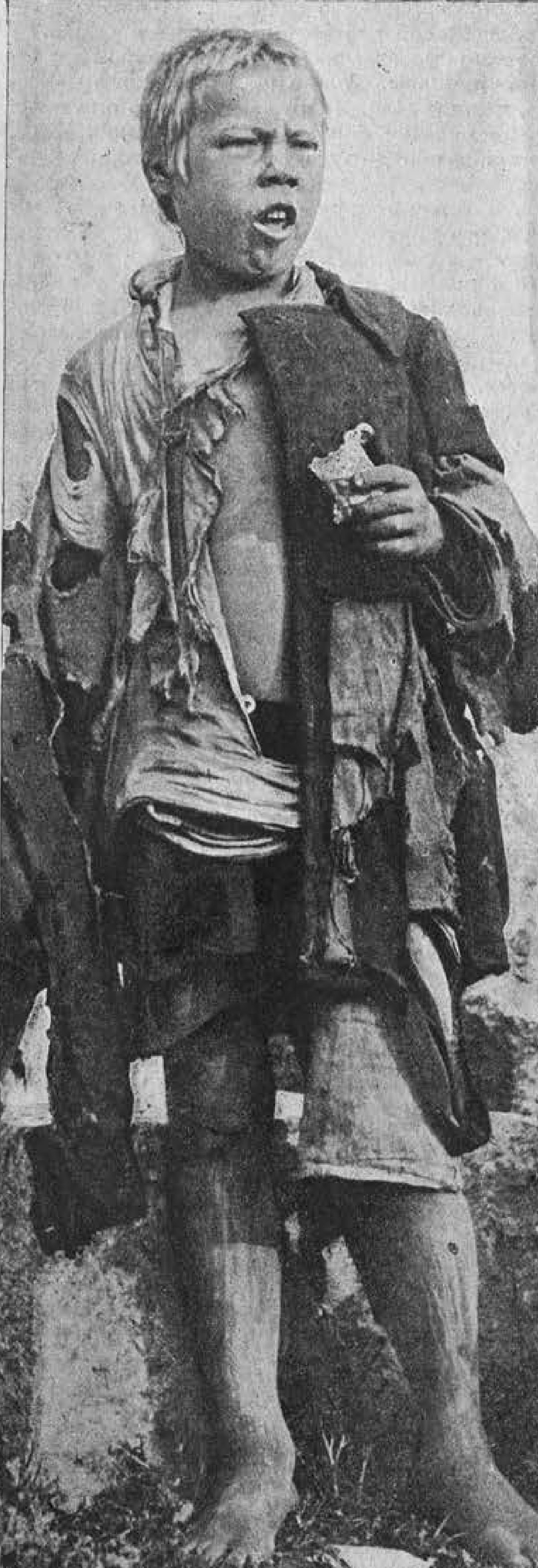
Especially interesting here are the experiments of former painters. The best anti-religionists are former priests and monks — no one knows the “secrets” of churches and monasteries better. The best fighters against painterly aestheticism are former painters: no one knows the “secrets” of artistic creation better, no one can better expose the falsehood of the “artistic representation of reality.” They consciously left the painting, and they will consciously fight for the photo-frame. One such person is A. M. Rodchenko, once a brilliant painter, now a convinced photographer. His photo-works are little known to the broad public, because they are mostly of a laboratory character — before the public one must come out with a finished result — but professional photographers, and photographers interested in the development of photo-art, must become acquainted with Rodchenko's experiments. His basic task is to depart from the painterly, “pictorial” construction of the photo-frame and to find other, specifically photographic laws of shooting and composition.
And can this fail to interest anyone who regards photography not as a “pitiful” craft, but as a matter enormous in its social significance — called to replace the painterly handicraft of the “artistic representation of life”?
— O. M. Brik
* The article appears as part of the discussion of the question “The Photographer and the Artist.” The author's words about the supplanting of painting by photography cannot, of course, refer to historical painting — e.g. Repin, whom photography cannot replace — but have in view only painting that strives to convey reality. — Editors' note.