
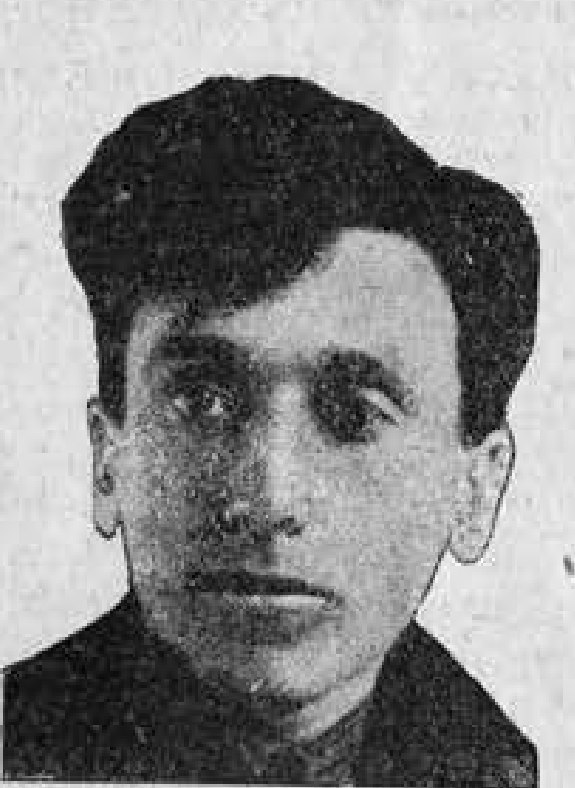
3. A. Shaikhet (“Ogonyok”)
Every beginning is hard. The beginning photographer often stumbles over insurmountable difficulties met on the first attempts to master the seemingly easy business of photo-reportage. Having felt all these hardships myself, especially at the start of my work, I more than once prepared to abandon the labour I had chosen; only an exceptional interest and great love for the cause gave me persistence and energy. The difficulties my comrades and I met were aggravated by the lack of necessary photo-materials.
Now, in the fourth year of Soviet photo-reportage, it is not without interest to draw some conclusions from our practice. The ability to handle the apparatus, confidence in it, a full and clear knowledge of its construction — that is the first requirement. The photographer-journalist should have two or three good cameras and work with them constantly, without changing them, since frequent change tells badly on the work.
Having mastered the apparatus, the photo-reporter can go out to shoot. But handling the camera is not all he needs: he must first of all be a journalist — able to get ahead, to foresee the course of an event, to pick out its most essential part, to embrace the theme in one or two shots and round it out so that with a brief caption all is clear to the reader. With journalistic adroitness and flair one can turn an insignificant theme into a very entertaining one by making good shots; a shot made with a special mood can sometimes be called a feuilleton, for it speaks of much. One must learn to understand and absorb the chosen theme, to treat it not by stencil, to seek out ways of enlivening it. One must keep abreast of events and remember them, for one often has to return to them, and must make independent sense of every event; a good photo-reporter can do without editorial assignments — it is enough for him to read a paper or two to fish out a series of themes.
The foreign photographer-journalist will envy the Soviet one. The Soviet order radically changed the life of the country and opened to us the possibility of broad activity. Nowhere was daily life refracted as it is with us, and that refraction we must notice and shoot in good time — not by stencil, but thoughtfully and interestingly. Shooting a newly electrified village, for instance, it is not enough to photograph an electric bulb in some hut — that would look like a shot in any city janitor's lodge. One must shoot the master of the hut so that the interest, the curiosity at the renewal in his home, can be felt on his face; small, non-crude stagings may be allowed; finally, one can shoot in close-up the entry of the wire, so that the outer part of the hut is fully seen and the wire entering it stands out sharply.
The photographer-journalist needs persistent work on himself: he must learn the methods of typographic printing and be drawn into the work of the editorial collegiums, since in most cases shots badly reproduced in the journals are far from the fault of the photo-reporter alone.
— A. Shaikhet