
A new camera, the “Miroflex”
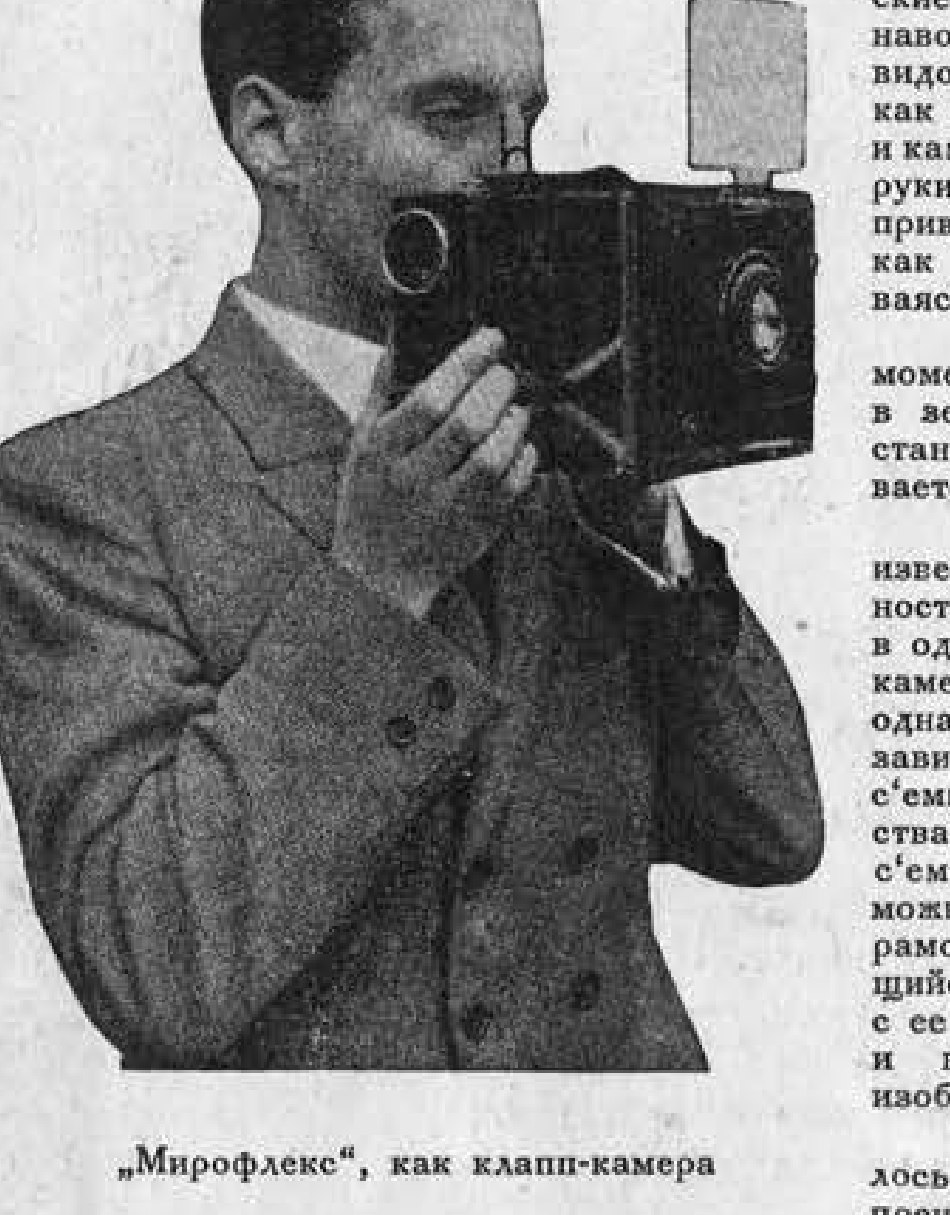
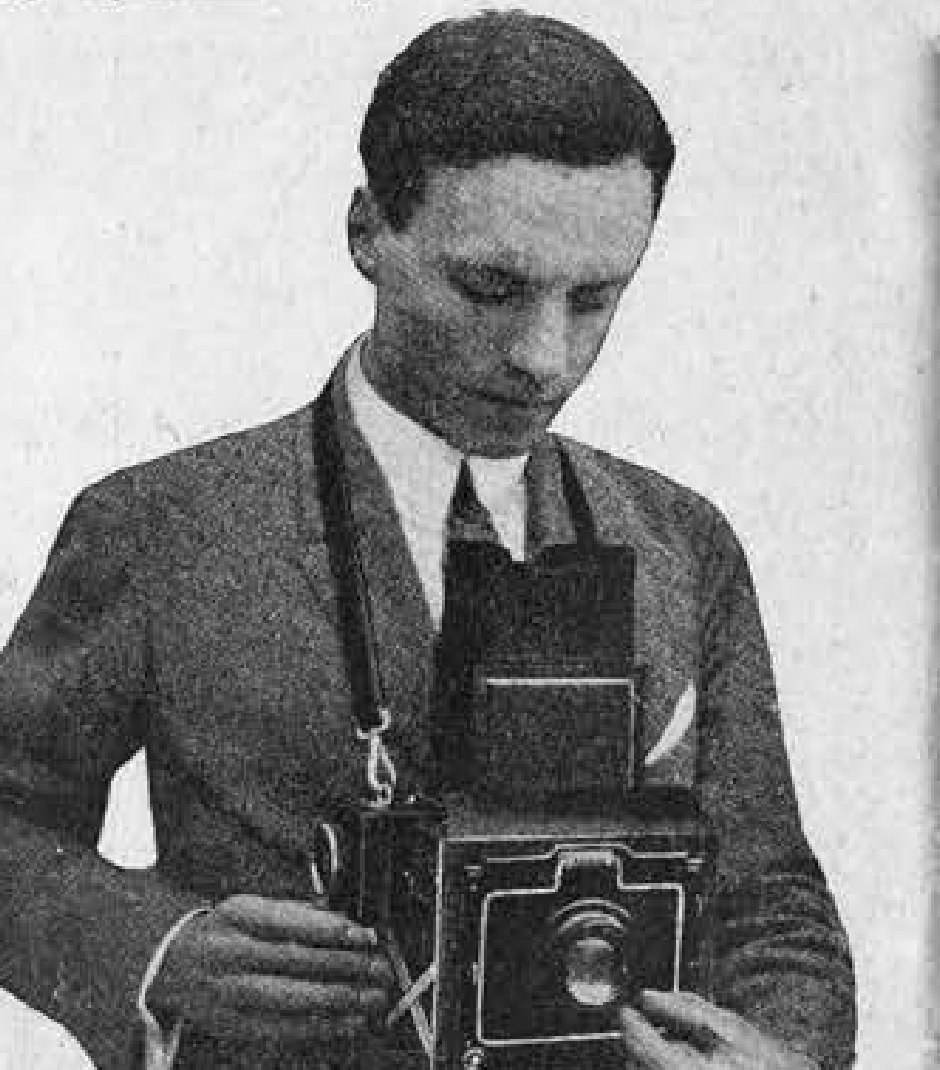
The firm “Contessa-Nettel” in Stuttgart (Germany), which won wide fame through its reporter and sport camera the “Deckrullo-Nettel,” has just put out an apparatus of entirely new construction — the combined camera “Miroflex.” The camera is a union of an ordinary klapp-camera with a folding reflex. In its folded state the “Miroflex,” so far issued only for 9×12 cm plates, does not exceed in size an ordinary Nettel camera, having a bulk of 6×14×17½ cm; in weight it is somewhat heavier — 2200 g.
It is built on the “Deckrullo” type, only the characteristic Nettel sliding scissor-struts are replaced by fixed struts, and the focusing is therefore done by a worm (screw) movement of the lens. The frame finder-iconometer is the same as on the ordinary “Deckrullo,” and the camera is likewise brought, by one movement of the hand, from its folded state into battle-readiness, like a klapp-camera, setting itself at infinity. By a second movement it can be turned instantly into a reflex camera — the mirror moves into its place, the hood opens, and so on.
Thus the factory, known for the precision and solidity of its work, attempts to unite in one apparatus two cameras, easily turned the one into the other at will according to the circumstances of the shot, with all the advantages — of the klapp-camera, with shooting at eye level and the power to catch a moving subject quickly in the frame finder, and of the reflex, with its exact focusing and its possibilities of composing the image.
How far the factory has succeeded in uniting in the “Miroflex” the advantages of both cameras, and how this has told on the complexity and solidity of the construction, one cannot yet say, for there are as yet no data on the camera's practical use. The idea, at all events, is an engaging one, and the rich foreign amateurs will probably pounce on this novelty. The camera allows speeds from 1/3 to 1/2000 second (a simplified shutter has been built into it). With the Zeiss Tessar F/4.5 (focal length 15 cm) the camera costs 228 rubles; with the Tessar F/2.7 (16.5 cm) — 306 rub. A Tele-Tessar F/6.3 (25 cm) for it, bought separately — 101 rub.
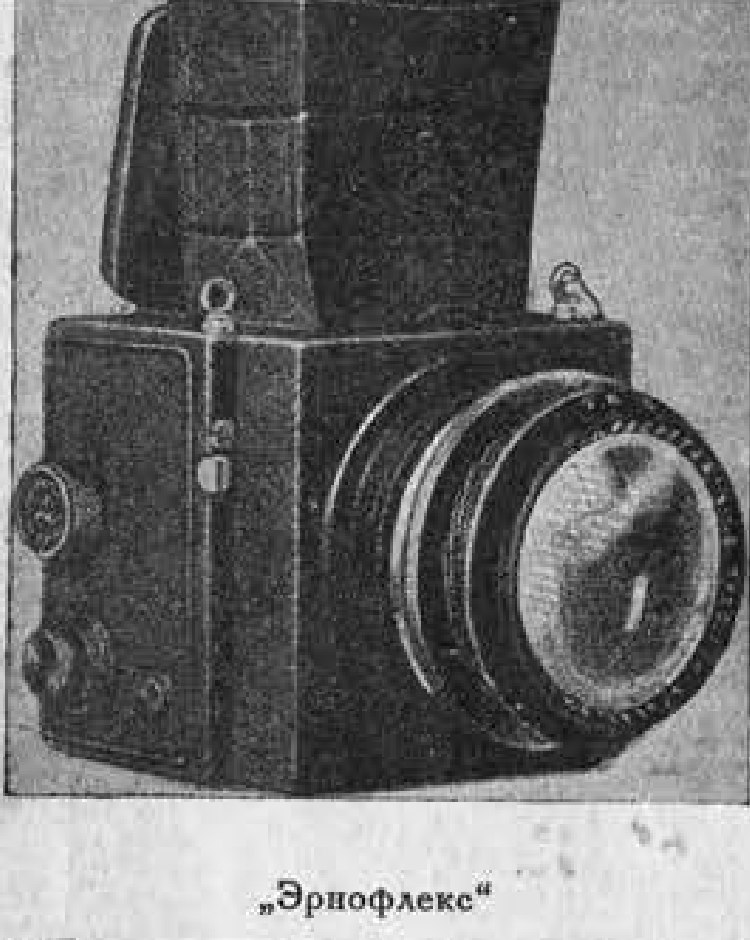
The reflex camera “Ernoflex” F/1.8
The firm Ernemann in Dresden (Germany), the first to put into wide circulation lenses of extreme light-power — the Ernostars F/2 — and which made a stir with their wide advertising, has this year come onto the market with the reflex camera “Ermanox-Reflex” for plates 4.5×6 cm, fitted with an Ernostar F/1.8 of 10.5 cm focal length. This camera is the most light-powerful reflex (the previous achievement was the “Mentor” 6.5×9 cm with Rietschel's Prolinear F/1.9).
As is known, where the light-power is very high the depth of sharpness, being extremely slight, demands exceptionally exact focusing, and that, in the conditions of varied shooting, is most attainable precisely in a reflex camera. With so high a light-power as F/1.8, even in the most unfavourable lighting the image on the ground glass comes out quite clear and distinct, and permits the most exact focusing. Thus the chief defect of high-aperture optics is fully compensated, and instantaneous shots in the most overcast weather, in a light room, and by artificial light, become quite possible. The camera has a bulk of 11×10×11 cm, weighs 1200 g and costs 315 rubles.
One must suppose that, as happened with the original Ermanox model, Ernemann will not stop at the 4.5×6 cm size, and will shortly put out reflexes with F/1.8 for larger sizes as well — up to 9×12 cm.