
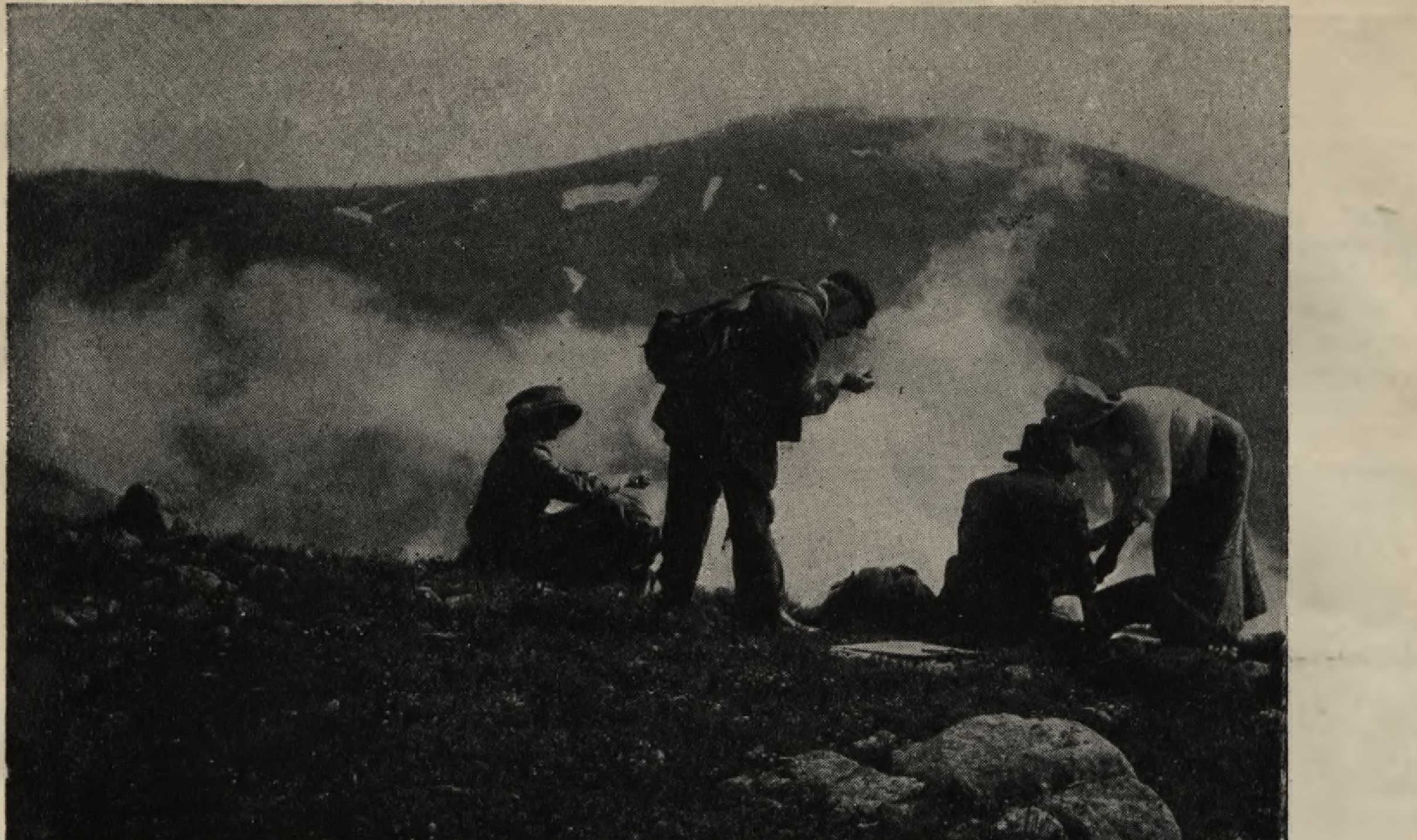
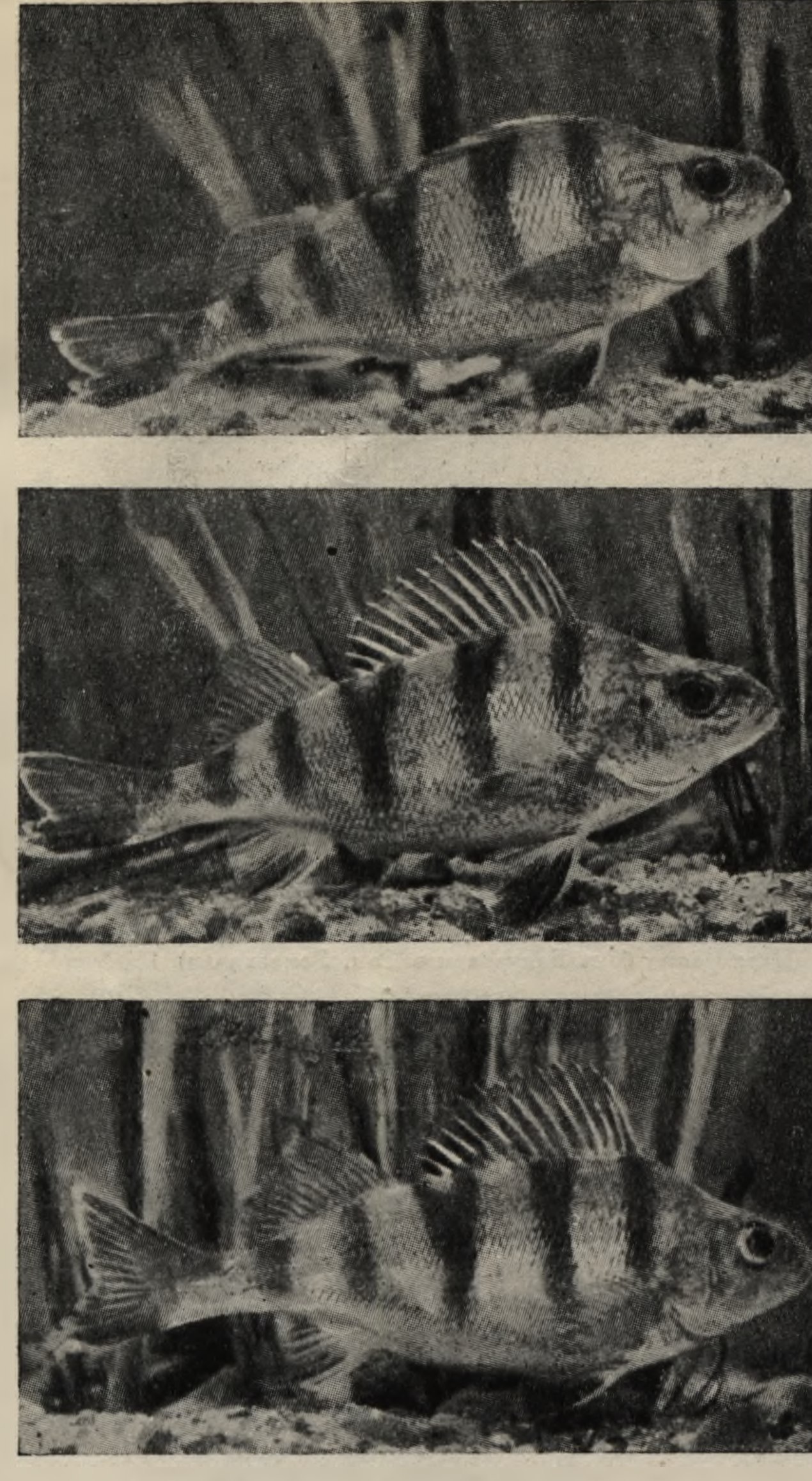
Before the majority of photo-amateurs the question often arises: WHAT, and FOR WHAT, to shoot? They have no wish to click idly and waste material, but where to direct their work they do not know. The fields for applying their labour are several: shooting for journals, for wall-newspapers, and so on. We shall place a series of articles pointing the photo-amateur to one of the fields — a very important and useful one, both for him and for science — of applying his energy: the study of the diverse nature of the home region, of that locality where the given photo-amateur lives.
One may love nature in various ways. Some love it passively, confining themselves to the enjoyment of contemplating its beauties; and if they carry anything out of this occupation, then only for themselves — at best, gathering a certain store of fresh strength and a good humour. Others take their chief interest in nature in the studying of it — in observation, in the systematizing of the knowledge gained, and in the investigation of the laws that govern the life of nature. Such an approach to nature is especially valuable; it gives the amateur enormous satisfaction, and through him it can bring benefit to all mankind. It is to such active lovers of nature, who go into it with a definite aim set beforehand, that these lines of ours relate.
For the broad study of nature the photographic camera has now become as necessary as the microscope to the biologist, the telescope to the astronomer, the compass to the geologist, and so on. But the photographic apparatus may be called, in the full sense of the word, a universal instrument, necessary to all the branches of natural science. It serves for the study of all the kingdoms of nature, both living and dead. The geologist uses the camera for photographing the structure of the earth's crust; the mineralogist, with the help of micro-photography, studies the sections of stones; the botanist photographs plant communities and single specimens; the zoologist, animals — and so one might endlessly enumerate all the branches of human knowledge.
The camera is not a toy! Photography is one of the most important instruments for the study of nature. Not one of the numerous disciplines of natural science can do without a camera… And yet, if one were to reckon what percentage of all natural scientists use a photographic apparatus for their research, that percentage would prove negligibly small — especially with us in Russia. We are not used to regarding the apparatus as an instrument of research; we do not know how to choose an object for a shot; we do not know how to shoot it; and we do not, in the end, find a use even for the valuable photographs we obtain by chance!
The photographic camera should become the companion of every naturalist, every excursionist; the photographic apparatus should be among the instruments of the physics cabinets of every school; a part of the school hours should be given to the practical and physical teaching of photography, and the pupils should use the camera just as they use the pencil, the set-square and the ruler.
So far, unfortunately, we are still far from this ideal. But, where possible, one must strive toward it. How, and what is needed for it, are complex and very important questions — but their place is not in the programme of our essays on the application of photography in natural science. Coming to the aid of those natural scientists who could, and wish to, apply photography to the study of nature, the editorial board proposes to place on the pages of Sovetskoe Foto articles devoted to certain guiding indications for beginners. Their basic aim is to broaden the outlook of the photo-amateur, to draw him away from the aimless clicking of the shutter, and to turn his attention to the objects of nature. In particular cases practical advice will also be given concerning the very making of the shot. But least of all would we wish to confine the initiative of the young investigators of nature. All the indications, therefore, should be taken as an approximate plan of work.
For a photographic shot to be able to claim use with a scientific aim, it must satisfy the following requirements:
- The object of the shot must present scientific interest.
- The conditions of the shot that might affect the representation of the object must be known.
- Every shot must be accompanied by exhaustive explanations as to what is photographed.
- On the shot must be stated the place, the date and the time of the shot, and also the surname of the photographer.
To fulfil these requirements, every photographer-naturalist must, when going on a photo-excursion, always carry a notebook with him, in which to enter particulars of the shots made, in some such form, for example, as this:
| No. of shot | No. of cassette | Date & time | Place of shot | Subject of shot | Lighting conditions | Diaphragm | Exposure | Notes |
|---|---|---|---|---|---|---|---|---|
Besides this, in another book, or in another part of the same book, it is very useful to note down all the objects you have met that are worthy, in your opinion, of being shot, but which you could not for some reason shoot at once. Noting the subject of the intended shot, one should also mark when it is most convenient to shoot it (the time of year and of day) and what technical devices will be required.
If there is a risk of confusing two shots similar to each other, then before developing, having taken the plate from the cassette, it is useful to make some mark on it — for example, on the margins with a knife, as many notches as there are units in the number designating the number of the cassette.
Having dried the plates, at once (while the conventional marks are not yet forgotten) put on them the numbers under which the shots are entered in a special notebook.
In this notebook — the inventory of all the shots of the collection (if there are several collections by different specialties, it is desirable to have a separate inventory book for each) — besides the number and a detailed description of the shot, are noted also the particulars, taken from the notebook, of the date and time of the shot. If the collection of shots is made up by more than one person, the author of each shot must be indicated.
To enumerate everything required for a full characterization of a shot is impossible: in each separate case there are its own characteristic features. One can only give a single general piece of advice: one must try so to describe the shot, to note those particulars, as would help you fully to make clear to yourself the aim and tasks of the shot, as though you had not yourself been present at it and had never seen the object in nature.
As for the processing of the shots, it in no way especially differs from the usual. One must only always bear in mind that photo-shots made with a scientific aim should outlive us. The negatives should be especially carefully washed after the fixer, and kept in separate envelopes in boxes, in a dry room. The paper should be chosen of the most durable sorts. In the matter of durability the daylight papers yield much to the bromosilver papers printed by artificial light. And although, as always and everywhere, one should attend to the elegance and beauty of the shot, yet in scientific photography the first place should be given not to the tone and tint of the paper but to the clarity of the image, the possibly exact rendering of the subject, and its durability.
— A. Bianki