
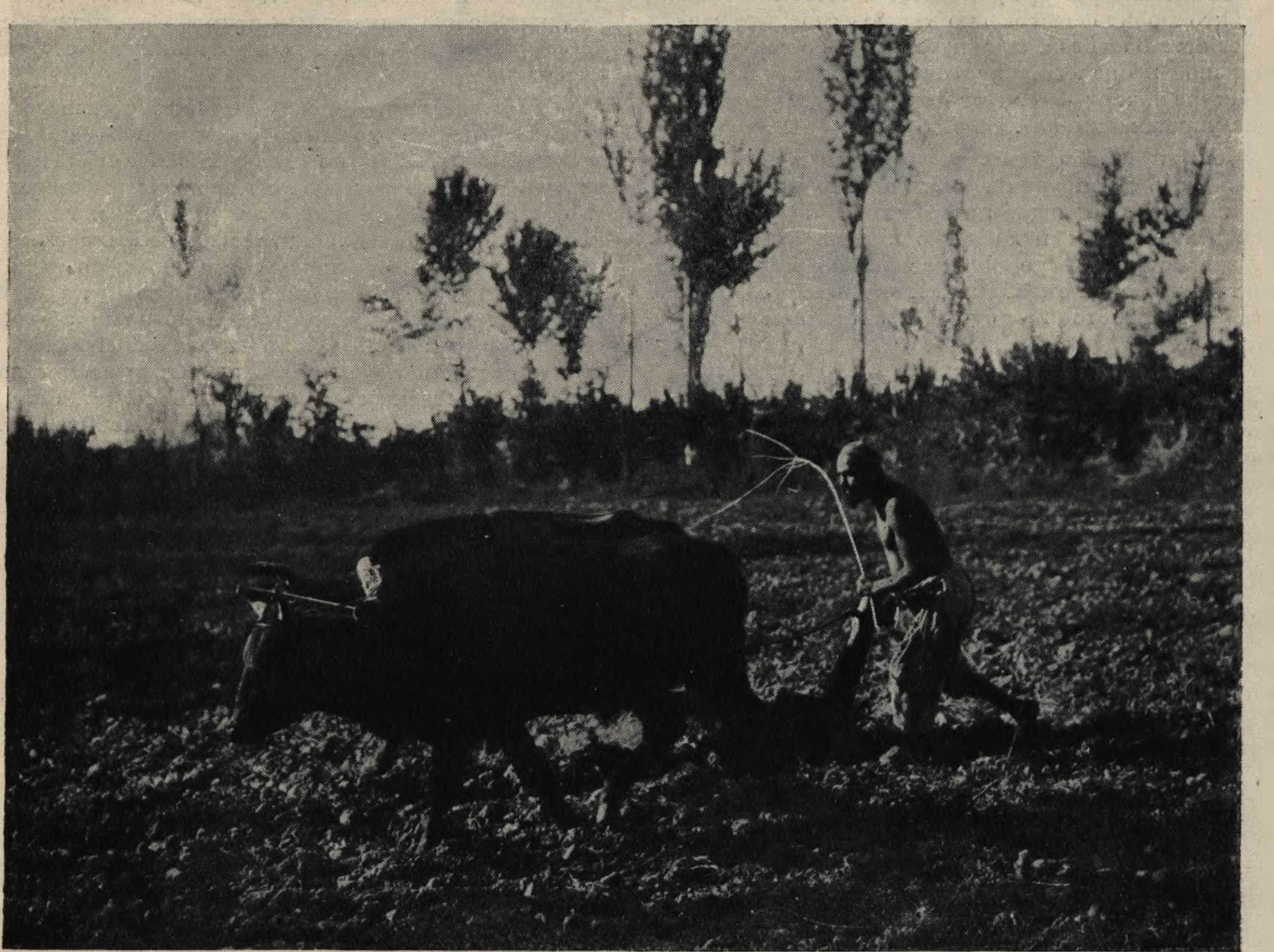
Dear comrade! I received both your shots and the letter attached to them, and did not answer — deliberately. But since you insist, I resolve to speak my opinion quite plainly; so much the worse if my plainness touches you a little in your confidence that you have a brilliant command of the photographic art.
Why do you send me doubly bad photographs — bad in composition and in technique — and why do you accompany them with a kindly note in which you say that “these are simple amateur photos” and that you made them only for your own amusement?
Of course, everyone may have only vague notions of photography; but there exist not a few books from which one may obtain, without any labour, the minimum of necessary knowledge, and, besides, the journals devoted to photography will give you all the explanations you ask of them.
Since you did not stop short of buying a good apparatus, since you possess an excellent lens, why did you not spare a little more money to buy a good guide? Why, instead of listening to all the “advice” of friends as inexperienced as yourself, and trying one after another all manner of solutions and all the plates someone had praised to you, did you not choose for yourself some one sort of developer and one brand of plates, and stop at them?
Of course, the experimental method has its advantages, but one should use it guided by logic, not by the inspiration of the moment. But still more am I ready to reproach you for your disdain of photography, which lowers it to a kind of “amusement,” and for your attitude to the word “amateur.”
“Amateurs” like you have debased this word and given it its present bad sense, in which is understood an idle man with an apparatus under his arm, shooting without plan or thought everything that comes his way, and treating his friends to samples of bad work.
A lover of photography is, properly speaking, one who loves photography for its own sake, apart from all money calculations — not a muddler who clicks right and left, bathes his plates in any mixture and, the devil knows how, prints the results of these exercises on any paper.
The term “amateur photo” ought to designate compositions superbly executed in technique, real works of art; for the amateur, moved by love of the matter and not by need, not by earnings and not by professional necessity, cannot excuse himself in bad or mediocre work by any of the professional's pleas.
If a professional photographer, who must live by the work of his lens, tries, for economy's sake, to prolong his developer as far as he can, if he buys cheaper plates and tries to make his bromide prints automatically — that is no great harm. He has to fight competition, he has large expenses, and, whatever one may say, the ever-growing number of “amateurs,” with all the modern models of photo-camera in their hands, takes from him not a few clients: many would come to him to be photographed, had they not contented themselves with a shot made by some other person, a photography enthusiast.
Toward such a professional photographer I would, with all my heart, find forgiveness, if he brought me shots like yours and said: “These are simply the photographs of a professional,” for he could refer to a thousand different things that for him are a justification, but for you would be only an aggravation of the guilt.
The professional would tell me that he is forced to work in any lighting, that he is obliged to succeed every time, that he does not make shots for his own pleasure, that he has to work in large quantities, as economically and quickly as possible, and that he has no time to change his manner or try new methods that might repel his clients.
Consequently, in the matter of creating a great art, we must not count on this industrialist; and to the amateur falls the task of leading photography out of the region of the banal and the accepted, in which it risks sinking. But for this it is still needful that the amateur agree to acquire sufficient knowledge of optics and chemistry, so as not to be paralyzed at the very first steps; that he possess some aesthetic knowledge; that he not take all his shots for perfection, not listen to the criticism of envious or ignorant people, and not think it possible to justify, by the notion of “amateurism,” every kind of ignorance and laziness.
Dear comrade, you are not an “amateur” if you “amuse yourself” making shots. But on the day when you send me a shot made with skill, well printed on paper, on an interesting theme, excellently bringing out its subject, with good coloring and harmonious composition — in a word, a creation significant and impeccable — on that day, this I promise you, I shall answer at once, and my first words will be: “I have at last received your amateur photo.”
— O. B—n