
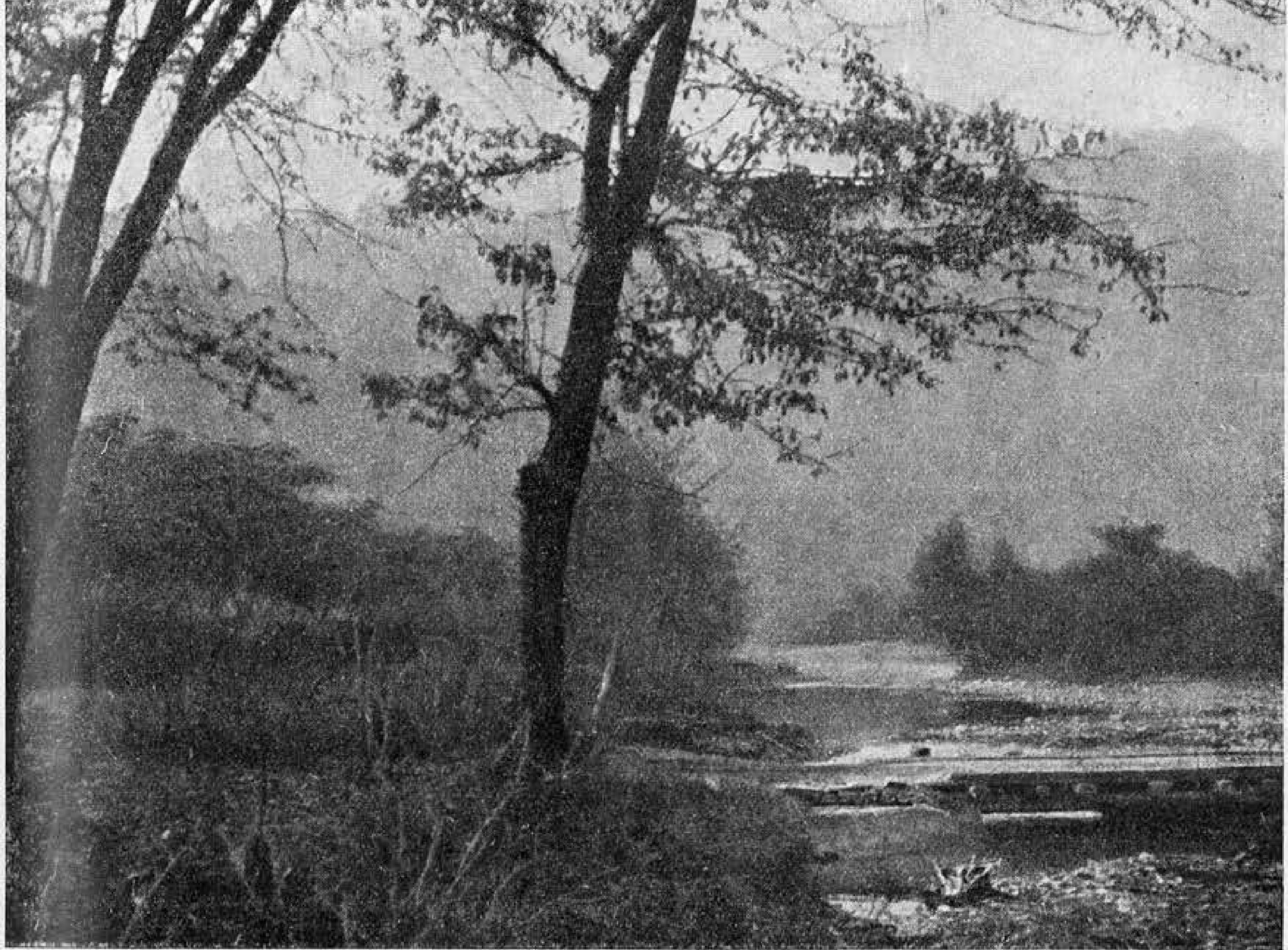
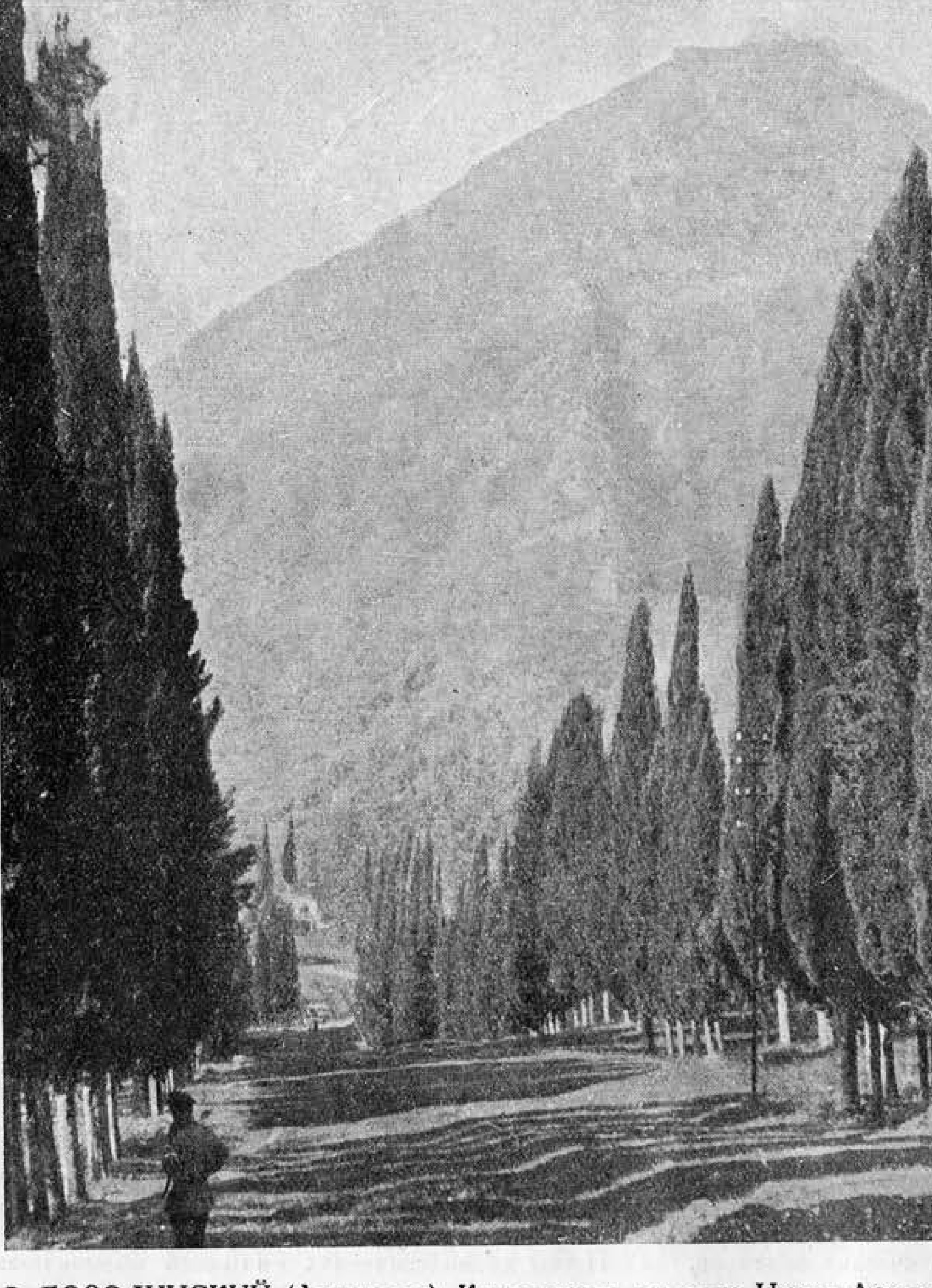
This article, from the cycle “Photographer–Local Historian,” points the photo-amateur to one of the paths for applying his labour to the cause of the photographic study of the climate of his home region.
The description of climates is to this day the privilege of cabinet scholars. The chief base of all climatic descriptions is numerous tables of figures, characterizing the long-term averages, the extremes, the average deviations from them, the variability and so on of various elements of climate. Sometimes — unfortunately, rather rarely — these figures are accompanied by a few graphs. An exceptional gift of words is needed to be able to enliven these numerical tables and graphs. Only persons specially interested in the study of the country's climate are able to go deep into the reading of its climatic essay. For the majority these descriptions remain quite inaccessible.
Meanwhile, finding ourselves in some new region, we very quickly form an ordinary general idea of its climate. We feel how the sun burns, we see the vegetation, the soil, the animals, the rivers, and by all this we form a notion of the climate. But what we see we can also photograph, and these shots, well chosen, will help give everyone — even one who has never been there — an idea of the climate of the region that interests him.
Photography can and should come to the aid of the climatologist in popularizing his science. But since climatologists seldom manage to come close to nature, the supplying of the needed shots is the business of amateur meteorologists, observers and naturalists. It goes without saying that a serious investigator of nature can also himself, having selected in the literature the climatographic material he needs, compile an interesting essay of the region, illustrating it with his own photo-shots.
The chief elements of climate are, as is known, the quantity of sunlight (radiation) — for the most part only approximately characterized by cloudiness — the temperature and humidity of the air, the winds, precipitation, and snow cover. These elements, changing not only in time but in space, lay their imprint on each locality. The task of the photo-climatographer is to catch in nature those objects which, photographed, will characterize the whole totality of the influence of the climatic factors. In most cases these objects will characterize not separate elements of climate but whole totalities of them. Thus, for example, vegetation is conditioned both by the height of the sun, and by radiation, and by temperature, and by humidity. But, on the one hand, for the characterization of climate it is not at all so important necessarily to separate the elements from one another; and, on the other, by a successful selection of shots one still often succeeds in singling out the influence of separate elements of climate upon nature.
The most grateful theme for the photo-climatographer is vegetation. It must be used first of all. The separate representatives of the flora, their growth, their usual combinations in nature — all this, photographed at various times of year and in various stages of development, already gives a very graphic idea of the climate of the place. A useful supplement to this may be photographs characterizing the comparative growth of plants in time. Shooting one and the same tree over a number of years on a known scale, we obtained a very great difference between the photographs taken through one and the same number of years somewhere in the Caucasus and in the Pechora region. Equally characteristic may be the growth of annual plants — for example, the development of wheat, sunflower, watermelon. It is understood that for such shots one must choose not exceptional specimens but really typical ones. By chronological shooting one can show also the influence of separate meteorological elements upon plants: of heat and cold, of precipitation, of the quantity of sunlight, and so on.
The surface of the soil, as is known, also depends on climate. In various parts of Russia we shall meet both a dry crust of loess, all in cracks, and rich black earth, and never-drying marshes. The predominant soil of a given region, its separate characteristic or rare sections, the influence of weather and of the time of year upon the soil — all can be photographed for a climatographic essay.
Winds are an important climatic factor. They destroy rock (weathering), hasten the drying of the soil, kill plants (dry winds), cripple them (not only storms, but also constant winds of one direction, on sea shores, for example), and heap up mountains of sand (dunes). One should not pass all this by without imprinting it on the plate.
Precipitation is the cause not only of the humidity of the soil and the growth of plants (of which it was spoken above), but also of the destruction of mountains and cliffs. Cracks, often met in rock, are the mute witnesses of the destroying action of frozen water. Ravines, clefts, sinkholes and swells are the result of running waters. The work of a southern downpour is not to be compared with the work of the strongest rain in the north. Shoot the result of these works, and you will prove it documentarily.
Snow cover, which covers almost the whole territory of our Union, may nevertheless characterize the climate of various republics. The winter landscape in the centre of Russia, with its bare transparent trees, and the snow that has accidentally covered the evergreen plants of Transcaucasia — is this one and the same thing? Shoot from one and the same place the landscape at the beginning of each month of winter, and glue all the photographs together. How many will there be in the south, and how many in the north?
If the high water of the northern rivers is conditioned chiefly by the melting of snow, then in the south snow plays a quite small part in the rise of the level of the rivers. Show, on a shot of rivers in spring, what quantity of water from the melting snows the river receives in the north and what in the south. On the contrary, shoot the summer flood in the south and in the north: if one makes no explanatory caption, it is easy to take the southern river here, by the quantity of water, for a northern one.
The freezing-over, the ice-jams, the ice-drift are conditioned, on the one hand, by the type of the rivers, and on the other by the climate of the place. Photographs of them, generally interesting, can also give climatographic material. How the water basins — seas, bays, lakes, ponds — open up can be graphically shown on a series of chronological shots.
Finally, the animal kingdom — it too, of course, is bound up with climate, as is vegetation. Animals are harder to photograph, especially wild ones; but domestic ones too sufficiently characterize the climate: the northern reindeer you will not shoot in the Crimea, and the donkey you will not find on the Murman coast. If one does not manage to catch a wild beast on the plate, one can shoot the traces of its sojourn: a field eaten away by locusts, oats sucked dry and trampled by a bear, bushes gnawed by a hare — such documents of nature, indirectly characterizing climate, every attentive observer of nature can supply in any quantity.
Having gathered an all-round collection of photographs characterizing climate, accompany them with explanatory text and meteorological observations, and you will get a really interesting climatographic essay. If you work in a club, make diapositives. A series of climatographic diapositives will be both engaging and original. Your diary, with the record of all the details of the shots made (see the article “Photography in the Service of Natural Science” in No. 5 of Sovetskoe Foto), will make them scientifically valuable material as well. In almost any town there are local-history organizations — clubs and circles, which will gladly help you in the work and will be able to use the fruits of your labours.
— A. Bianki