
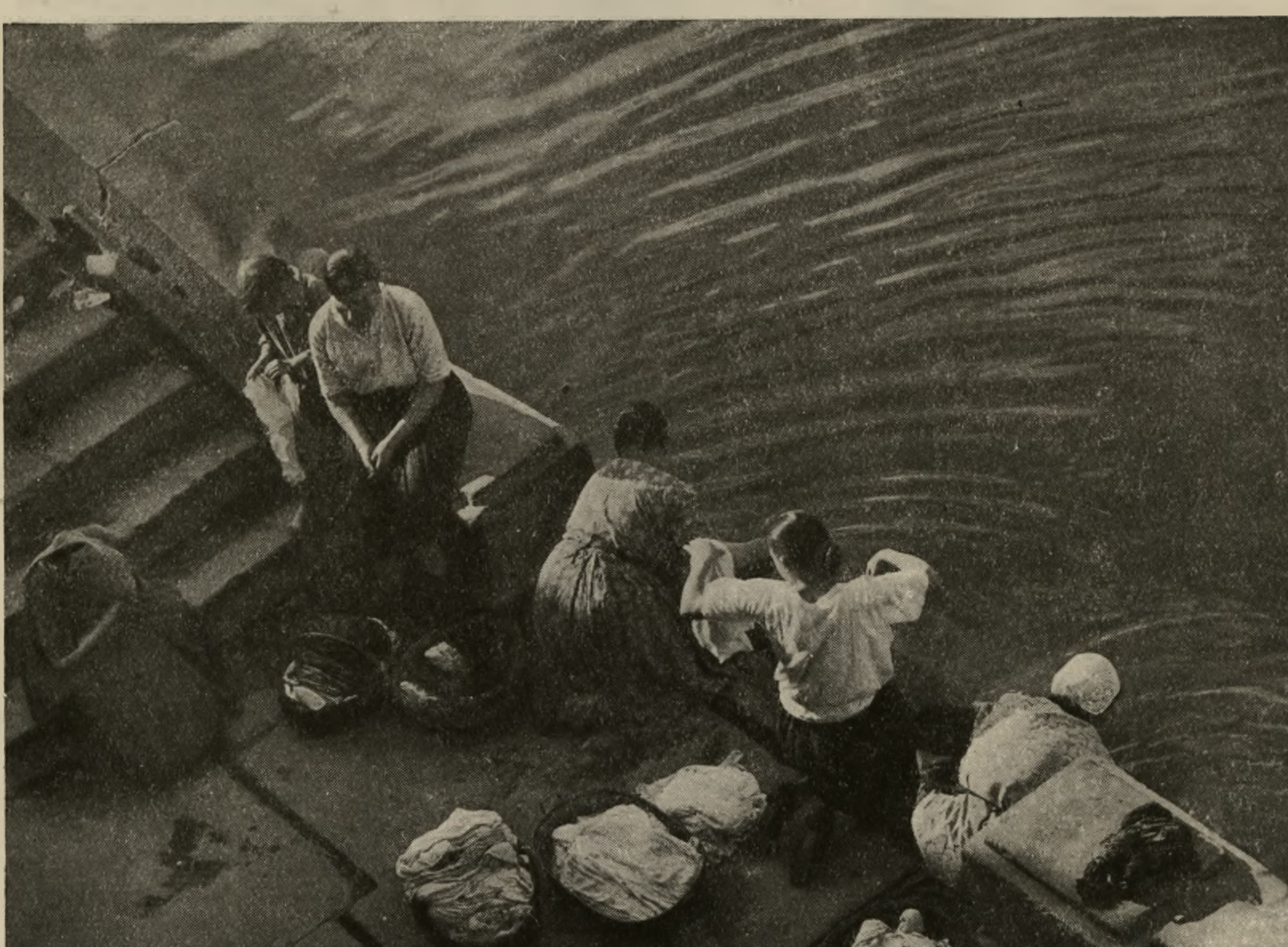
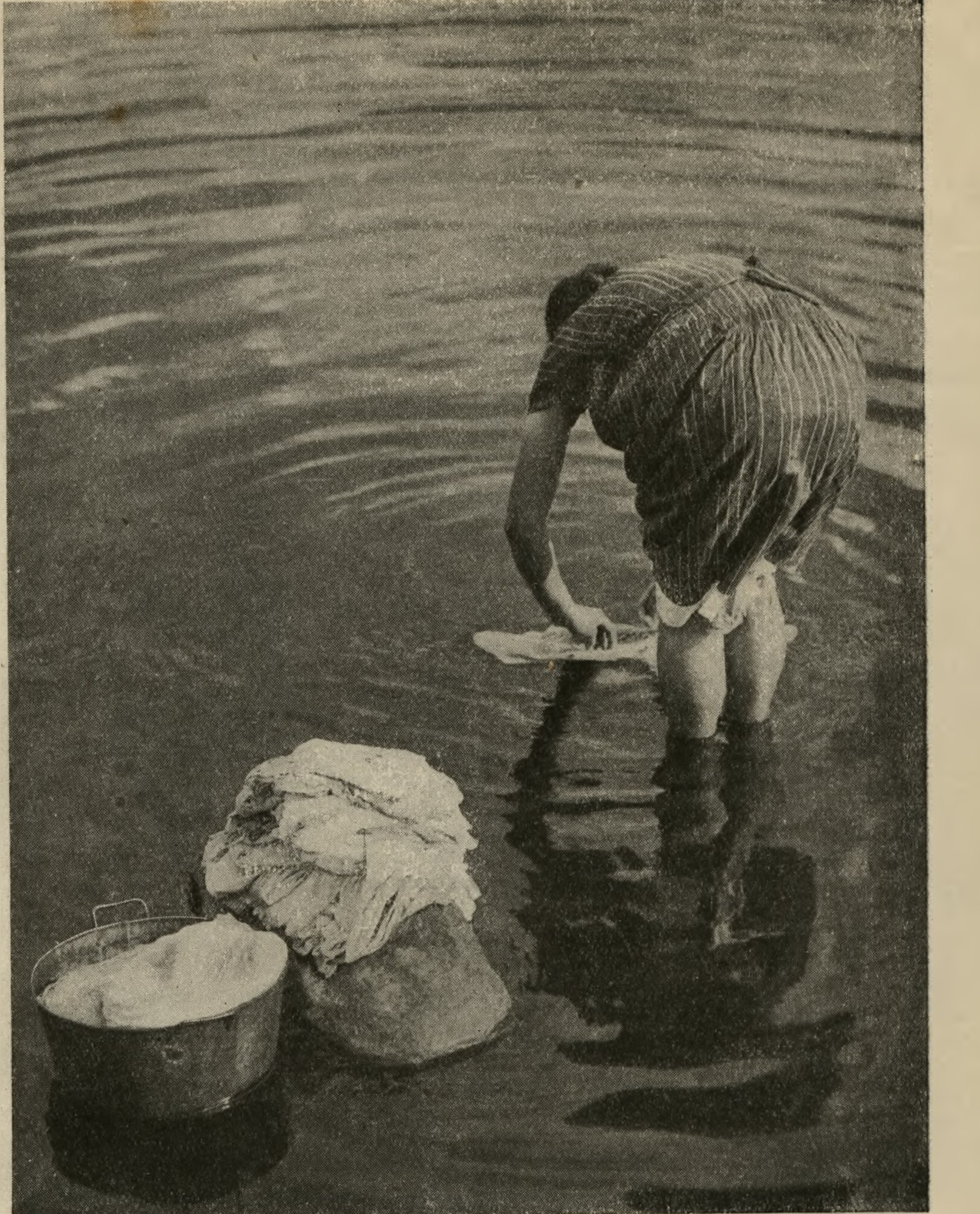
Europe is now carried away by exotic instruments. Famous now, for example, are the pieces performed on Hawaiian guitars. Through gramophones and radio the Hawaiian guitars play all over the world. Their music is simple, primitive, even old-European. The listener is struck by the instrument, its timbre. On this is based also the enthusiasm for the jazz-band.
Sharply isolated metal, a variety of mutes, drums, wood — create a qualitatively perceptible music. The old instruments are now less felt in their timbre. And yet their timbre, in its time, was brighter than what we now feel. The Greeks considered, for example, the character of the sound of the little flute sensual, and even spoke of forbidding this instrument; the big flutes were warlike. The timbres of the jazz-band are now fresh, and it displaces the European orchestra.
The matter is that various sides in art are not only bound together in one work, but convertible one into another. They replace one another. The development of characters in a novel presses upon the subject.
Now in art there is a set toward the material, and not toward the construction. Material, for example, in painting is taken new, various, not only paint. The enthusiasm for the timbre (facture) of the paint has passed; now German (and soon our own) painting is living through the moment of enthusiasm for the emotional, meaning-bearing timbre of the image.
Grosz and the jazz-band are connected. In the one are heard instruments, in the other the characters of those depicted. Grosz's pictures are not a gamut of colours. The jazz-band is also not a gamut. The set of today's literature is upon the fact, upon the message; the set of all art — upon characterness.
And just at this time photography entered into painting. Before, it was otherwise. In praising a photographer, they used to say that he shoots picturesquely. Photo did not have its own timbre; it hid it.
And yet, despite the fact that the relation between the shot object and the photograph, under equal technical conditions, is a constant magnitude — despite this, photography has its own timbre, which now begins to be felt aesthetically as well. For the German artist of the Renaissance the main thing in a portrait was, probably, the likeness. He worked conscientiously, using the whole store of his knowledge; the aesthetic significance of his picture, its style, ran up onto it later. Aesthetically were realized the devices of extra-aesthetic origin.
Photo, with its demand of a static group, with its breaking into planes — that is, with the strict establishment of picture planes lying on the segments of a circle whose centre is the lens — created its own timbre, now aesthetically realized.
For the first time this can be traced in the works of Rousseau. This naive artist perceived photography as an aesthetic canon. Transferred into the material of painting, the timbre of photography gave a high material.
Now, after a long struggle of painting with photography, its assimilation is taking place. We see in the recent past of Soviet art the lush flowering of photo-montage. The photo-montagists, in my view, were not people of great creative tension. The photo-material they took as someone else's, not reckoning with the spatial character of each shot, working with material variously shot as though it had been shot at one and the same distance. They had a bad aestheticism — a peculiar coquetry with the boundness of the material.
So at one time they worked with type-setting, forbidding the cliché in the book; and with setting they composed pictures out of little sticks. Very difficult, dear and inconvenient. Yet for a man who knows the type-case it is clear that setting passes, through the jobbing-type, quite smoothly into the cliché. Photo-montage, not reckoning with the timbre of photography, worked with it toward sincerity and simplicity. As a result it drove photography into little corners, with black lines — with all that which has now become indecent in book graphics, like a gilt edge and the cover of the journal Probuzhdenie.
Along the path of realizing the timbre of photography went, in Germany, Grosz, and in Soviet Russia, Vladimir Lebedev. For them that emotional tone is important which has already run up onto photography. Important is not so much the photograph as its placing into the noise-orchestra of the picture. Photography invades the picture, the illustration, mixing with the drawing. In the drawing appear photographic moments, documentality, the singling-out of details. The pose is not self-sufficient, but shows the object.
Photography got into the drawing, chiefly, as a satirical element. But humour was always on the cutting edge of art. Satire is formally an advanced art, because a new form is always felt with a certain timbre of the comic. Thus appeared the verses of Nekrasov, the verses of Mayakovsky. Blok's “Neznakomka” was written for a humorous journal.
The timbre of photography, like the timbre of the jazz-band, will go away from laughter — though laughter, of course, is better than museum reverence. The task of photography in painting, its influence on the picture, will not be realism. But photography will help painting to create a new, its own, perceptible voice.
— V. Shklovsky