
4. M. V. Alpert (“Rabochaya Gazeta”)
The photo-reporter must be quick-witted, must quickly make sense of the surrounding setting, and only then will his shots be able the better to reflect the events imprinted. Besides, each chronicler's shot must be approached not only skilfully, but psychologically too.
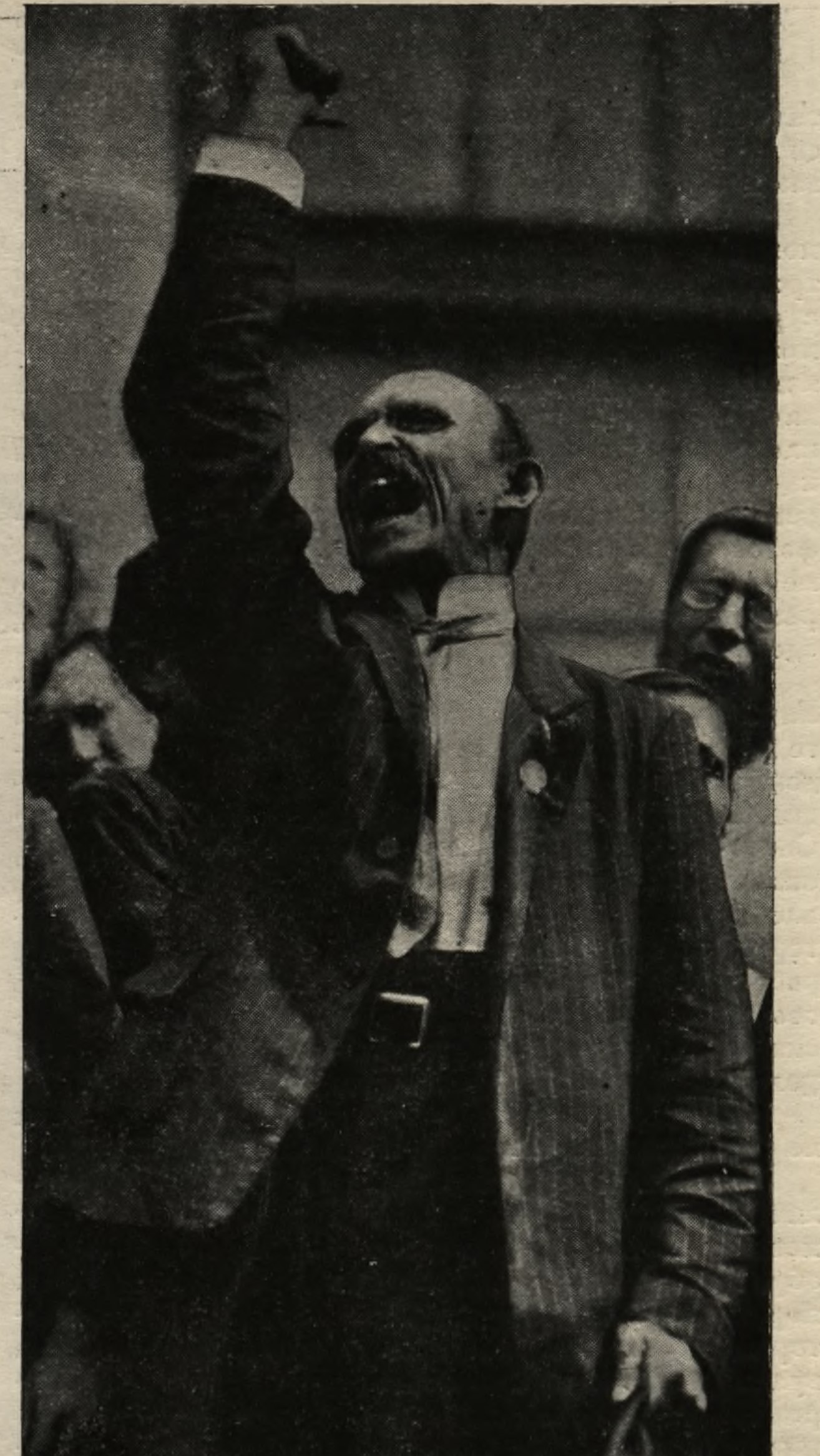
Let us take the shooting of a speaking orator at the tribune. Such shots usually have to be made in a closed room, under jupiter-lamps or by a magnesium flash. 1/25–1/30 of a second are the maximum speeds that can be used with this lighting. Here is where the photographer will need a psychological approach to the shot, and the ability to catch such a moment that, despite the strong movement of the speaking orator, his figure does not come out blurred.
The photo-reporter must follow the orator's speech, must catch his last, strong phrase at the moment when it reaches its “dead point.” For example, the orator, finishing speaking, pronounces: “Long live…” and in the same second lunges forward with his whole body and raises his hand with a strong tension of the face. At this moment it is necessary to release the shutter, if you want to get a good, lively shot.
It often happens that the orator speaks hotly all the time, gesticulates, moves with his whole body; such an orator is hard to catch even at a greater speed, if one clicks the shutter at random and does not follow, as I have said, his speech.
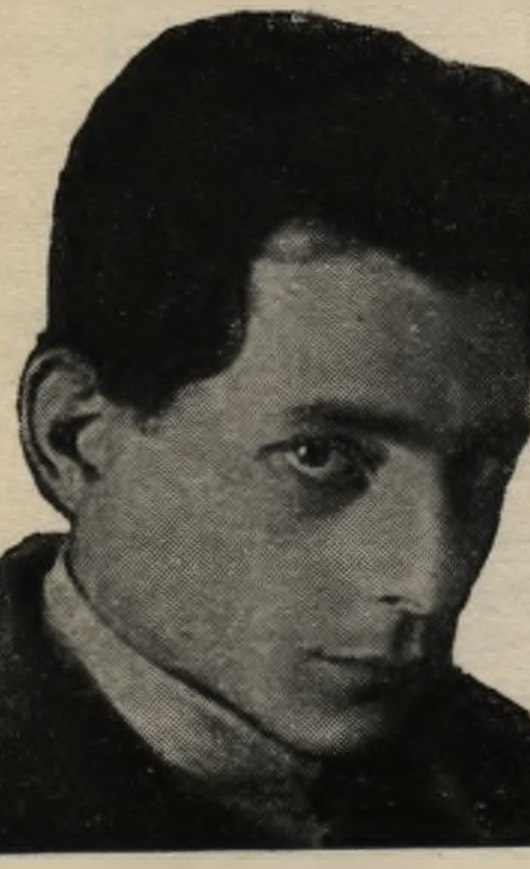
The photo-reporter has sometimes to resort, in his everyday work, to certain contrivances in order to get the needed shot. I will give such a case. I was once charged to shoot “a certain subject” so that he should not even suspect that he was being shot for the newspaper. He worked at some exhibition. I went to the administration, got permission to shoot the exhibits for the newspaper, and, having found the department in which the “subject” worked, asked him to point out to me the most interesting exhibits of the department for shooting and placing in the journal. Shooting the things shown with an empty camera, I then draw attention to some exhibit and ask the person to support it, and then shoot him together with the exhibit. The portrait was placed in the newspaper.
A similar device can also be used by the worker-correspondent — shooting, for example, for the wall-newspaper, a foreman who treats the workers rudely, together with some factory machine during the work.
— M. Alpert