
I was somehow, by chance, looking through the address cards of the subscribers of Sovetskoe Foto: there struck the eye a multitude of subscribers from among the professional photographers — our metropolitan ones, and especially the provincial.
This is understandable. For ten years already, if not more, nothing has been printed with us on photography. Foreign editions almost do not reach us, the mass readers. The necessity of a photo-journal is completely obvious; a large circle of readers awaits it. Sovetskoe Foto unites the mass-amateur and the professional — on its pages we must come to an agreement on a whole series of questions occupying us in the field of photography. Just now I very much want to talk with a comrade by profession — the professional photographer.
Who is he, what does he do, and how does he work? Often he calls himself loudly. In what little town, in what backwater, will you not find an “Artistic Photography Rembrandt”? This is obligatory. Further will go: “Mars,” “Jupiter,” “Record,” “Talbot,” “Daguerre,” and, for some reason, in the south — “Vereshchagin,” “Renaissance,” “Gioconda,” “Rococo,” “Lumière,” “Decadence” and “The Russian Light-Writing of Abram Weinstein.” Most often behind such loud names hides a modest toiler, a good, harmless fellow, by our times a “lone handicraftsman” (tempting the finance-inspector with great names and shadows): he is both “Rembrandt,” and… a paster, and a copyist, and a retoucher — everything you like!
And how does he shoot, how pose, how retouch? Has he moved forward? Not a step! Not from the spot! As it was 20–30 years ago, so it has remained to this day. No exception in this backwardness are the photographers of the Rabis trade-union in the localities, or the collectives at the labour exchanges. I speak chiefly of provincial photographers; however, I do not for a minute close my eyes to the fact that our metropolitan photographers too, in the mass, have not gone so very far. True, good worker-artists are met in the province too, but they, apparently, do not struggle with photographic stiffness, archaism, routine.
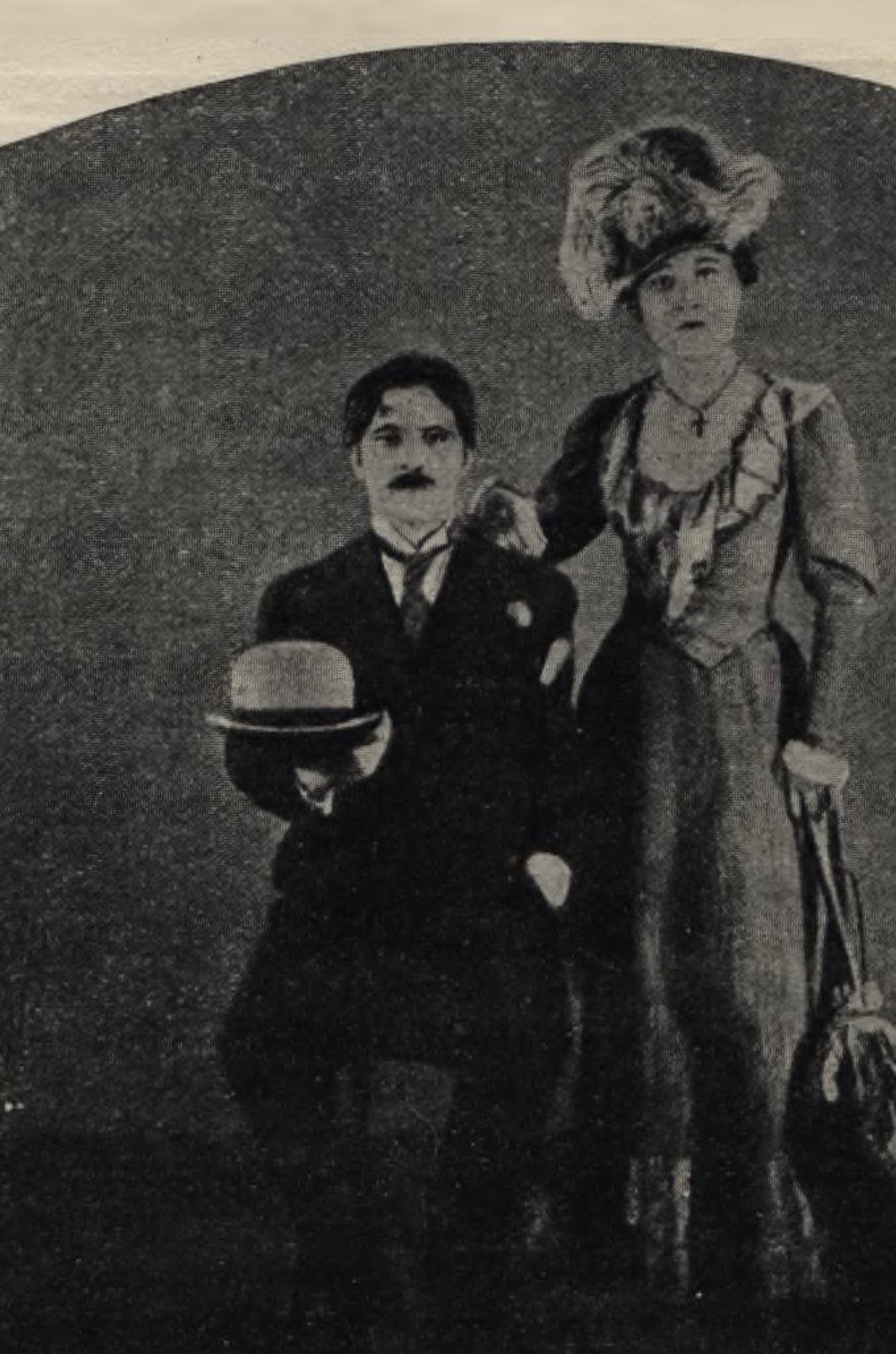
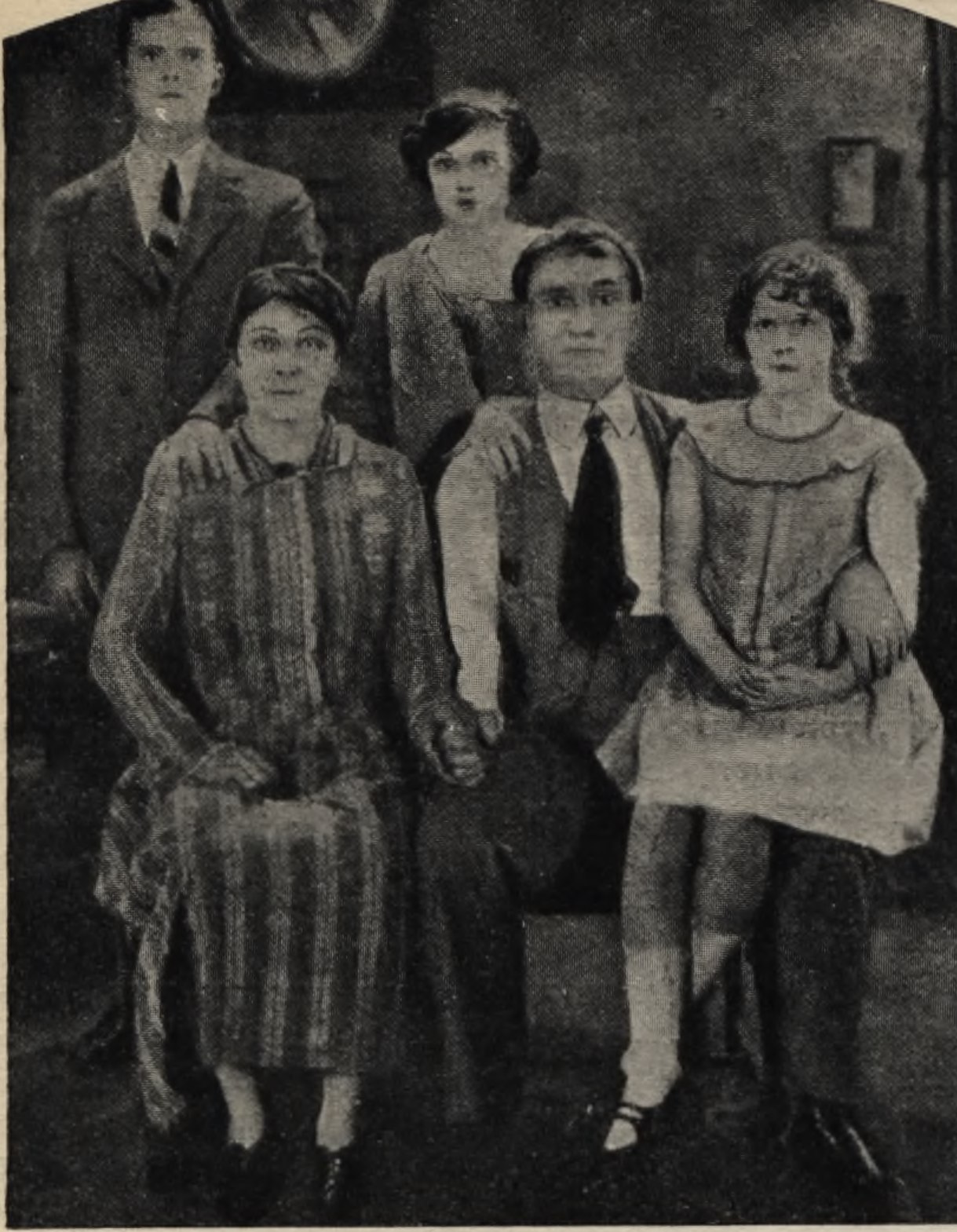
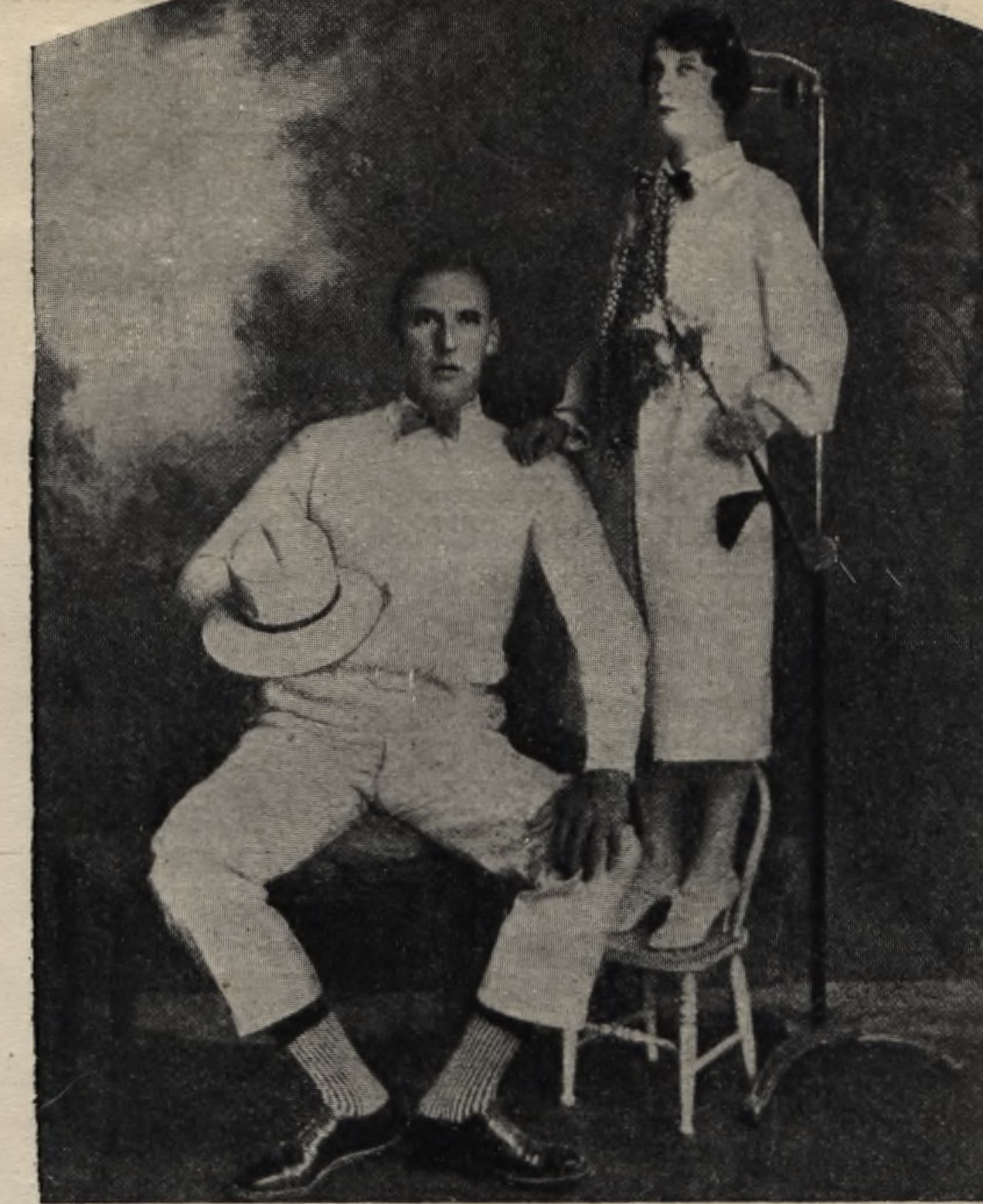
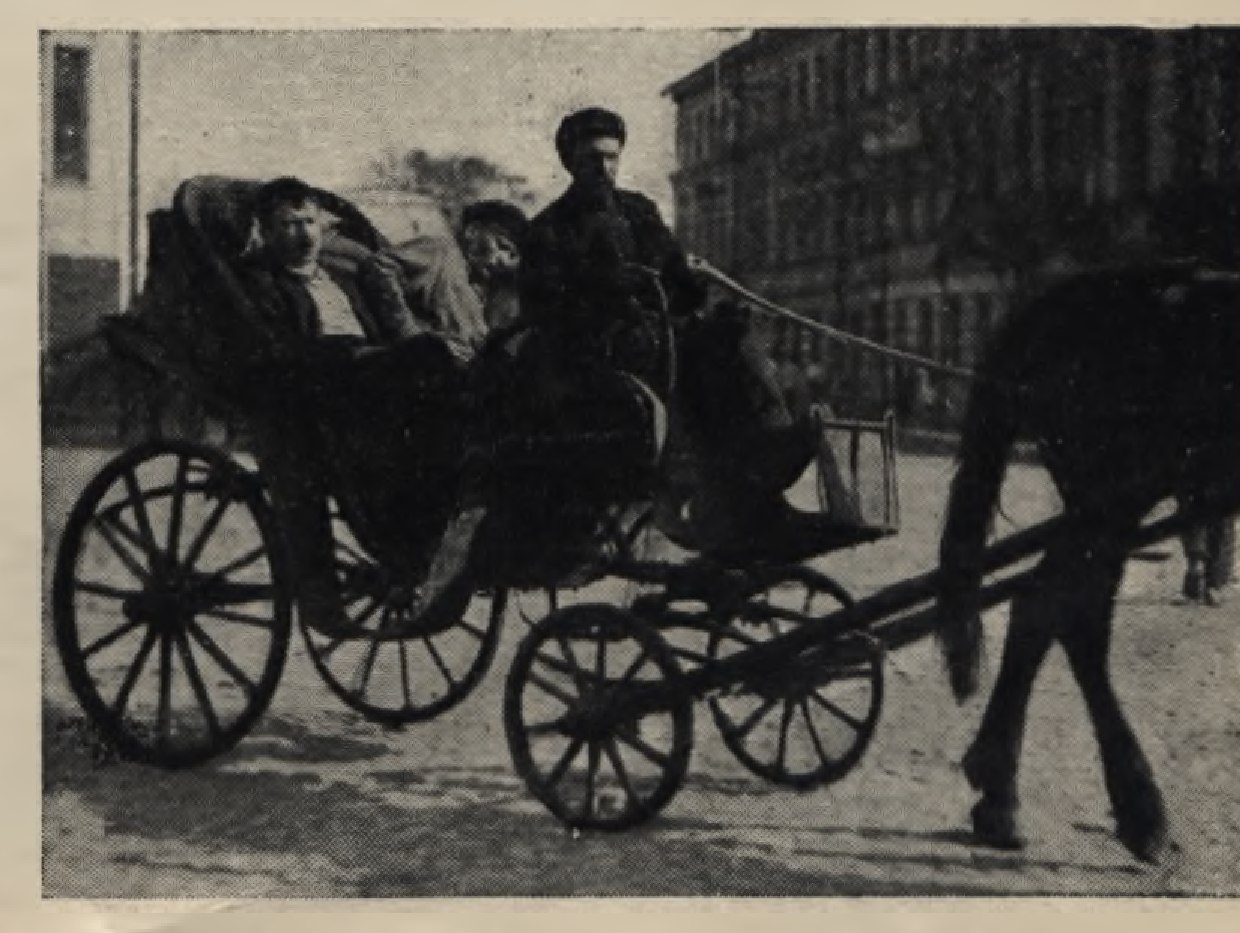
The most vulnerable place is the backgrounds, the decorations, the accessories. From these sores Moscow and Leningrad have long freed themselves. Look at a photographer's showcase in the province: there still, invariably, is garden furniture on a salon background, screens, birch barriers, little columns, cliffs, theatre boxes, boats and automobiles (papier-mâché) — and all this nonsense on the most fanciful, in their discrepancy, backgrounds, with city views, with a moon from Hamburg. And the kopfhalters (head-holders), and the frozen stony faces and poses with hands hanging like a whip, and the negatives licked to ugliness and the positive retouch? If the given photographer serves the Gubispolkom or the Gubkom, then on his showcase there are groups without end — groups that say nothing to the mind. Tasteless, gaudy vignettes.
The second showcase — women bared to the breast. Not at all moralizing, one wants to wish the comrade-photographers to renounce the shooting of the so-called “décolleté.” For, it must be said straight out, least of all in such cases is there “creativity of the artist,” and rather — impulses of another kind.
There is also the current, hackneyed “Smile!” Instead of a smile there often results a distortion, a grimace; for the given face a smile is not at all characteristic — the devil take it! Smile, if the photographer wants. With this survival, too, it is high time to have done.
I once asked, in a friendly conversation, a visiting photographer why he had named his photography “Rembrandt,” and who this Rembrandt is. He could answer nothing but babble: “An artist.” When this artist lived, what is characteristic of his works, the school, the direction — of this, not the slightest idea. The other day a completely unexpected question of a Moscow photographer pinched me still more: “And who is this — Edison?”
I speak of this not at all in order to “carry the rubbish out of the hut,” or to show off my “education.” I am myself a photographer, and least of all does it enter my calculations to abuse my own milieu; but to smear over, to pass over in silence the defects that strike the eye, is hardly expedient. The majority of provincial photographers looked past the revolutionary epoch and completely lagged behind the time. Of Moscow and Leningrad this cannot be said: here the roles were distributed in a correct ratio of forces.
The photo-reporter, the journalist-photographer, took upon himself the photo-history of the revolution and honourably copes with this great task. The metropolitan professionals, without a struggle, yielded him this work. One must impartially say that the professionals in their turn went all the time along the path of searches and undoubted achievements. A testimony to this — two large all-union photo-exhibitions with bright, full-blooded works (Moscow 1924 and Leningrad 1925). As a result, however, of the inertness and conservatism (may the comrades forgive me!) of the photographers in the localities, we have an irreplaceable loss of the pictures of the revolution, the civil war, famine, ruin and the restoration of the country throughout the Union. Only as a rare exception did the photographer-public-figure shoot something…
Now, it seems to me, before the photographer stands a direct task and a moral duty — to shoot the new life in the country. Show in your showcases the life in the country, the daily life of your cities, plants, factories and of the whole region. Go out of the pavilion even for half an hour a day, breathe the air of the new country, take with you an amateur-style apparatus — and your showcases will come alive, and you yourselves will take wing, will feel the joy of labour useful to society. A light-minded attitude to one's profession does not pass without a trace. The struggle for bread, for existence, pushes many with the apparatus out onto the street (the instant-photographers). To increase these frames is hardly reasonable, but to remain on the old positions means inevitably to be thrown overboard.
Your client — the “public” — has changed very much. In the country enormous work goes on, the cultural level of the masses rises all the time. Red Army men, workers, employees, vuz-students — by thousands, by tens of thousands, by excursions — come to Moscow, to Leningrad, get acquainted with the museums, with the palaces of the arts, with clubs and theatres; in the localities great lecture work is conducted. Talk heart-to-heart with such a seemingly simpleton, and he, no offence be said, will give many a hundred points ahead in tastes and views on art in general; and in particular, on photographic art too he will soon present his demands. It would be well for the brother-photographer to keep pace with the time and go in step with all. And whoever lags behind — woe to him! “Whatever you call yourself, but give real work” — the new “public” will tell you. And then even “Rembrandt” will not help.
— L. Leonidov