
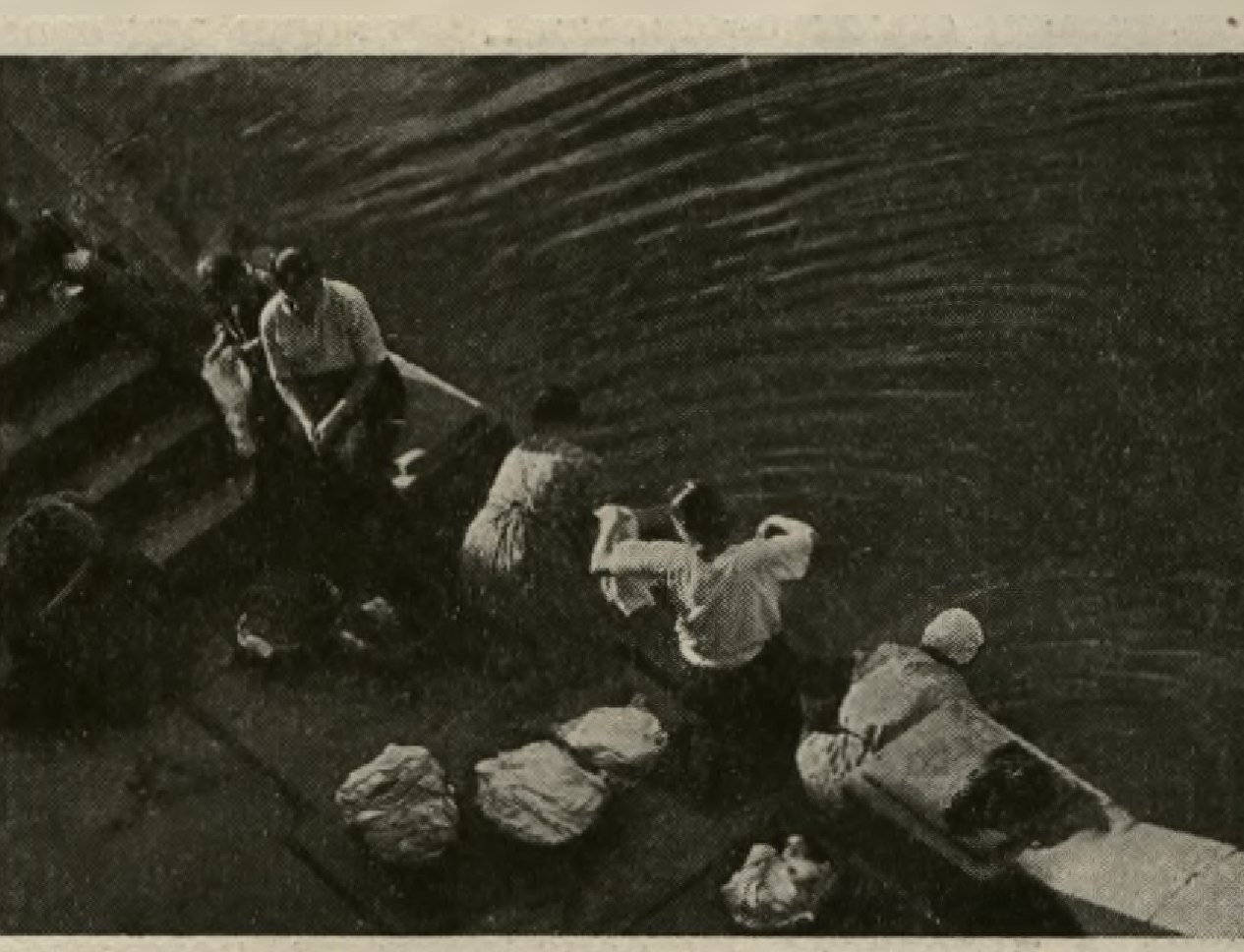
Reasoning about mastery in the photo-art, we proceed exclusively from illustrative reportage photography, which gives birth to the contemporary newspaper and journal illustration. Very possibly, the master who has as his aim the creation of unique photo-pictures, intended for mounting and hanging on the wall, prefers special paths to the creation of his works. But the title of master in art in general is received by the one who masters all the methods of constructing his works for the aim of achieving a definite influence on the reader, viewer or listener.
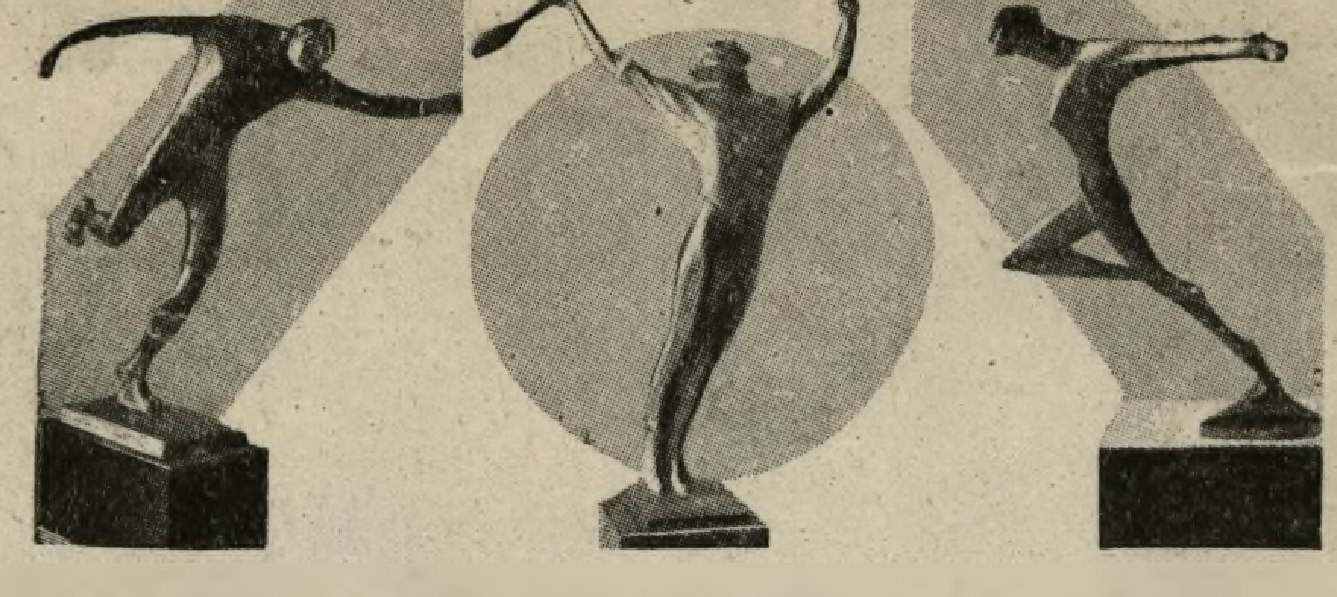
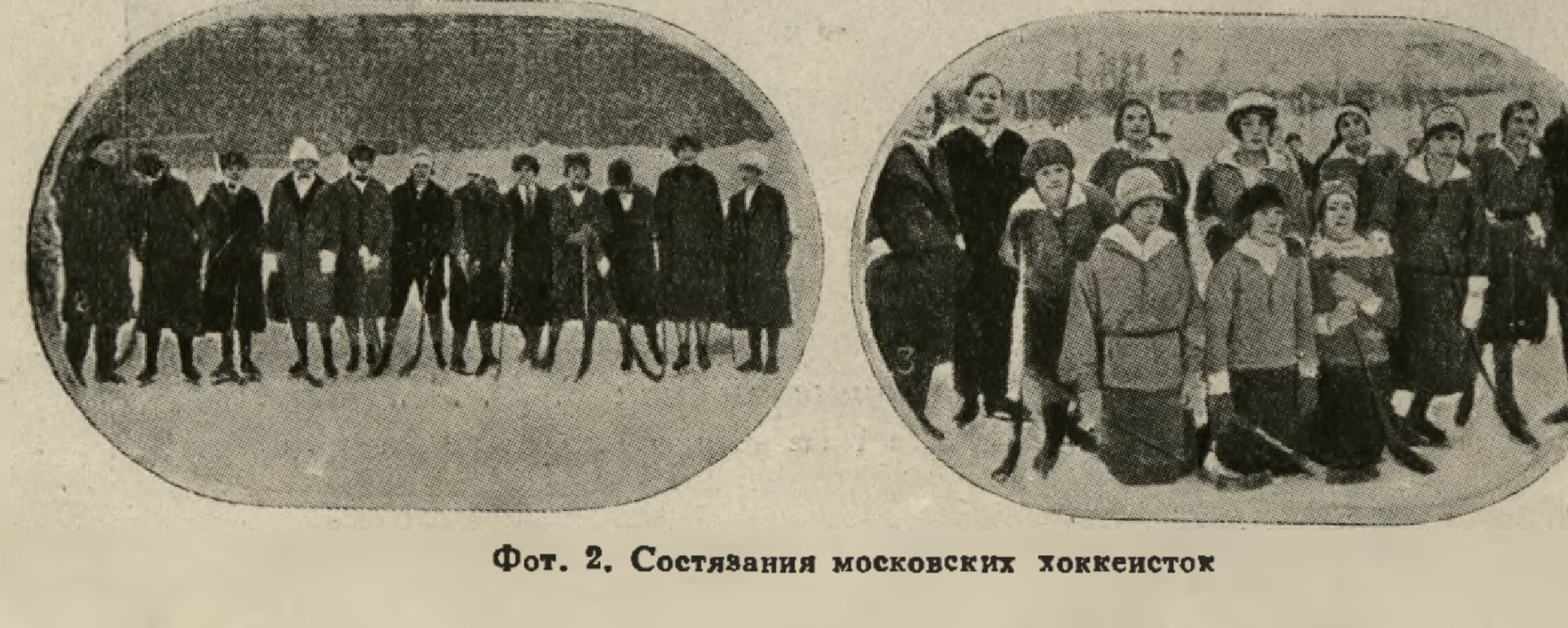
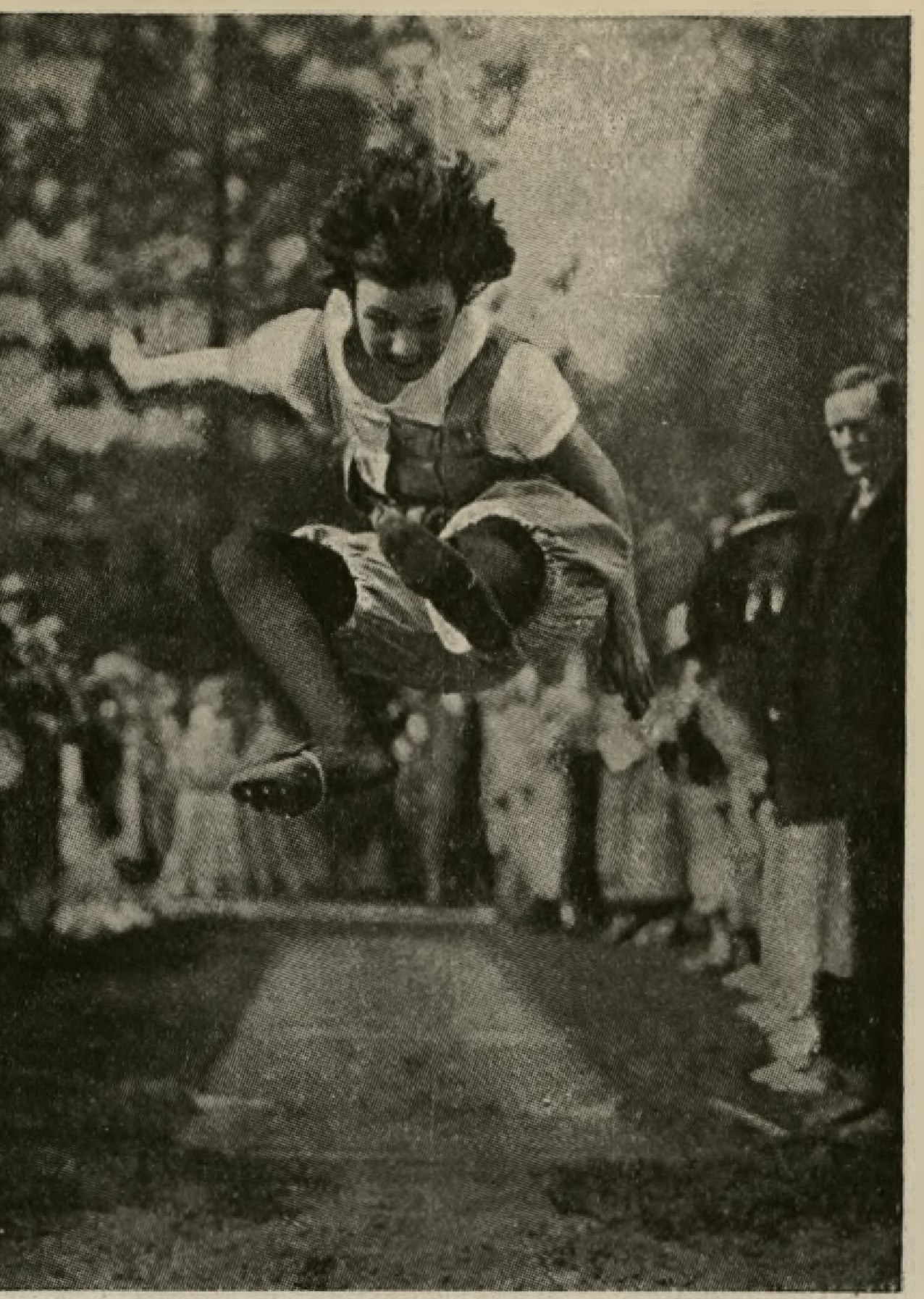
Photo 1 shows how the master-sculptor, in his studio, answered the theme “Sport” with his work from dead clay. Photo 2 is the answer to the same theme, given by a photographer in the lap of nature, with living people, and placed in its time in the journal Krasnaya Niva.
In the field of the art of photography there is a method of fixing the briefest phenomena of life, which allows, in the further stage, a wide distribution of the work. “The frame” is a concept brought in from cinematography; there it is the cut-out of one little shot from a many-metre ribbon. “The photo-frame” is a moment, cut out of life.
For the evaluation of such frames — “cut-outs from life,” intended for the viewing of them by the broadest masses (the print runs of some of our editions exceed 500,000 copies) — we do not approach from the point of view of high aesthetics in general, and of the relative concepts of the beautiful and the ugly. We set before ourselves a purposive aim. An illustration in a newspaper is fleeting, like a butterfly that lives one day; it is not hung on walls or glued into albums; today it is greedily looked at, and tomorrow it turns into wrapping paper. The purposive designation here is to give an easily read and firmly memorized frame. Memorability, bordering on obtrusiveness, has a decisive significance in our compositions. The attention of the viewer-reader must be torn away for a moment from the surrounding reality, and in that moment there must be put into his consciousness, for a long time, that which we want to say. And almost always it is still necessary to translate our idea into the language of the reader.
On one and the same theme, Rabochaya Gazeta will not place at its own what Krasnaya Niva gives; Ogonyok does not need the artistic refractions of Prozhektor; Krestyanskaya Gazeta too has its special requirements for the language of illustration. Our basic striving is a newspaper without text — an illustration speaking for itself. Besides these, purely external moments, there exist also other, deeper motives, which force one to strive to create the photo-frame dynamic.
In one of the numbers of Sovetskoe Foto the photo-reporter Savelyev says that the cinematograph has heightened the observational abilities of the masses, and the viewer has become more demanding in relation to illustration. It is true that living life, conveyed by cinema, has forced, to a considerable degree, the photographer who fixes the moments of life to go by new paths too. But the main thing, of course, is not that the photographer goes after the cinema-man, but that in general the representational arts, photo-cinema among them, seek new paths for their works. The matter is not in the demands of the viewer, but in those details of life which lay themselves down as a foundation in the subconscious of the creator, from which he draws the material of the work. Very many works of art saw the light earlier than the viewer's consciousness demanded them.
Social factors, as the art-scholar N. Tarabukin notes, require a change of styles. The way of seeing, and of expressing the seen, changes. The quickened tempo of life and the change of views on life radically alter the paths of the arts. To each epoch corresponds its own “reflex of perception of reality” (N. Tarabukin, The Art of the Day). The dynamics of our epoch require their reflection in art too, and especially in representational art; and still more they require it in the art of the day — photography. The contemporary photo-frame should be dynamic, like the time that gives it birth.
The dynamic frame requires special devices of mastery; and, perhaps, precisely now, as never before, it is necessary to take, as the base of the composition of photography, special devices proper to photography alone. Until now, the base of the composition of artistic photography has been taken to be the graphical perspective and the diagrammatic analysis of construction on the plane connected with it (see Yerzhemsky, Self-Teacher of Photography; Bobir, Artistic Photography; the articles of Syreyshchikov in Fotografichesky Listok, 1914; and now I. A. Bokhonov — G. T. K.). The problem of light and shadow in composition has until now not received sufficient illumination, and has not had such strict, almost mathematical laws as the diagrammatic analysis.
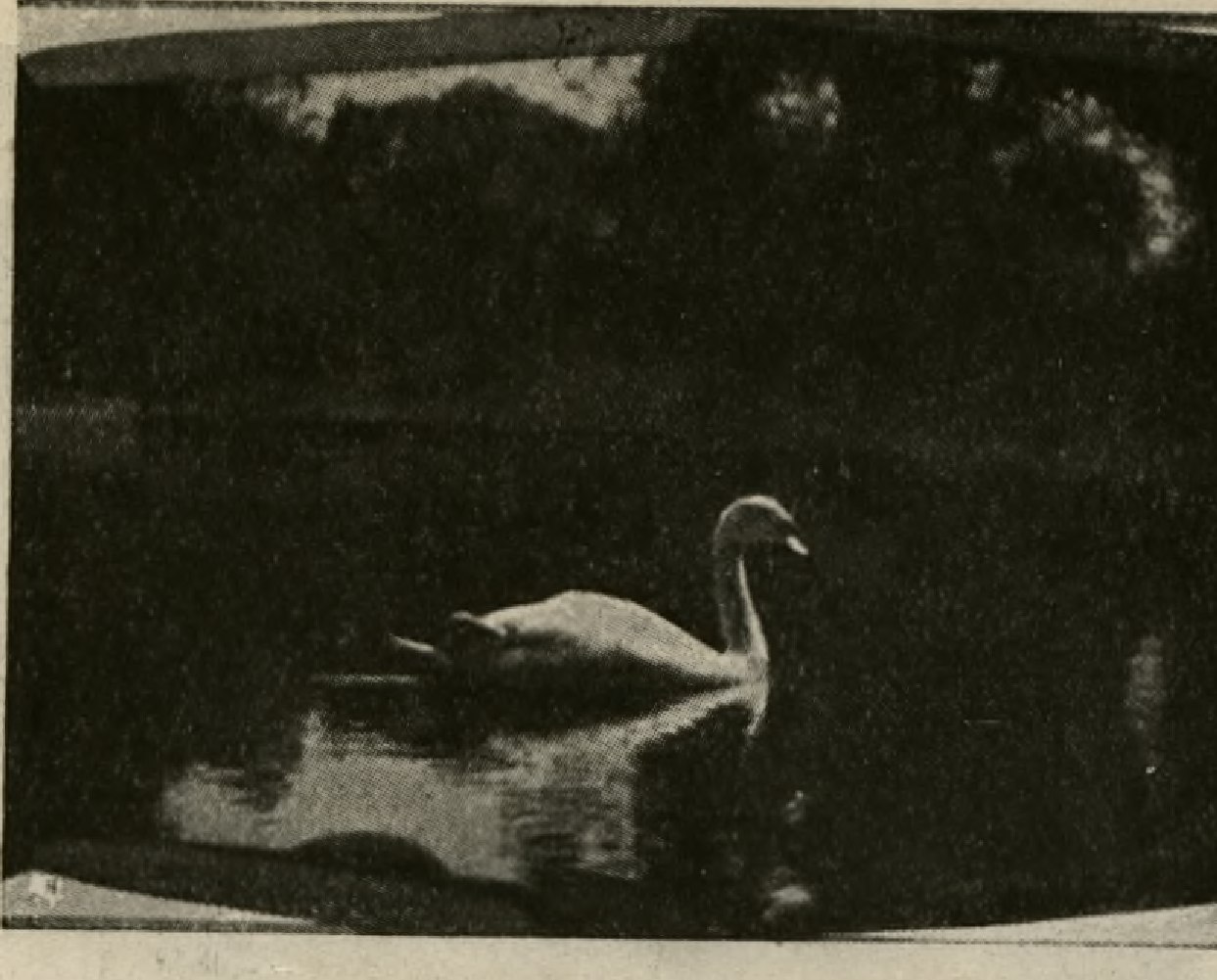
In No. 3 of Sovetskoe Foto we noted that the compositional moment, defined in our language by the term “construction of the frame,” is a transitional moment, connecting the conception with mastery. The forming compositional moment moves apart beyond the frames of the technique of the work. It is necessary, still within the limits of the working-out of the theme, to form the subject. The construction of the frame should begin not when we see the image on the ground glass, but much earlier. Thus, for example, in conveying a landscape monotonous by virtue of these or those causes, we can bring into the subject beforehand the wheel of an automobile, or give a view of the city from a height with the wing of an aeroplane. We are deprived of the possibility of forcing life to pose for us, and cannot always seek during the shot a point lower, a point higher; life is not a ballerina in a studio, and we are obliged to establish beforehand the future foreshortening (rakurs — point of view).
As the base of the rakurs — the point of view — the old theoreticians of artistic photography laid down the graphical perspective and the so-called “harmonic” schemes of construction (based on symmetry and on the so-called “counterweights”). These functions were transferred into photography entirely from graphics and painting; and in painting they were firmly held by talentless realists in justification of their mediocre works. True works of the art of painting were almost always built on the destruction of these “harmonies.”
Graphical perspective is a department of descriptive geometry. Its most exact laws are especially sharply needed in projection drawings, in architecture, in machine-building and so on. Three-dimensional space, laid into a two-dimensional drawing, requires some special methods of construction. Is graphical perspective needed in artistic graphics, in painting? The history of the arts shows us whole epochs (Egyptian art, Japan, icon-painting) that do not know graphical perspective at all. A survey of contemporary works of representational art shows either the same full absence of graphical perspective, or such a peculiar interpretation of it that from its laws exactly nothing remains.
The basic functions of photographic compositions are laid in the optics and in the light-colour-sensitivity of the plates. The artist paints a study and passes gradually from the main thing to the parts; often these “parts” he finishes writing later. This gradual transition is reflected on his work — whereas we glance with our lens one time, at a speed of 1/500 second, at a horse galloping 3–4 metres from us.
Of what, then, do the knots of composition consist, and how are they tied, after the working-out of the subject? Ginsburg, in his work Rhythm in Architecture, gives such a definition: “As long as we deal with a line, we deal with a projection of form; introducing light and shadow, we deal with spatial form.” Thus, the basic characteristic of spatial forms is light and shadow. The composition of spatial things and phenomena should begin precisely with light and shadow.
- The setting toward the light source, the filters, the developers and the positive processes give birth to light and shadow.
- The optics — short- or long-focus, corrected or uncorrected, diaphragmed or undiaphragmed — gives birth to the relation to space.
- The rakurs — the point of standing, the glance from where (here enter the plane, large or small, and the introductory moments) — gives birth to form.
Here are the elements of composition, from which should be born the placement of the subordinated parts and the singling-out of the main thing.
— P. Grokhovsky
(Continuation in the next number of the journal.)