
A. Yerokhin surveys the aids that free the amateur from guessing the exposure — the tables, the chemical meters, and the optical photometers.
In recent years, chiefly German firms have put out simple cheap devices to mechanize the operations hardest for the amateur, who works in such cases by instinct and often not even “by eye” but “on the off-chance.” Devices for measuring distance and for timing the print we covered in No. 2; this brief review is of those that time the exposure at shooting, where amateurs most often stumble and spoil plates for want of exact guidance. Correct exposure is the basic condition of a good negative. The old way — several shots at different exposures until one came right — suits neither every subject nor the regime of economy, dear plates now making it vital to get a normal negative at one try; so inventors turned to the problem. Exposure-determiners fall into three groups — tables, chemical meters, optical light-meters.
1. Exposure tables
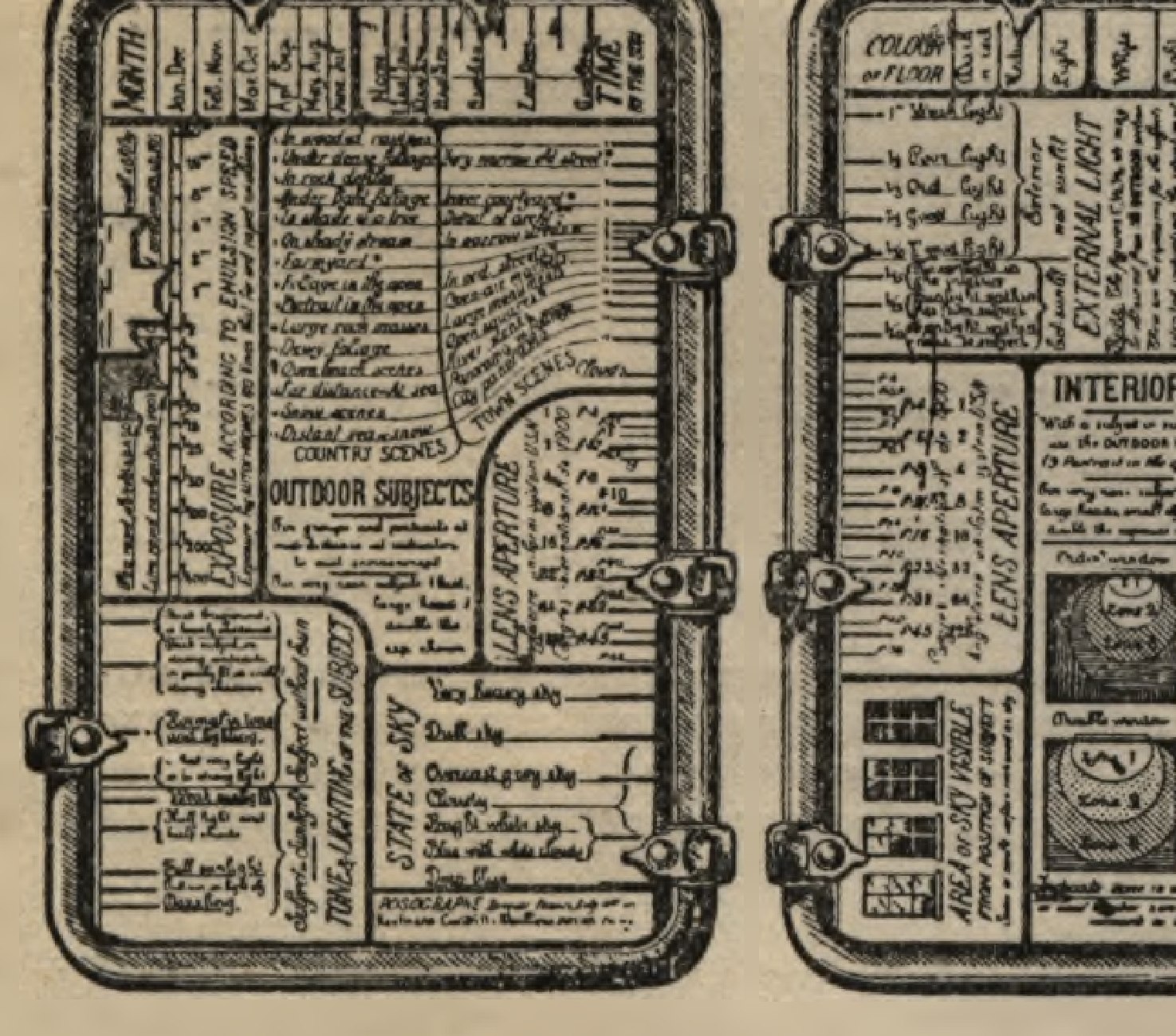
Tables reckon the factors bearing on exposure — the light on the plate, the lens’s speed, the plate’s sensitivity — the force of daylight itself depending on the sun’s height, cloudiness, hour, latitude, and the object’s character and colour; the more factors taken in, the more complex the table. Some need calculation — addition (Hyuard and Cousin, Stöbl, Alpina), even multiplication (Herz), a real drawback; simplified ones need none, the data merely found in the right column (David). Handier still are tables with movable scales (Agfa, Voigtländer), and handier again those replacing the scales with a rotating disc — among them the “Sovfotol,” put out this spring by Sovetskoe Foto, which gives the exposure by a turn of the disc, without any calculation, and will cost 75 kop. To the tables also belongs the recent French automatic determiner “Posograph” — two enamelled metal plates with six hinged arrow-levers round three sides, each running on a scale of one factor (subject and its lighting, month, hour, diaphragm); set the six arrows and the pointer shows the exposure. Its reverse carries a scale for indoor shots; it weighs about 100 g, folds like a notebook in a leather case, and costs about 5 rubles. Tables are very convenient, though one may err in deciding which category a subject belongs to — a fault the chemical photometers share.
2. Chemical photometers
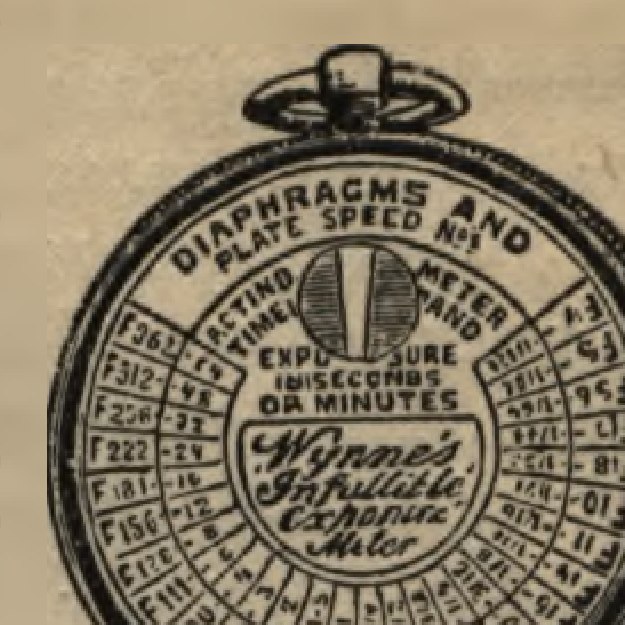
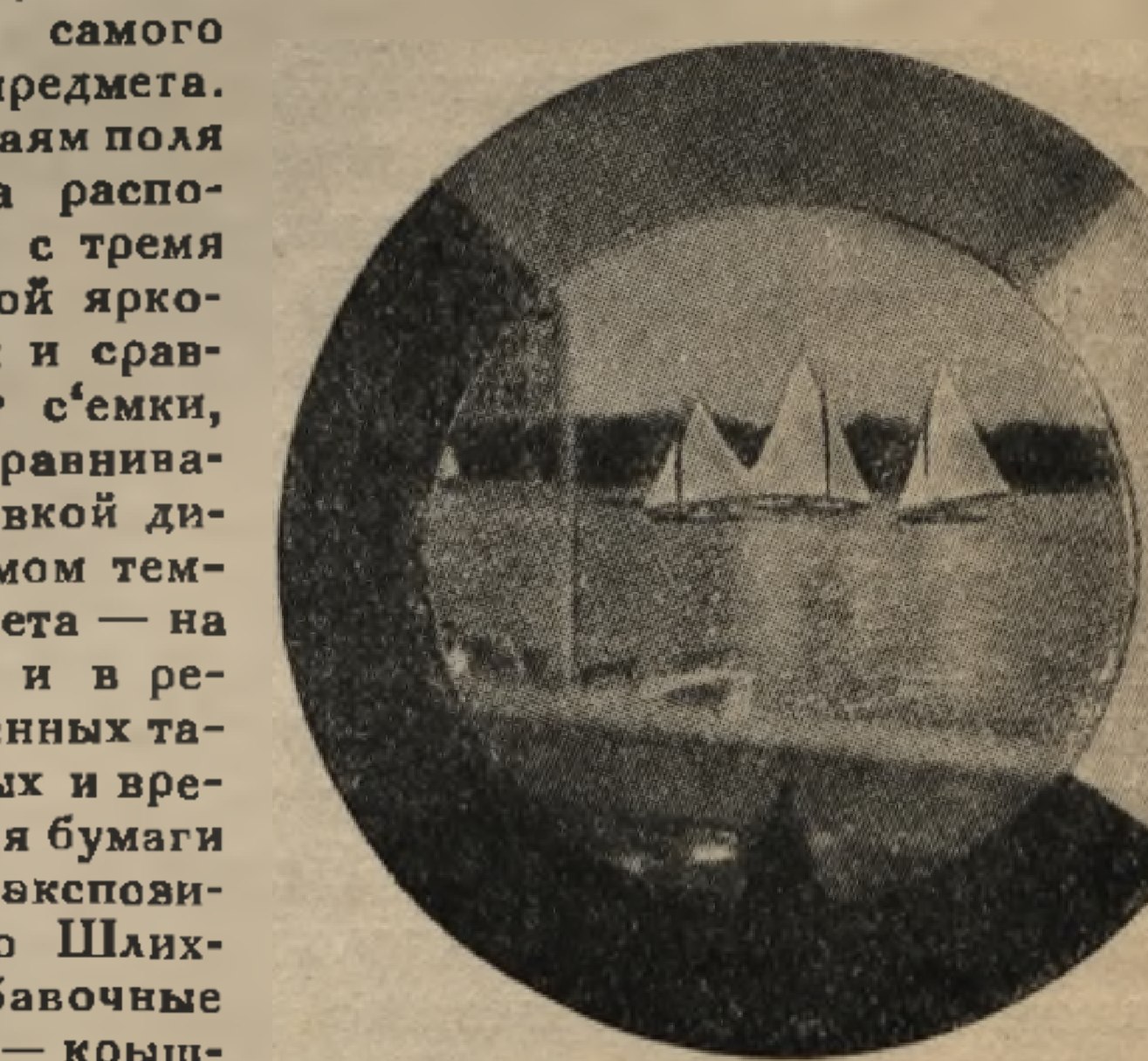
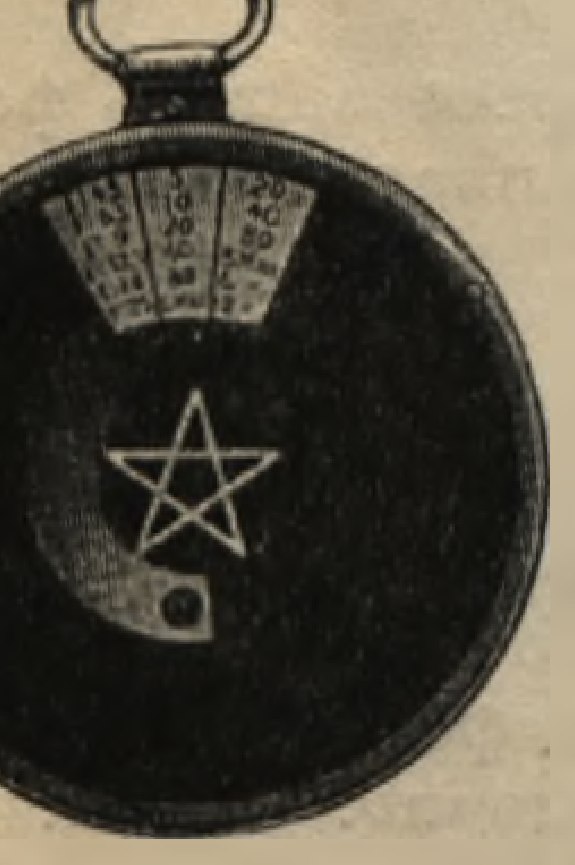
These measure the light not by the sun and sky but by the time a special sensitive paper takes to darken to a set colour, the rest reckoned graphically on a ruled circle. The known English “Wynne’s Actinometer,” watch-shaped, is charged with the paper and exposed, the darkening timed by the watch, and the exposure read from the dial combined with the other data. The recent German “Dr. Schlichter’s Photometer” also times the paper’s darkening, but measures the brightness of the subject itself: a ring with three fields of differing brightness lets one match shadows (by shifting the diaphragm on the darkest field) and lights (on the lightest), and from these and the darkening time the exposure follows; it has extras — a milk-glass cover for interiors, a light regulator for mountain and sea — but its three separate measurements and the setting of the ring make it the most complex of all, the largest, and dearest at about 20 rubles. Chemical meters are more reliable than tables, especially indoors where the eye, quickly adapting, is a poor judge. Their defects: they measure not the light reflected from the subject but the light spreading around the apparatus — not the same thing, above all for dark objects and against the light; and the actinometric paper is not of constant quality, often missing the right shade — darkening too fast in bright light, too slow in weak, differing fresh or stale, not all grades usable, and in our conditions impossible to get at all, so chemical photometers are doomed to idleness in the USSR. Home-made actinometric paper exists, but is extremely unreliable.
3. Optical photometers
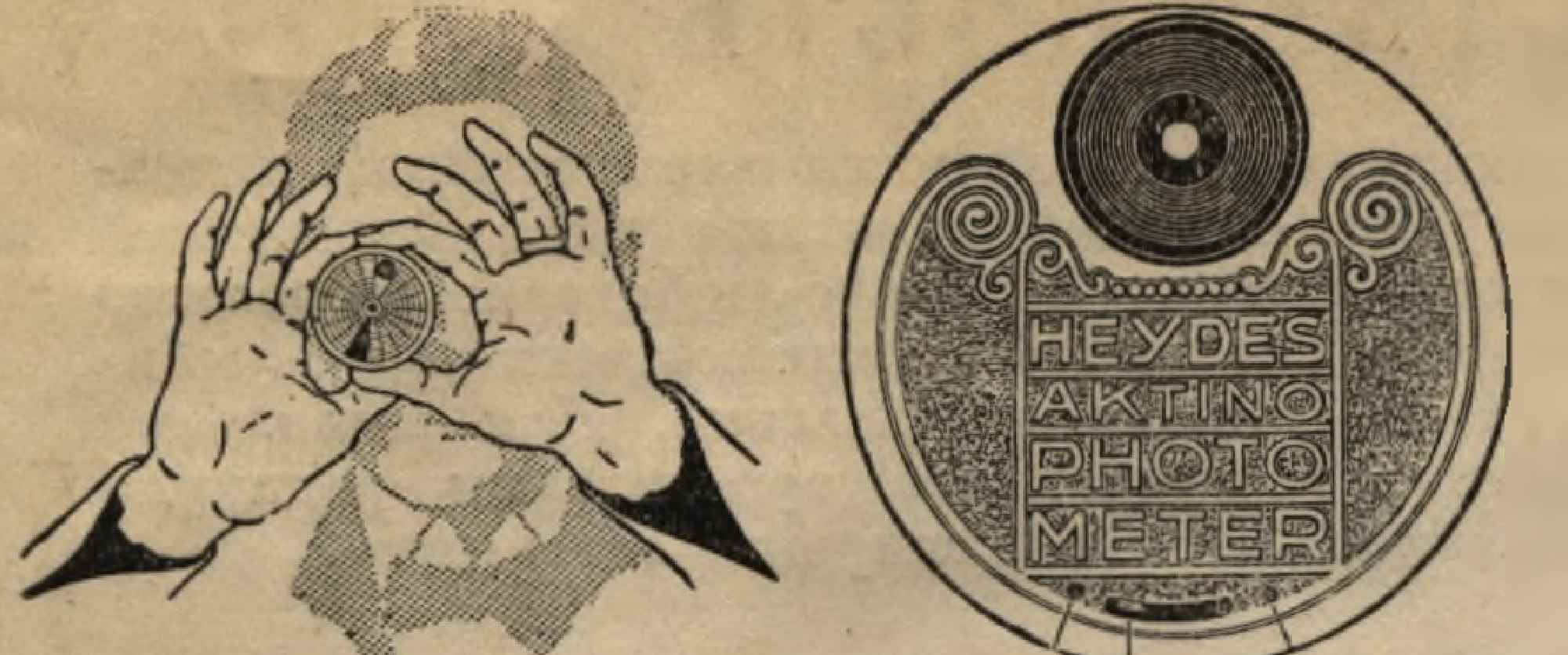
These measure the illumination of the subject itself, viewed through blue glass darkening gradually toward one edge — a disc or a wedge-prism of cobalt glass passing only the actinic light-blue, blue and violet rays. Everything shows better through the light part of the glass and not at all through the dark; one views the subject from the light-blue end and turns the glass until the shadow-detail vanishes and only the outlines of bright whites remain, then reads the exposure against the arrow, adjusting for sensitivity and diaphragm. Such is “Heyde’s actino-photometer,” ranging from 1/300 second to 5 hours; Ica’s “Diaphot” uses light-blue glass on a grey disc instead of a wedge. These measure the real brightness and use no conventional scheme — but the measuring instrument is finally the eye, which dulls in bright light and sharpens in dark, so catching the moment of darkening is hard and often inexact, especially on detailed subjects, and needs experience the beginner lacks.
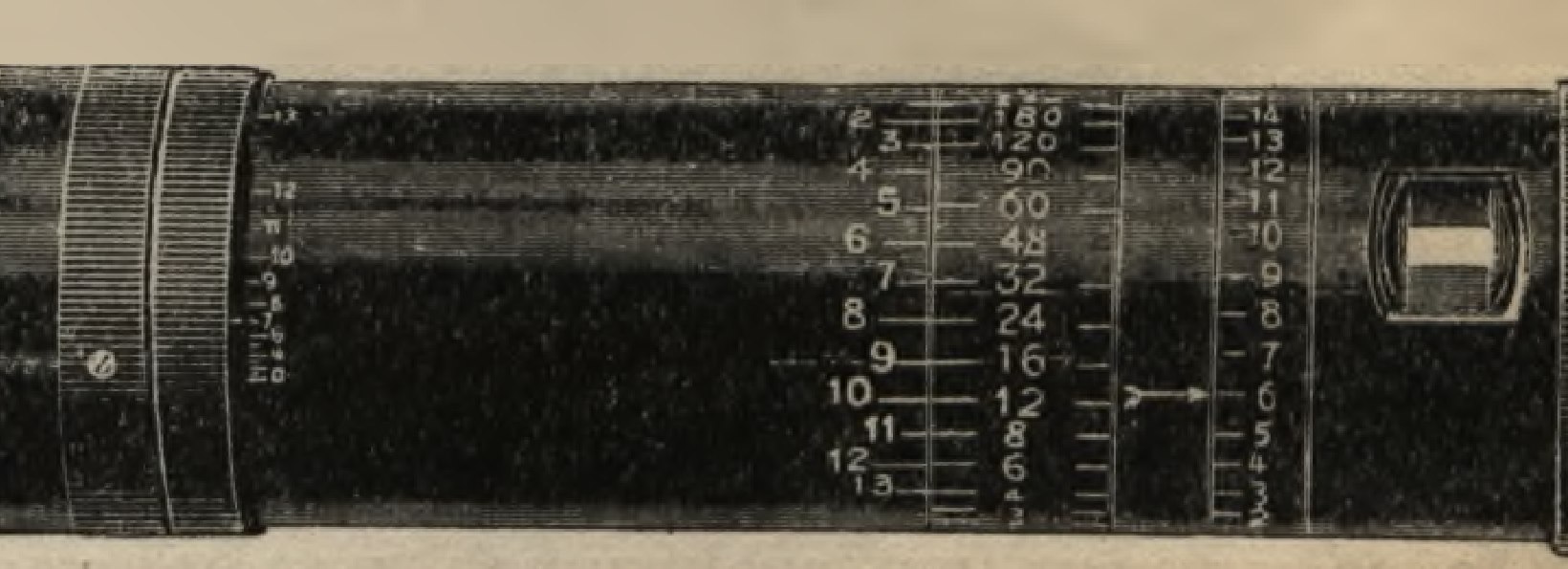
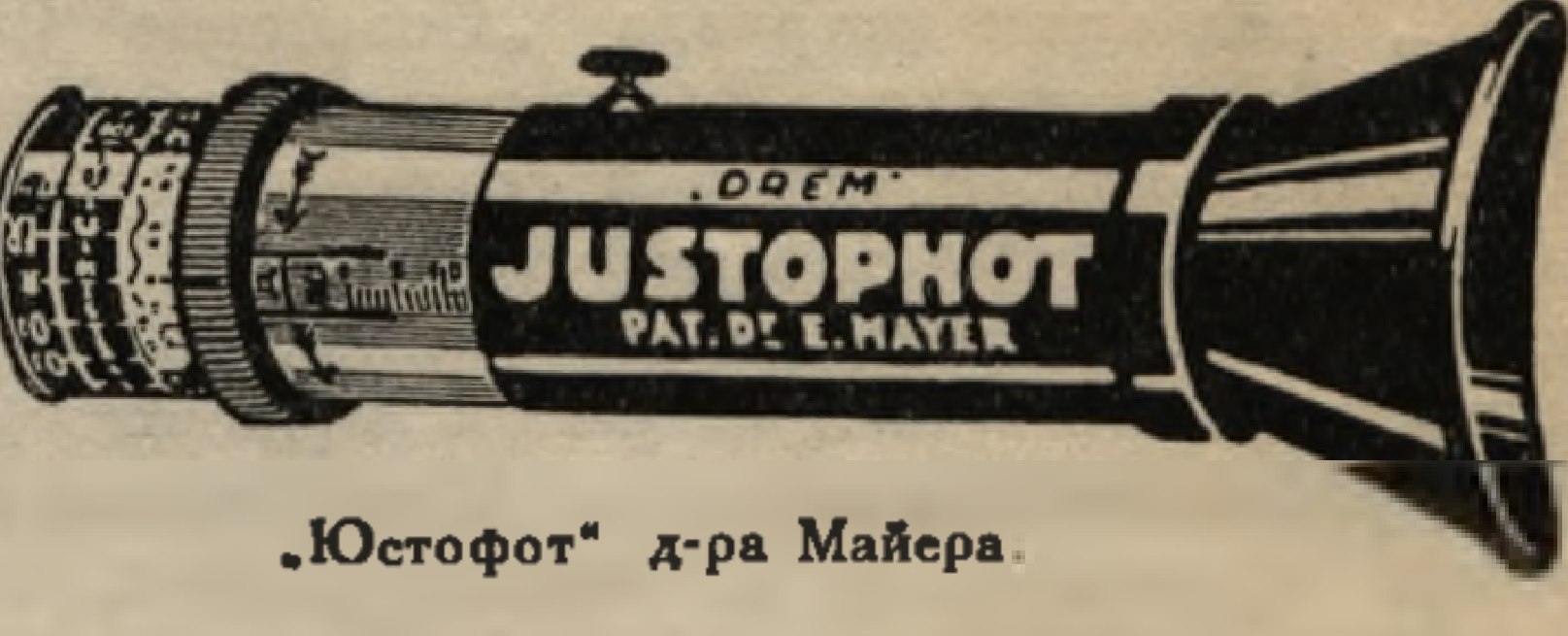
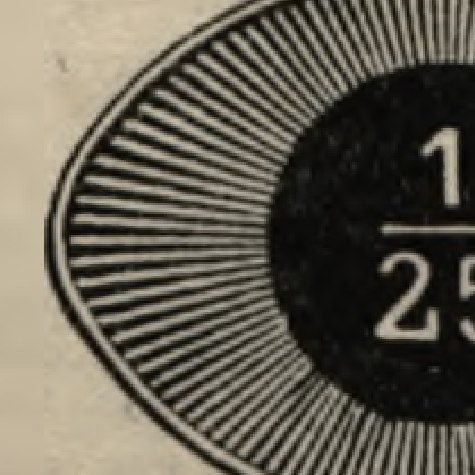
A real advance is to replace the ever-changing image with a fixed test object, as in the Austrian “Justophot”: its test marks are light strokes on a dark ground, and its inventor Dr. E. Mayer had the happy idea of making those strokes the exposure figure itself. One looks through the tube at the subject with the diaphragm closed and opens it by turning the ring until a distinct figure shows on the dark ground — that figure is the number of seconds of correct exposure, corrected for sensitivity and diaphragm by outside tables if need be. It needs no calculation or combination, suits any beginner, works in sun or in a dim room almost automatically, is unconditionally the simplest of its kind, and costs about 12 rubles. In the end every photometer has some fault, and for each a case can be found where its reading is wrong, since no simple device can foresee every condition of shooting. Yet — beyond saving beginners from failures, wasted plates and disappointment — such devices can serve the experienced photographer too.
— A. Yerokhin