

The size of the image and the focal length
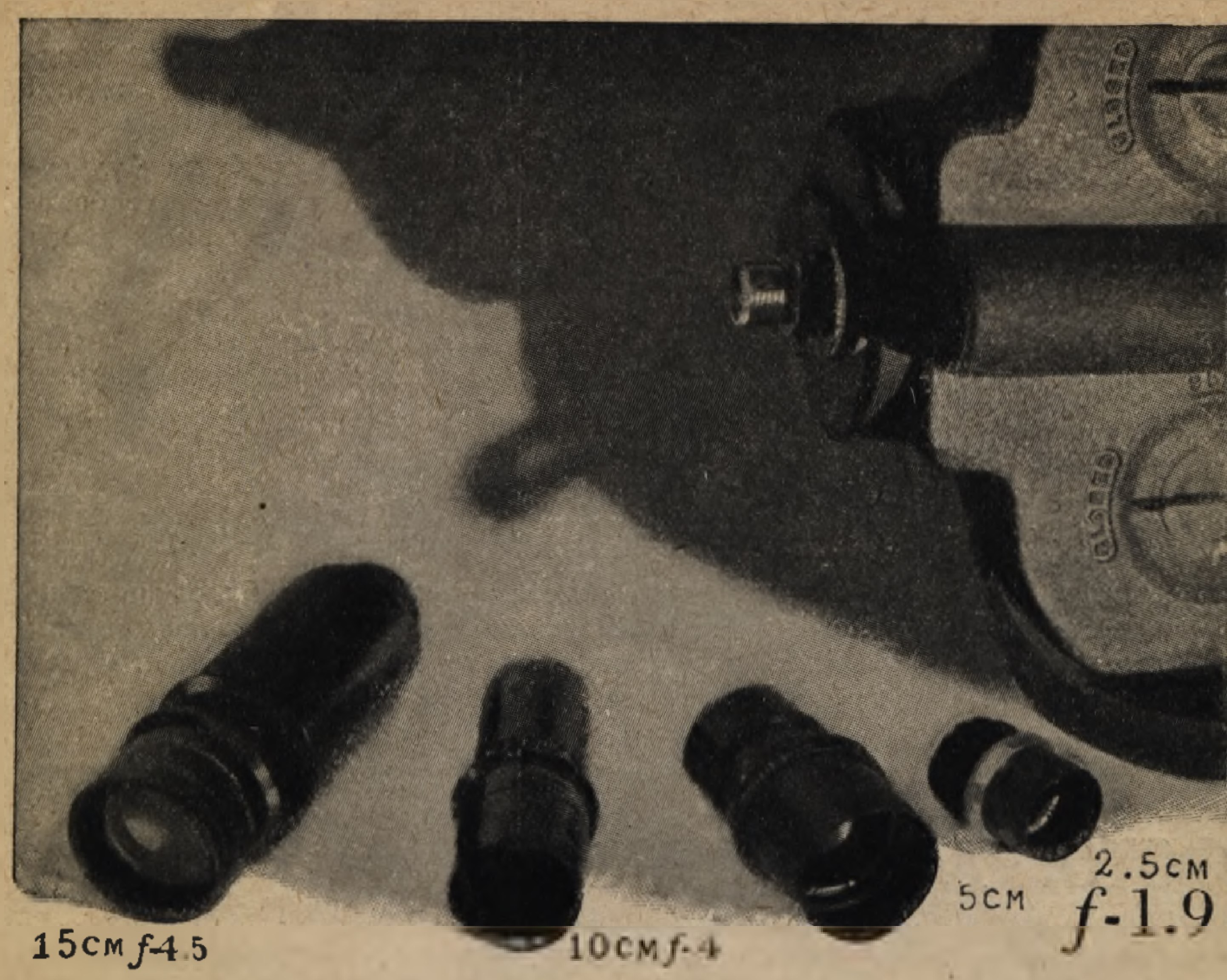
At an equal distance of the camera from the subject, the size of the image on the plate depends on the lens’s focal length — the longer the focus, the larger the object comes out. Our illustration shows four lenses of 2.5, 5, 10 and 15 cm focus, placed in turn on one camera, and four shots made on cine-film from one spot: one can trace how the scale grows with the focus — the clock barely seen in the 2.5 cm shot fills almost the whole frame at 15 cm. So photographers who want a really universal apparatus provide themselves with at least three lenses of different focal lengths.
Automatic shutter release
Abroad, simple self-release devices have appeared: the regulator is set to a chosen exposure (instantaneous, or a time exposure from 1/3 to 10 seconds), the spring wound, the camera’s metal release inserted into the little device, and at the right moment the shutter fires itself — so the photographer can seat and aim at a group, walk into the field of view, and be taken with the group himself.
A new German folding reflex
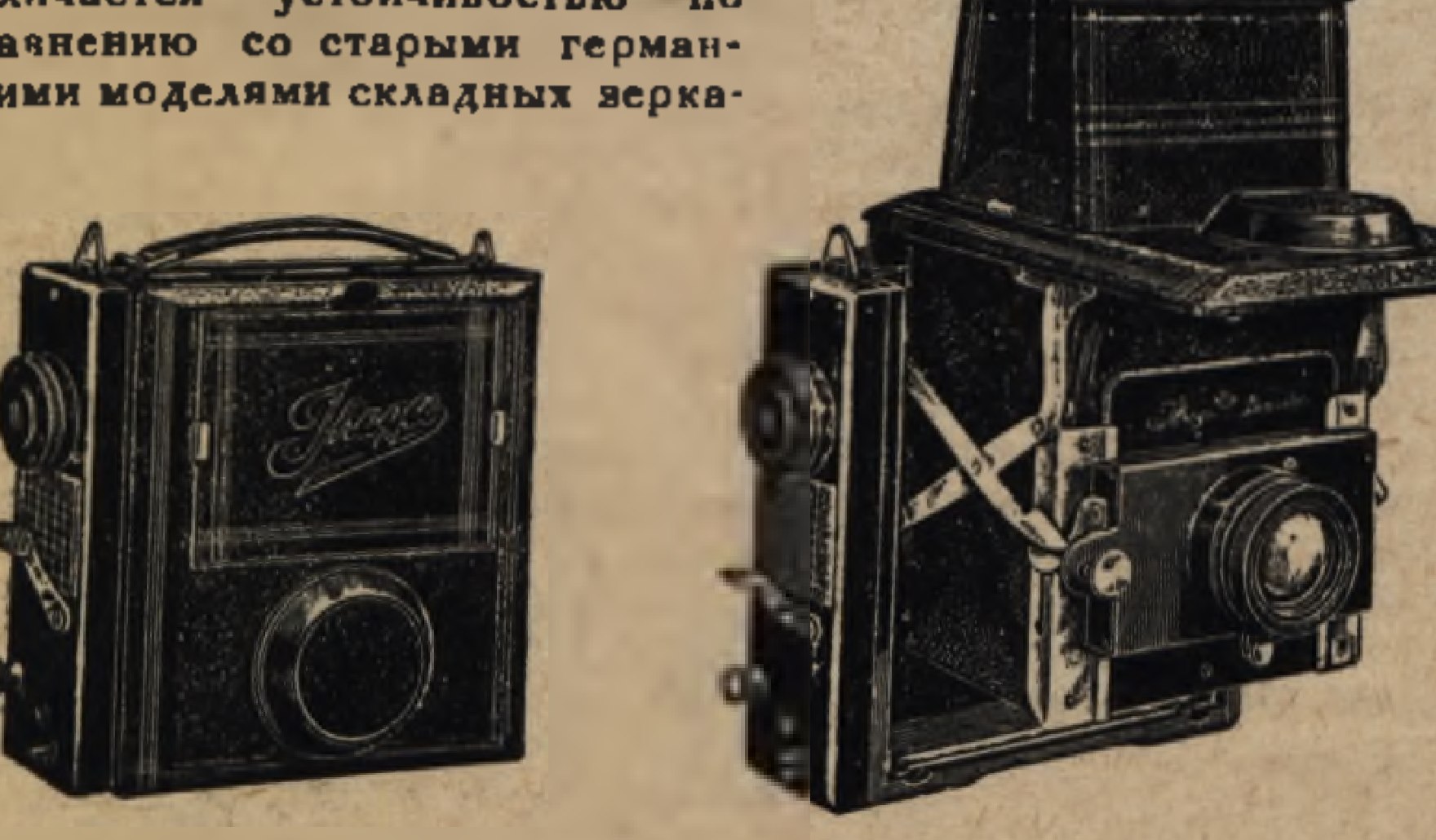
The firm Ihagee of Dresden has brought out a new folding reflex, the “Ihagee-Patent-Klappreflex” (shown in our drawings folded and ready). For the 6.5×9 cm size it weighs about 1 kilogram, is small in bulk (14×5×14 cm closed), is readied by a single movement, and is more stable than the old German folding reflexes; it costs 160 rub. with a Meyer Veraplan F/4.5 and 190 rub. with a Zeiss Tessar F/4.5, the focal length in both being 12 cm.
Films
Roll-films and filmpacks are now made by the well-known German photographic-paper factory “Mimosa” in Dresden.
Special paper for transfer bromoil
First put on the market by the German firm “Bük” in Berlin. Its layer does not stretch — important for repeated transfers — and the matrix is durable, standing 20 and more copies.
What may sometimes come in handy
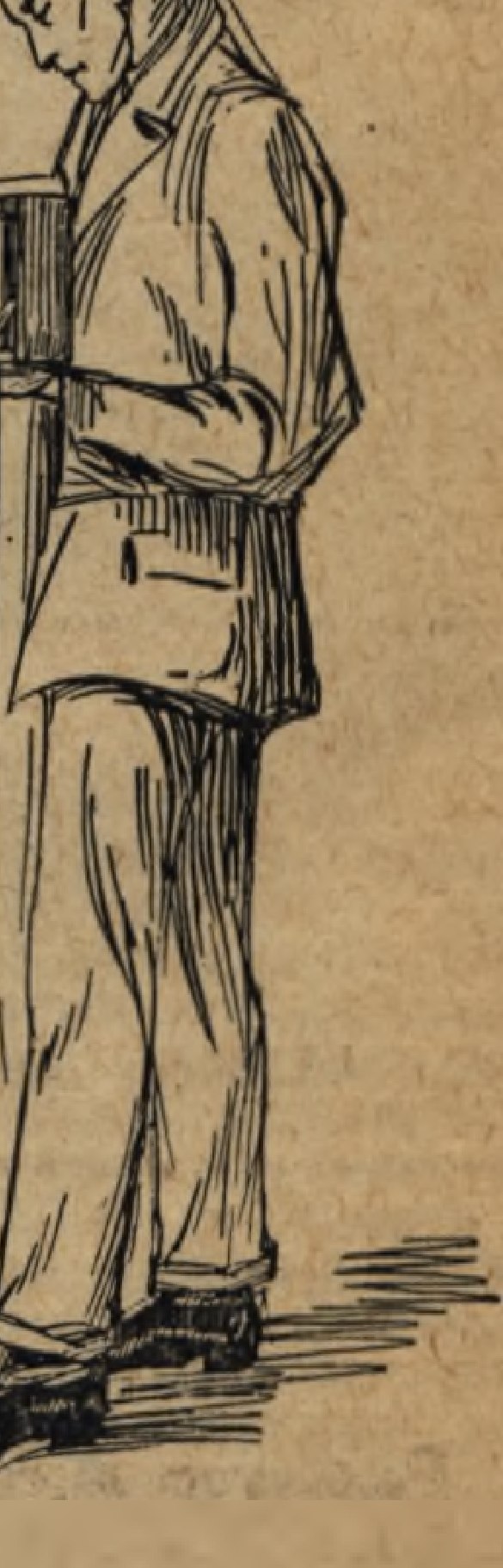
How to do without a tripod: it happens that you set out without one, dusk falls or the weather is dull, and an exposure of 1/5 or 1/3 second is needed, whereas hand-held one can shoot no slower than about 1/25 second without a shaken, blurred result. If a rope is at hand, the “rope tripod” helps: tie a rope of fit length into a loop, pass one end over the camera’s folding board, catch the other under the foot and pull it taut, pressing the camera to yourself at the same time — with such a “tripod” shots of 1/5 second come out excellently. Use it only when there is no real tripod and nowhere to set the camera; for exposures of a second or more it is, of course, unfit.