
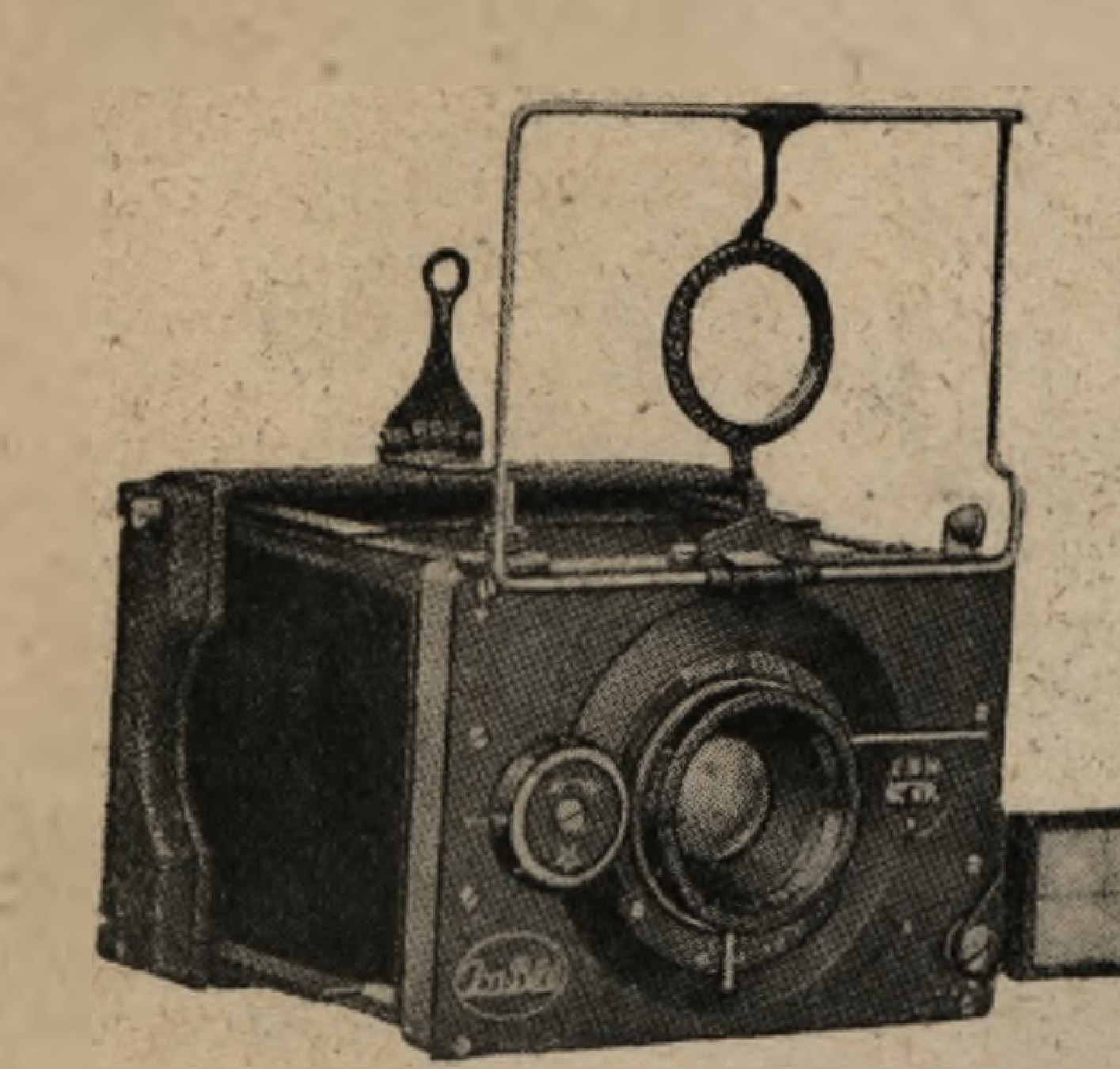
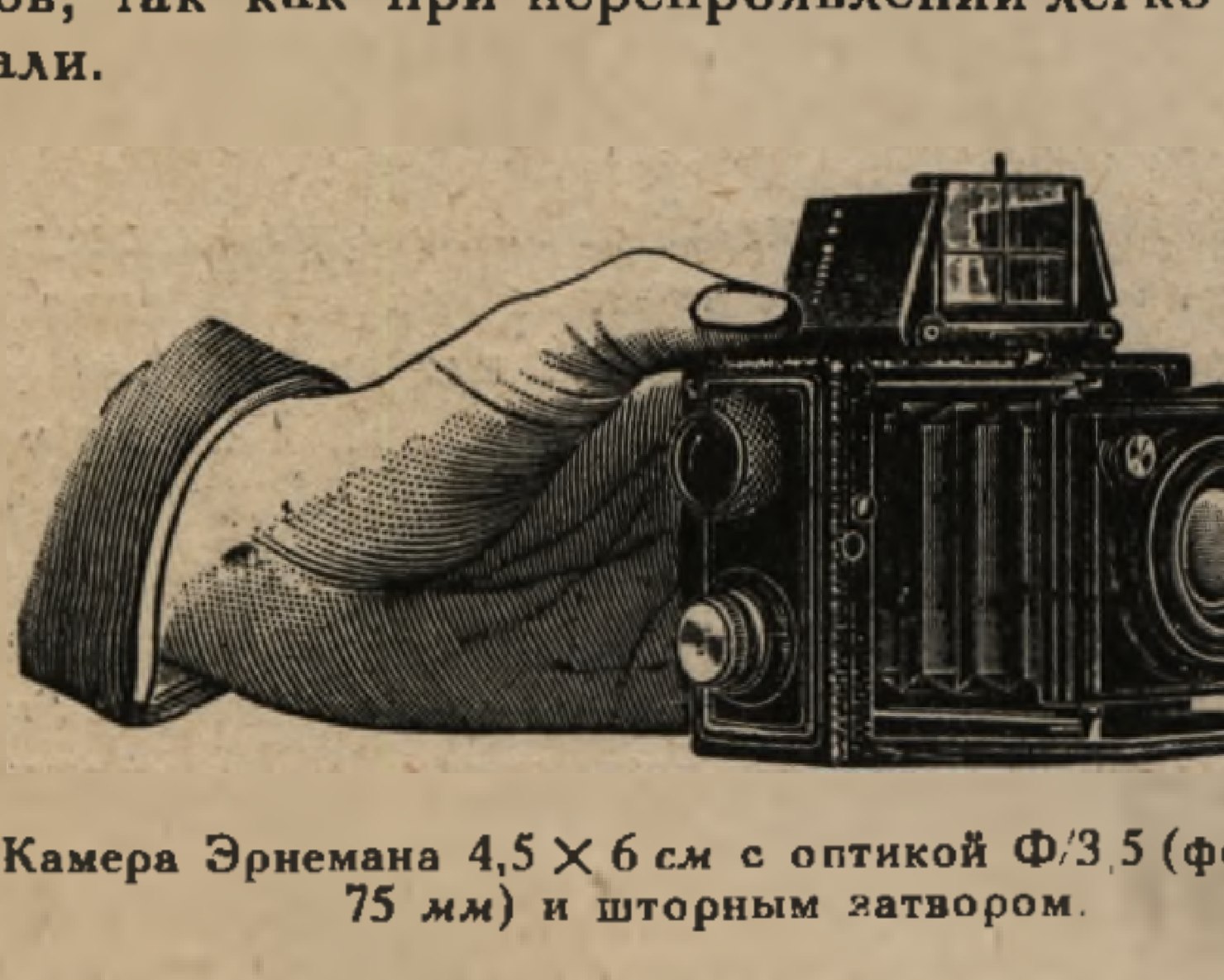
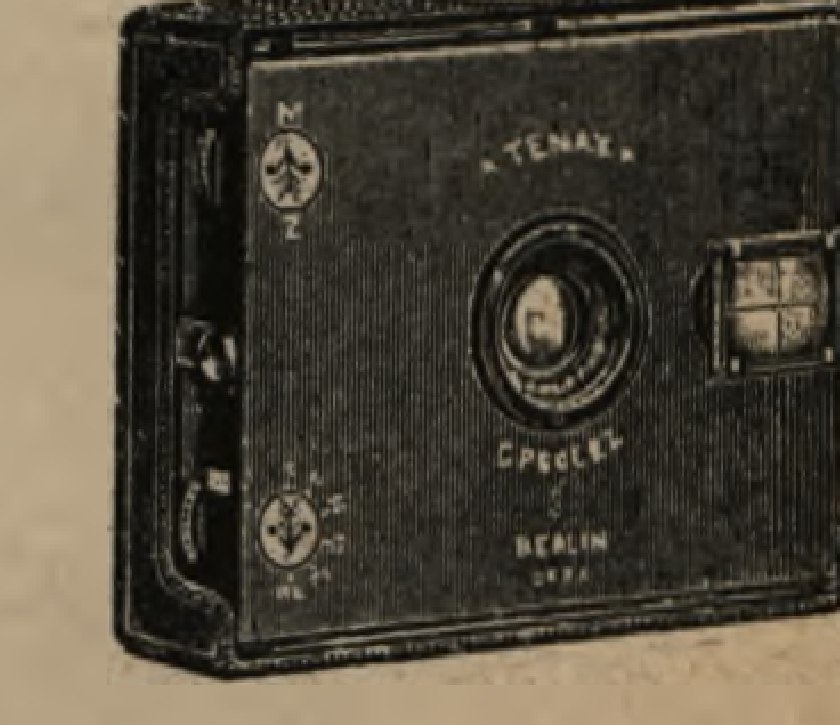
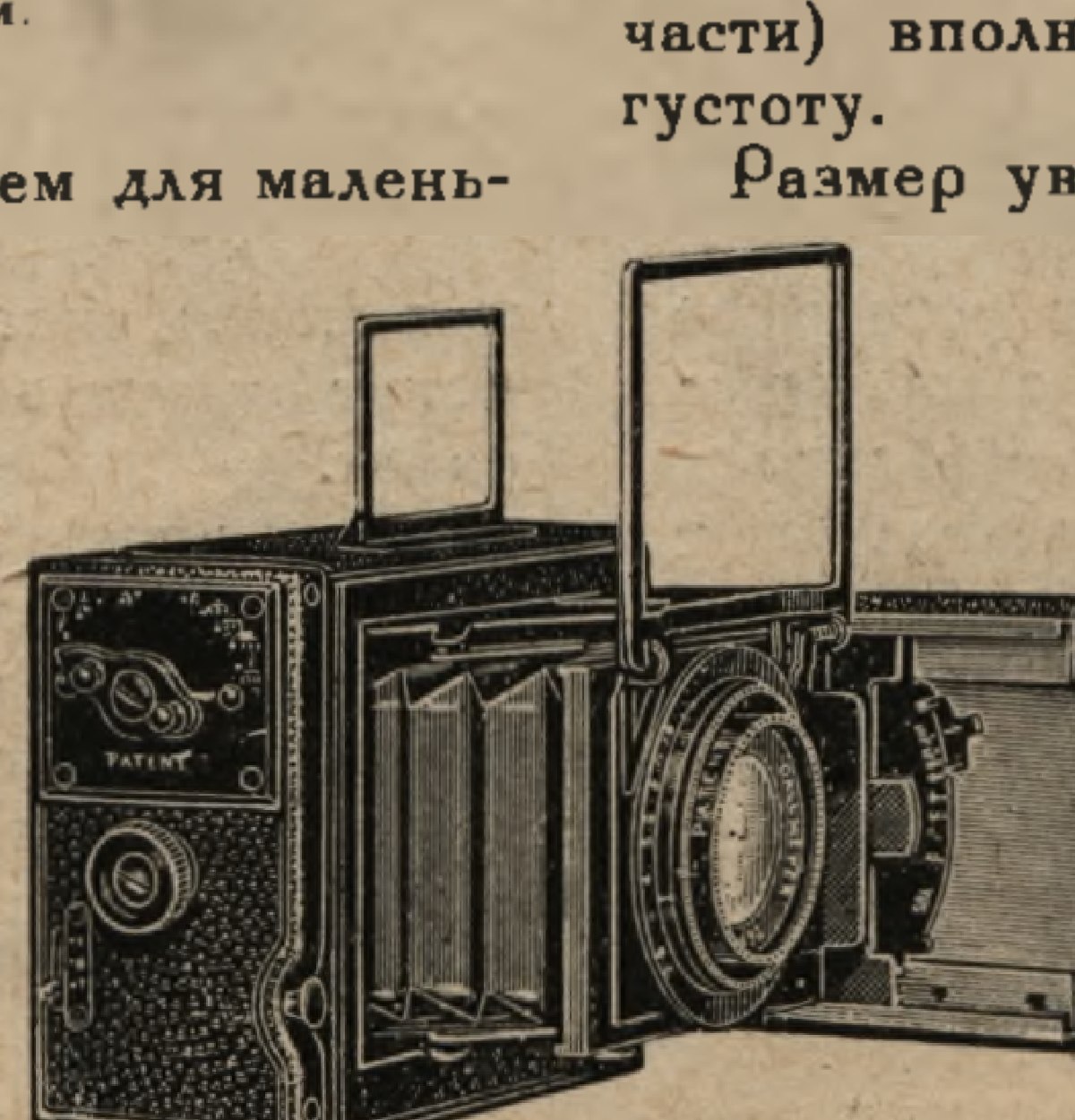
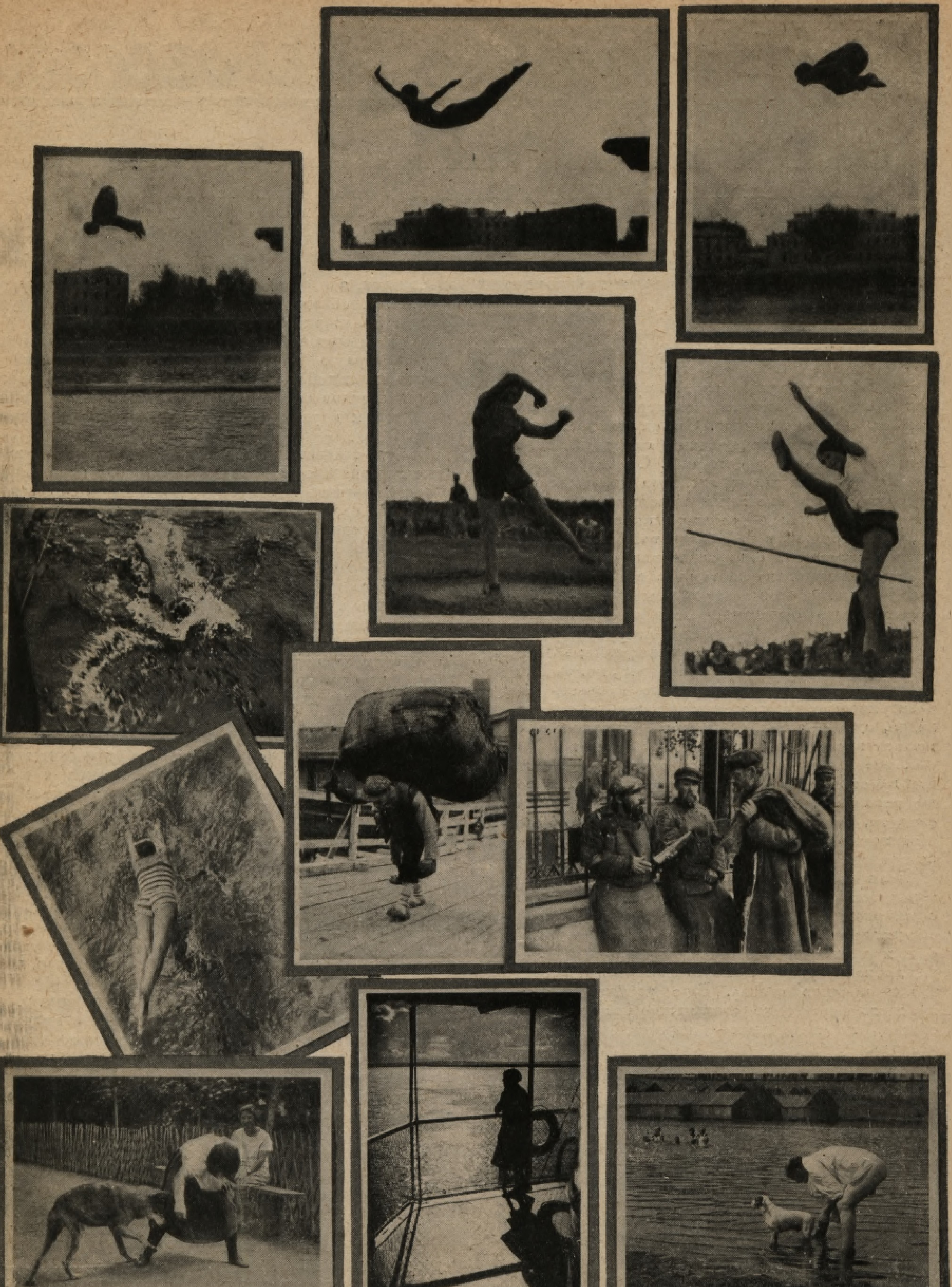
D. Gorodinsky defends the small camera (4.5×6, 6×9 cm) — still dismissed by some as mere pampering — and explains how to work with it.
Some photographers still hold that work with a small camera is pampering, an unserious pastime — judging mostly by hearsay, without personal experience or any need to shoot with a camera of small bulk. But the very fact that the best factories strive to perfect small apparatus and fit it with fast optics speaks to the ever-growing demand, helped too by the convenient vertical enlargers lately appearing abroad: a good small camera plus an enlarger can embrace almost every branch of photographic work.
The advantages are these. Its small size lets one keep it in a pocket or briefcase, always at hand; its slight weight spares extra load, and in a case on a neck-strap it does not hamper the photographer at all. Small plates and films are cheap — a great economy — and the tiny negatives and cassettes can be carried in quantity, important on the road, while several can be developed at once with less chemistry. A small camera lets one shoot at any moment without complex preparation, and inconspicuously, keeping the subject’s natural look. The commonest size is 4.5×6 cm; for more serious work one should use 6×9 cm.
Handling small plates and negatives needs special care: the least carelessness — finger-marks on the layer — shows, magnified, as spots and scratches at enlargement. Small negatives should not be developed hard; they must come out soft, of delicate gradation, since over-development easily loses the detail. The best developer for small plates is glycin; a stock solution:
| Constituent | Amount |
|---|---|
| Sodium sulphite | 125 g |
| Water | 500 cu. cm |
| Potash | 125 g |
| Glycin | 25 g |
One part is diluted with 3–5 parts of water — the more dilute, the softer the working — and potassium bromide added as needed; dust the plate first, for dust shows on a small negative and the more so when enlarged. Vertical development deserves note, the process being easier to watch, and the withdrawn stand can serve for drying too. The Hübl developer is popular for it: dissolve 25 g crystalline sodium sulphite in 40 cu. cm hot water, then 10 g glycin, warm nearly to boiling, and add 50 g potash gradually; 1 part of this dense liquid to 50 parts water for tank development, or 12–15 for ordinary. Agfa recommends for the tank another:
| Constituent | Amount |
|---|---|
| Glycin | 1 g |
| Water | 1000 cu. cm |
| Sodium sulphite, crystalline | 5 g |
| Potash | 7.5 g |
| Potassium bromide, 10% solution | 10 drops |
Tank development depends on exposure, grade and quality of plate, but at room temperature runs about 45 minutes; in washing, watch that the plates do not crawl one over another.
Copying from small negatives is unusually simple, the one condition being negatives wholly free of defects, since the least fault comes out enlarged. They should not be hard or very dense in the shadows, or the prints turn “chalky” — shadows too deep, lights too bare, with no transitions — and too-dense negatives also need very strong lighting; the best are delicate, soft, well-graded negatives. Likewise avoid hard printing, where the negative’s lights (shadows) lack detail while its darks (light parts) are full and dense. The size of enlargement cannot be fixed — it depends on the negative’s quality and clarity — but a good, clear, distinct negative allows at least a 6-fold enlargement with no obtrusive unsharpness. In general a 4.5×6 cm negative gives excellent 18×24 cm enlargements, and where special sharpness is not needed, sometimes even up to 40×50 cm. On page 151 of this number is placed an enlargement from a 4.5×6 cm negative.
— D. Gorodinsky