
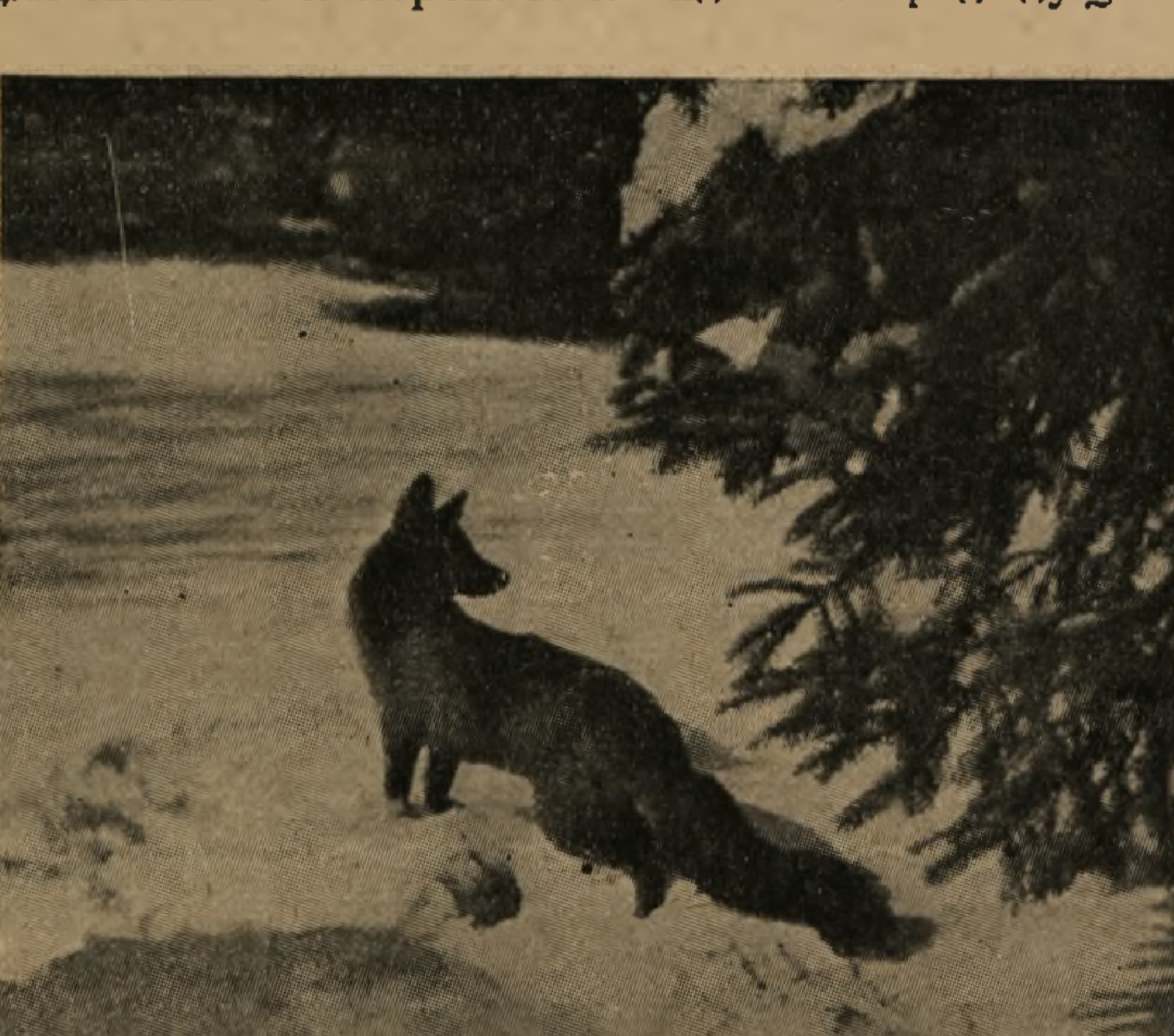
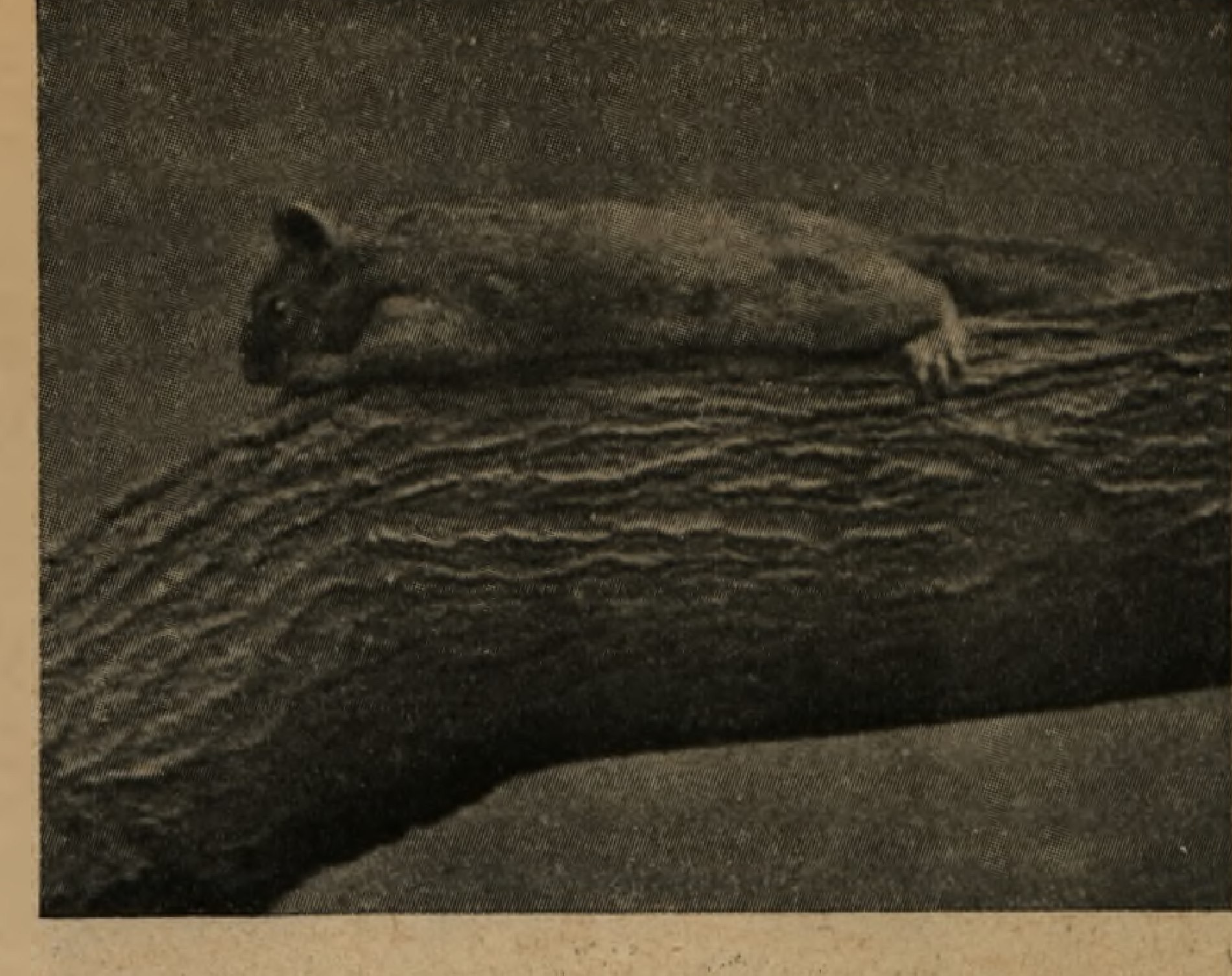
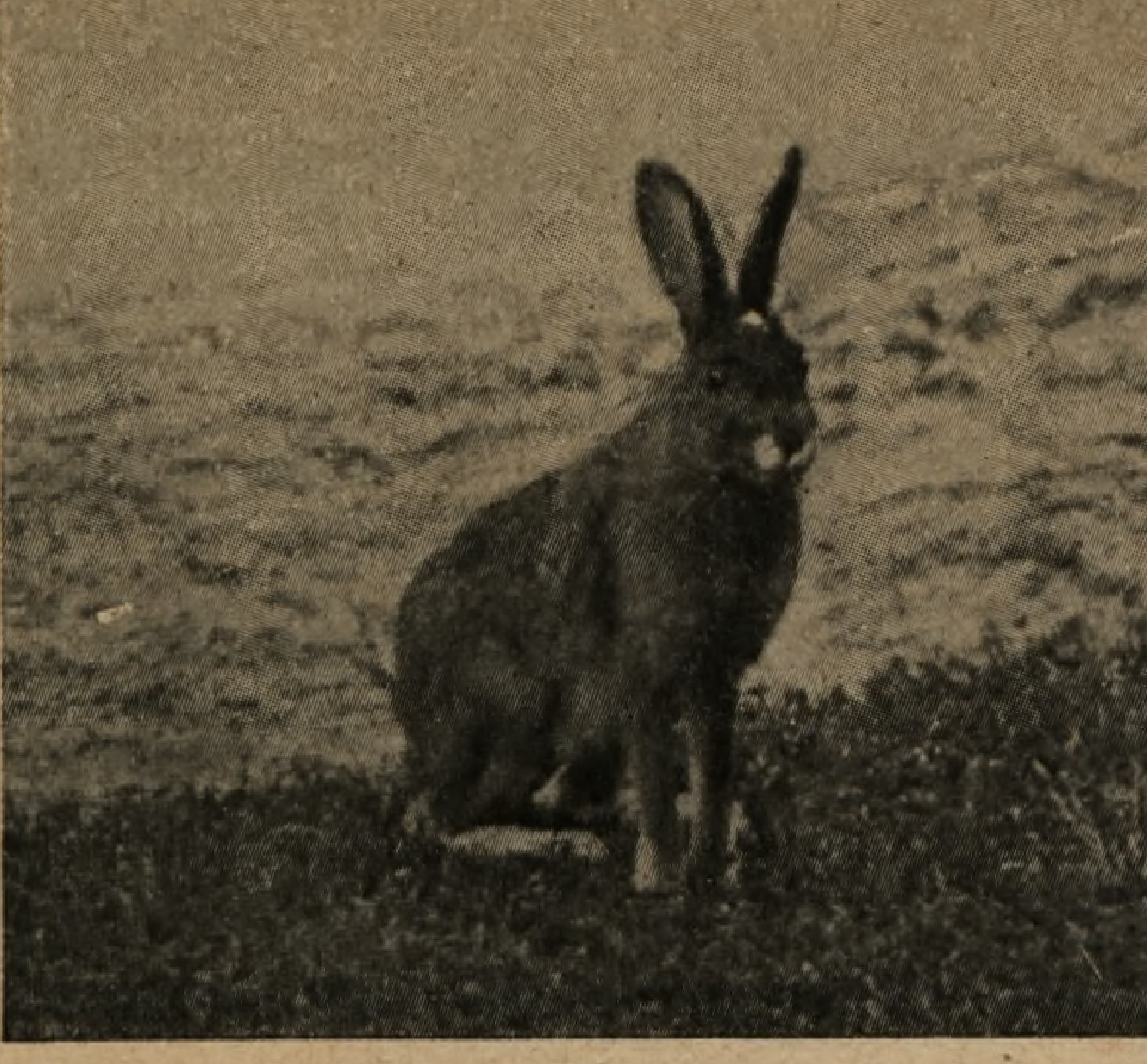
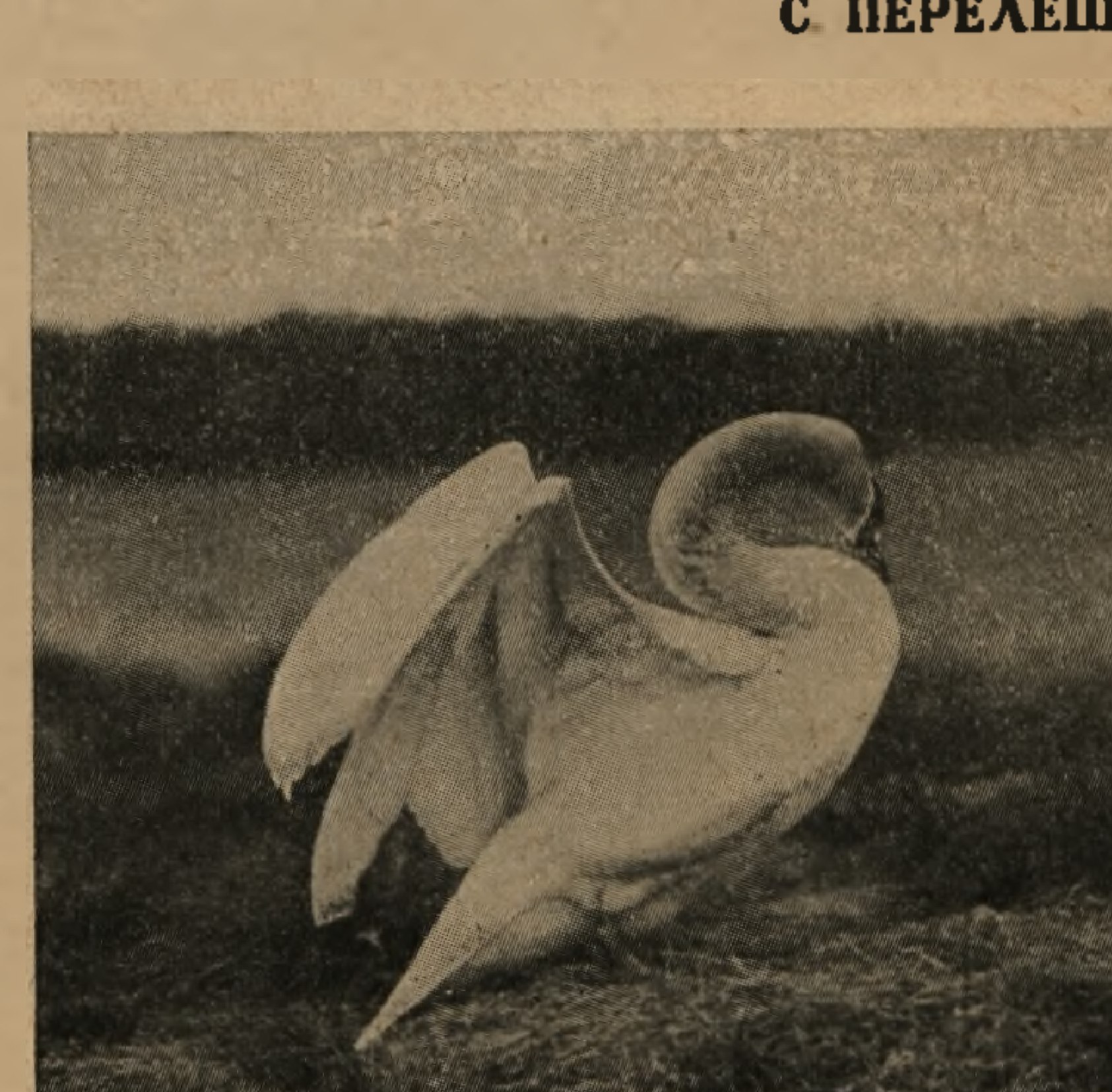
S. Pereleshin’s plea for the camera over the gun — a hunt that kills nothing and yields, besides pleasure, valuable material for science.
Friend-reader, are you not a hunter? Do you know that incomparable joy when, leaving the noisy city, you wander for days with gun and dog through forest and marsh, watching a nature often quite unlike the books? Strong in us still are the instincts of our savage-hunter ancestors, for whom getting an animal was a question of life and death — how merry to outwit the game, to set your wits against the animal’s cunning, your persistence against its caution, your aim against its speed. Suppose you win: knowing the hare’s ways, you untangle its confused loops, reach the lair, fire at the running beast and… your joy ends. The hare is killed, and with it the hunter’s instinct dies; the little beast you just saw in its graceful run, whose night-tracks you followed, whom you came to love — is dead. For a sportsman, not a trapper, the hare is not even needed; you could live without its few pounds of meat and its skin, which you could probably not even dress. Be sincere — how often did the joy end just at the successful shot? And if the shot only wounds, and you must finish it off? So learn to keep all the joy of the hunt without killing: leave the gun on the wall just once and go hunting with a camera — you will not regret it. Instead of corpses you will have photographs, a joyful reminder of a happy hunt and often valuable scientific material, adding to the treasury of zoological science.
The camera has advantages over the gun. First, sporting ones: the hunt is the more interesting the harder it is, and to shoot a cautious beast well is far harder than to kill it. And you will find many objects where there is, properly, no one to shoot — around big cities; the beginner always finds themes that prepare him for harder ones. You can hunt all year, with no closed season — indeed when the bird rears its young and shooting is forbidden, the camera-hunt is especially valuable — and even on protected animals (elk, desman), in reserves and so on. The USSR is vast and little studied; our few zoologists cannot cope without the population’s help, and only a network of amateur-researchers can clear up many questions. It is to such nature-lovers, wishing to join the joy of “hunting with a camera” to a service to science, that this article turns.
Why is an animal photograph so valuable to science? Because photography is a document. A truthful eyewitness still conveys facts inexactly — half unseen and filled in by imagination, half forgotten or confused — whereas photography does not lie. Stressing this documentality, the German nature-photographer G. Schultz coined “Natururkunde,” roughly “the original of natural science” — any shot from nature unchanged by man and free of retouch on negative or positive. To have scientific value a shot must carry data of where and when it was made, and above all what it shows, since many near forms look so alike that a photograph alone cannot tell them apart; if the photographer is no zoologist, he should get and preserve the animal for a specialist to determine. Any alteration of the subject must be stated, lest false data enter science — e.g. bending or cutting branches that hide a bird’s nest misleads others if the nest’s typical place in dense thicket is thereby changed unremarked.
As the proverb says, not the pen writes but the scribe: skill and persistence matter more than the camera — though the right gear eases good results, and some hard themes are almost impossible without it. The lens is the chief part: a fast-moving animal needs a very fast lens against blur, yet, unable to approach, one often shoots from afar and enlarges, so the lens must be well corrected — only an anastigmat gives both speed and sharpness, and among anastigmats the animal-photographer should choose. For still objects of an animal’s activity (nests, tracks, damage) an aplanat stopped down serves well; and a teleobjective gives incalculable advantages for cautious game at a distance and large scale. The camera should meet the usual demands of serious outdoor work (stability, strength, lightness, cremaillere focusing, light-tightness, a movable lens-board) and one more: the pigeon on the street moves nearer or farther while you swap ground glass for cassette, so you need a camera that shoots the instant the ground-glass image is sharp, without changing the cassette — the reflex, whose weight, complex mechanism and cost are repaid by its advantages. Its demands resemble the reporter’s, animal photography being a kind of reportage. The plates must be very sensitive (for instantaneous shots in poor light), fine-grained (for enlargement), orthochromatic, preferably anti-halation, of good latitude; foreign material we now scarcely have, and Soviet is uneven, so it is best to settle on one grade and study it — at present the orthochromatic “Iris” plates seem the most suitable. In development, as the shots are often under-exposed, the methods that save a doubtful plate are precious — slow glycin development in a vertical tank, or the three-tray method (normal, under-exposure and over-exposure developers, beginning in the first and moving the plate as the process shows).
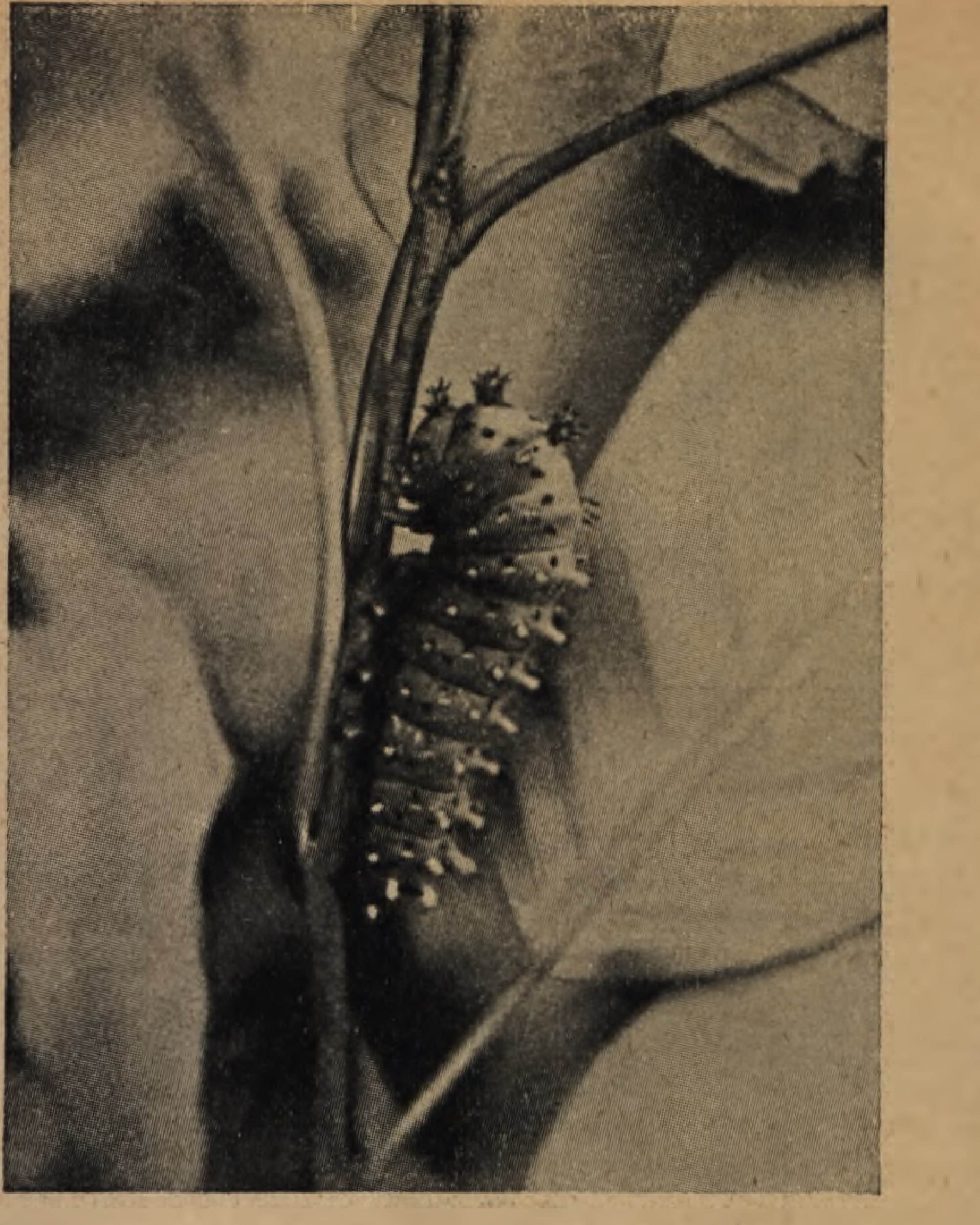
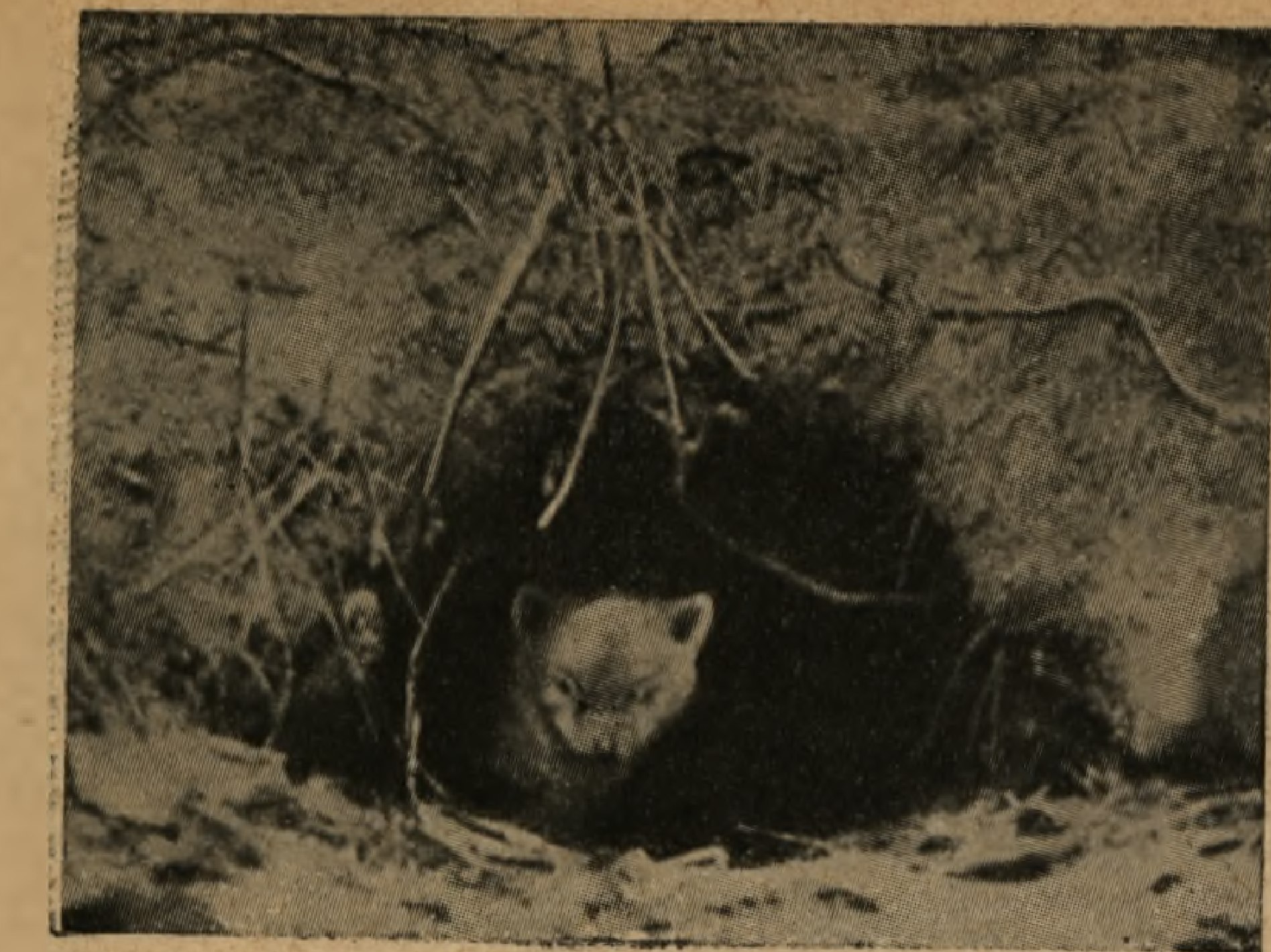
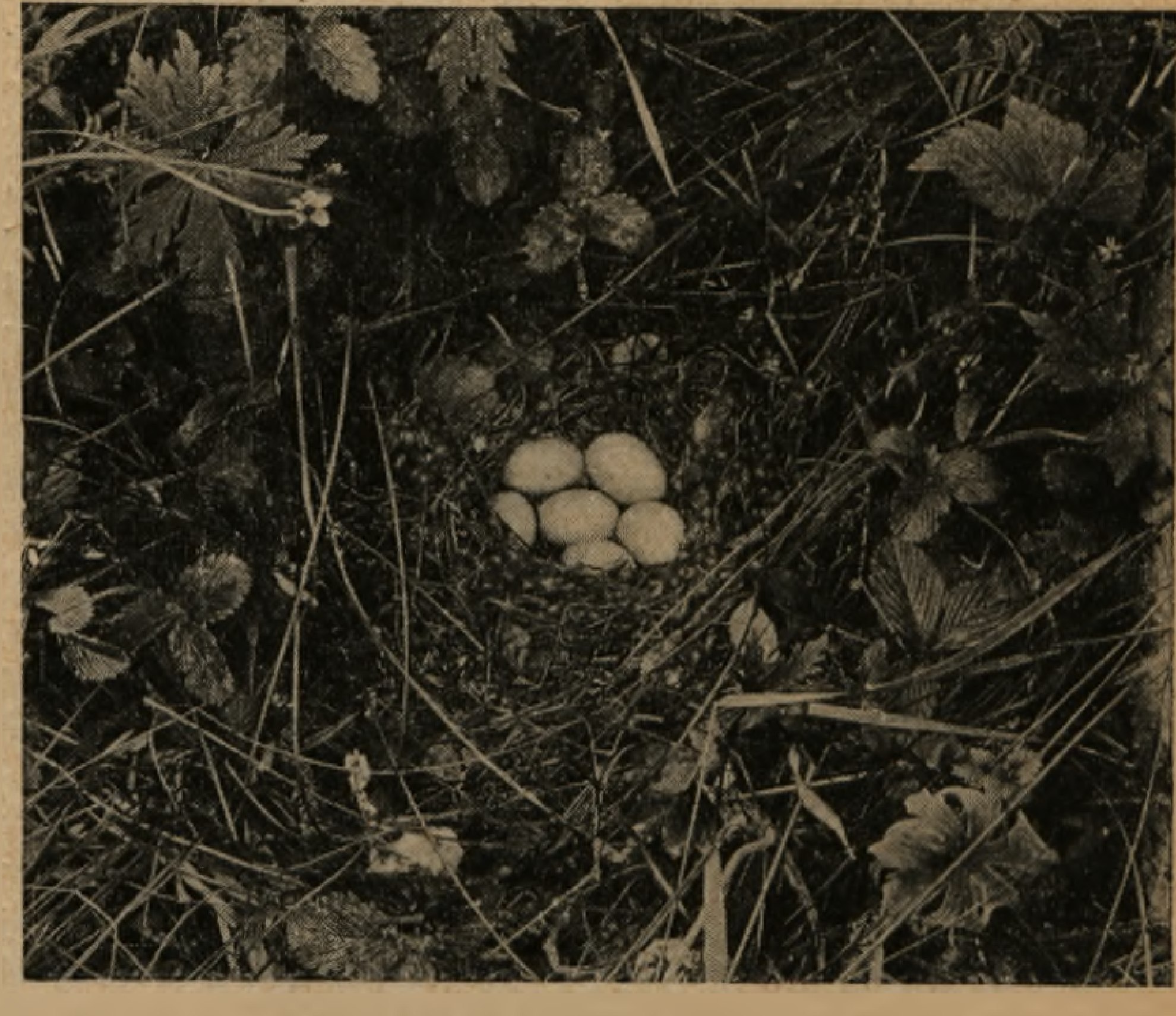
Pass to the shooting itself. It is interesting to get not only an animal’s “portrait” but a photographic description of its whole life — so the simplest theme is its characteristic haunts (as hard as ordinary landscape work). Harder are the signs of its activity — tracks of mammals and birds on snow, nests, burrows. Snow-tracks are the richest: all the animal’s life shows in them, and series of tracks of varying depth, density, gait, age and sex give knowledge no other way yields; since a track on white snow looks blue and prints too light on an ordinary plate, orthochromatic plates and a yellow filter are needed, the deeper the filter the more contrast. Birds’ nests are rich material: the finding is often harder than the shot. High nests (rooks, crows, herons) are usually shot from the ground, showing only the outside — interesting to add a shot from the tree, slightly above, showing the contents, which means hauling the camera up and fixing it there (an ordinary tripod lashed to the branches may serve, and there are special tripods that screw into the tree or grip a branch like pincers). Low-bush nests (warblers, reed-warblers) are easier, the chief hindrance being wind that rocks the leaves — for a large-scale nest one must stop down hard, and the long exposure among dense bushes lets the wind spoil it, so shoot at morning dawn when the wind usually drops. Very beautiful are sandpipers’ nests on the ground among stones, their eggs perfect protective colouring, hard to find in nature or on the print. Burrows, nests, spiders’ webs and insects’ structures (wasps’ nests) are similar themes, needing no reflex — any camera of sufficient draw on a tripod will do. Little-mobile invertebrates — a crawling snail, a caterpillar, a night butterfly at rest — are easy, needing only a double bellows draw to shoot these small things at natural size.
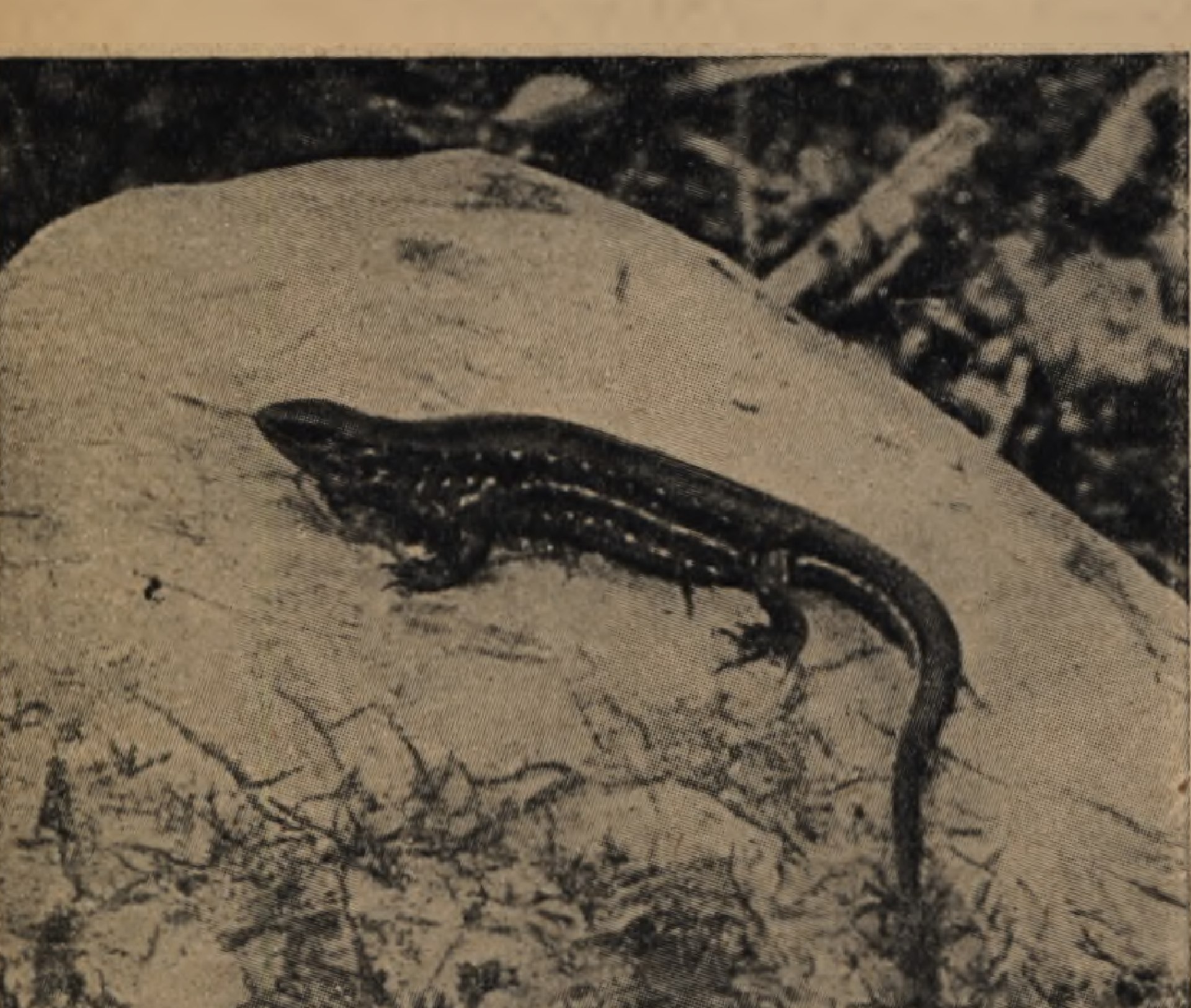
Captive animals sometimes give very interesting motives: zoological gardens (the fine Moscow Zoo), zoo-parks (the world-famous Askania-Nova in the USSR), fox, arctic-fox and sable farms — and the separate animals kept by amateurs: a white rat, guinea-pigs, a wolf-cub or fox, canaries, pigeons; the domestic animals; and the aquarium, with its amphibians, fishes and invertebrates. These are harder — many are so mobile that a reflex is needed; in zoos one often cannot get close enough, or the animal comes too near the grating, and only patience helps: wait until it stands conveniently, then do not dawdle. Where interior light is too weak, a magnesium flash helps. For the aquarium, poor glass distorts the view — cure it with a special tank of good mirror glass as front wall, and a movable glass partition to keep the animal from swimming off into far corners.
But the most effective and interesting are shots of cautious animals and birds in freedom — the hardest, needing the most dexterity, skill and, above all, patience. Mostly such distrustful animals are taken not by stalking but by waiting, hidden near where they must come — a watering place, or, for birds, the nest. Two variants of ambush: hide with the camera and make a series, or hide the focused camera and release the shutter by a pulled string. A lens set right by a cautious bird’s nest — like a huge peering eye — may frighten it into abandoning the nest; so set up first a “false camera” (three tied sticks with a box on top), far off at first, then nearer, until the bird ignores it and does not notice its replacement by the real one; then hide nearby and, when the disturbed bird returns, release the shutter by the string. This has the fault that changing the cassette for each shot means approaching and scaring the bird, whose return may be long awaited. Hidden with the camera by the nest, one can both make a series and delight in watching the bird close up — arranging an ambush, a hut or small cloth tent lightly camouflaged with tied-on plants, brought up gradually like the “false camera” (with small, trusting birds one may simply set the tent by the nest at once). Hiding by a watering place, or setting the camera by carrion where birds of prey flock, also yields fine shots. Having studied the habits, one can sometimes make the animal shoot itself — a string across its path or tied to its perch releases the shutter; harder, but very rewarding, is to have a night animal both open the shutter and fire a magnesium lamp, lighting and photographing itself. The combinations are endless, and only the hunter’s resourcefulness and experience will find them — greatly eased by joining one’s own experience to the literature. In Russian there are three books on nature and animal photography:
- Buturlin and Ivashentsev — Hunting with a Camera.
- G. Schultz — Photography from Nature.
- O. I. Ognev — Photography of Living Nature.
And it is very useful, even necessary, to know at least the elementary zoological literature on the animals you mean to shoot — in Russian not large, but one may note:
- M. Menzbir — Birds of Russia.
- Kholodkovsky and Silantyev — Birds of Europe.
- Brehm — Life of Animals.
In closing, a word on the artistic side. Is artistry admissible, needed, in this essentially registering “hunt with a camera”? Not only admissible but necessary — for art is the power to convey to another your own sensations and impressions. The measure of a photograph’s artistry is not its prettiness but its power to move the viewer as you found needful, and not as the optical and chemical processes happened to leave it. The aim of the “hunter with a camera” should be — an artistic original of natural science.
— S. Pereleshin