
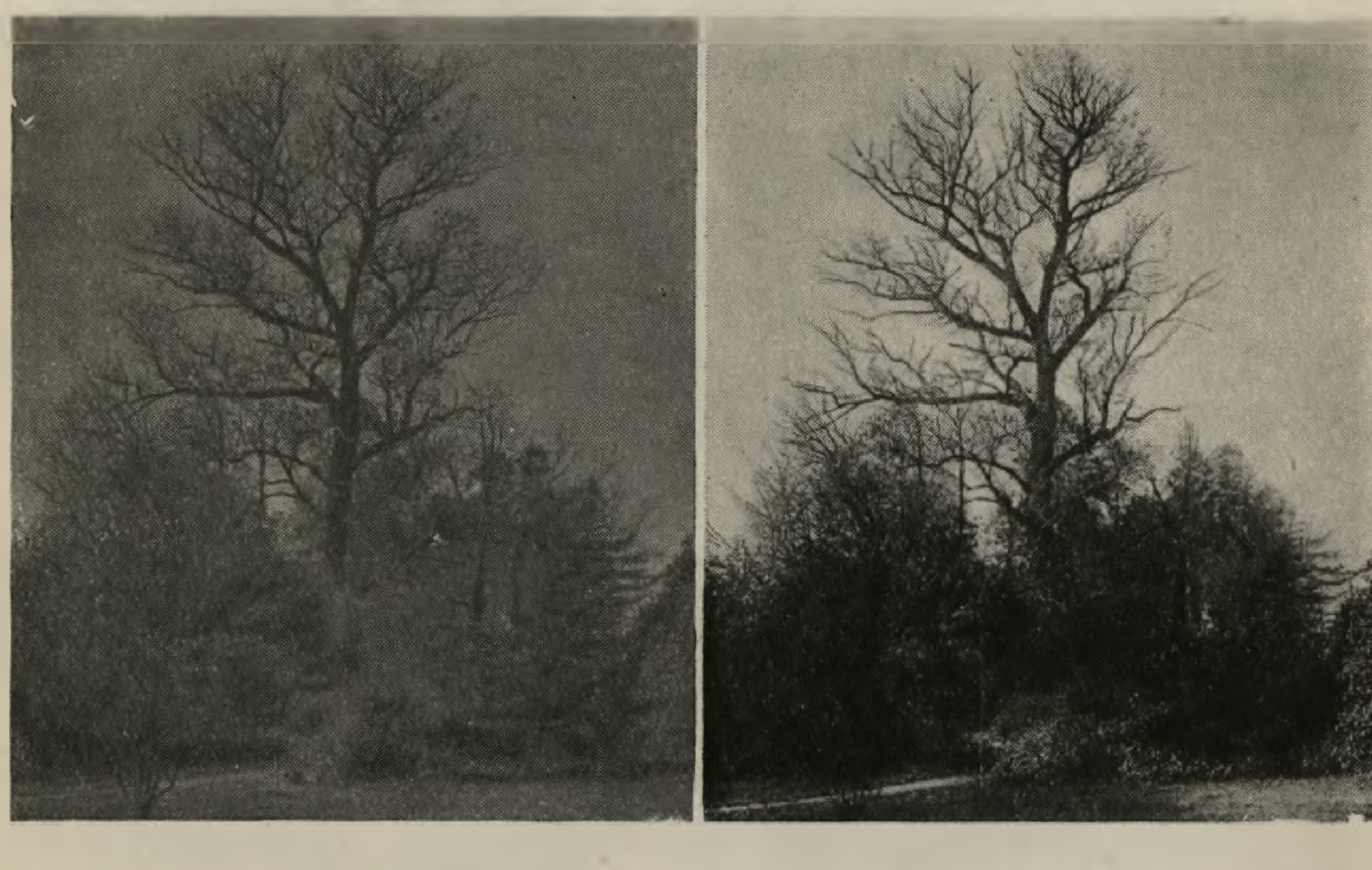
P. L. on reviving an almost-unprintable flat negative — not by intensifying it, but by “rebirth” through diapositive duplication, leaving the original untouched.
Sovetskoe Foto has indicated ways of getting softness in portrait prints from negatives that cannot give it in ordinary use, while leaving the negatives untouched. For an artistic portrait softness is the recognized condition; but in other cases the demand is the opposite — in documentary photographing of nature, interiors (especially museums and separate objects), architectural shots general and detailed, machines, reproductions — where the greatest possible sharpness, distinctness, juiciness and fine detail are wanted, for which, of course, fine anastigmat optics are used.
But once an error creeps into the exposure or the development, the result is a flat, dragged-out negative which, though it holds all the detail, drowns it in a grey murk that must be called back to life. For this there are the known chemical methods — removing the veil first, then intensifying. But apart from the risk of irretrievably spoiling a perhaps valuable and rare negative by an unsuccessful such process, keeping the original negative untouched is always desirable, the more so as a conscientiously fixed and washed negative, not after-treated, stays unchanged for decades — which cannot be said of intensified negatives. Here, then, one can point to a method of “rebirth” for a negative sometimes almost wholly unfit to print.
The photo-chemical industry has worked out special papers that give good prints from flat negatives — a real help — but they bind the photographer to one grade and rob him of the choice of getting positives as he wishes. Incomparably simpler, then, is to carry this method of improvement over from positive practice into the negative process. From the flat negative a diapositive is made on a slow-working chloro-bromide plate, and from the diapositive a new negative; in this double process the layer of reduced silver thickens so much that one can usually stop there. If more is wanted, repeat the process; and to avoid excess contrast it is sometimes enough to use ordinary (bromide, less contrasty) diapositive plates in the later steps. The method also allows all kinds of correction and retouch, and any colour of the negative image — from pure black to pure red — which the chloro-bromide diapositive plates give according to the time and conditions of exposure and the grade and concentration of the developer.
— P. L.