
V. Makarov attempts, within the bounds of a journal article, to name and describe the elements that make up the much-abused notion of the “artistic shot” — theme, subject, composition, perspective, planes, unity, lighting and line.
We often hear, and ourselves use, the words “artistic shot,” “artistic photography.” Yet the notion of “artistry” is met in the most varied senses. Some understand by it a sepia tone, a happily caught turn of the head and an effective ray of light thrown on the model; others confuse the notion with the “elegant,” or call “artistic” a shot masterfully executed on the technical side; finally, a third sort hold “artistic” the shot that satisfies the sense of beauty and harmony in the highest sense. Such a discord comes from many causes: the different cultural levels of the critics, different tastes, undefined and unformed views on art. Having in view the numerous cadre of young photographers scattered over our whole Union, warmly loving photography and often deprived of needful guidance in their striving to move forward, we set ourselves the aim of making clear and establishing the elements of which the notion “artistic shot” consists, with that fullness which the size of a simple journal article allows. This notion is very complex; it consists of several elements, to the enumeration and description of which we shall now pass.
The theme of the shot
This notion is so simple and generally known that it needs no definition. As for the choice of a theme for an artistic shot, one may say that here the photographer is given full freedom. Before him is nature in its endless variety, man with his world of thoughts and feelings, society and its life. Of course, out of the endless variety of themes the photographer will choose that which interests him most, rouses his attention and admiration, which can “inspire” him. In the choice of theme, therefore, the inclinations and spiritual interests of the photographer-artist are reflected. Interest in the theme, passion for it, understanding of all its depth, is a very important (if not the decisive) moment in the artist’s creation. The tension of all creative forces, the full and perfect use of technical knowledge and skills, is possible when the artist is, so to speak, in the power of the theme. This must be well remembered, and the search for a theme eased once and for all by clarifying for oneself one’s own “I,’’ one’s interests and inclinations. As examples one may point to painters who worked in some one chosen field: Shishkin in landscape (the forest), Aivazovsky the sea, Serov the portrait. There are, it is true, exceptions — e.g. Repin, who talentedly develops historical, everyday and other themes — but that is the exception.
Composition and the subject
Every shot, from the graphic point of view, represents a geometric figure filled with lines, spots (masses) and tones of various strength. The sum of these elements bears the name of composition. These elements can be combined in endless combinations, giving an endless number of effects. Hence proceeds the full freedom of the artist in creation and in the choice of composition. This freedom, however, must be used very reasonably. It is given to the artist as a means for the fullest and most perfect expression of the theme (idea) in the subject. Much knowledge and taste, certain practical skills, are needed to present the chosen subject just as the artist conceives it and to get the effect he expects. The very process of creating the composition in the shot bears the name of “the arrangement of the subject.” The aim of arrangement is the fullest and brightest expression of the theme in the chosen subject. Arrangement consists of several moments, so interconnected that an exact delimitation between them is impossible: the slightest change of one factor at once reflects on all the rest. One must accustom oneself in practice to evaluate the subject from all sides at once, with the most tense and concentrated attention joined to extreme caution.
Let us note in passing the existence of artistic works without a theme — book vignettes, ornaments on walls, patterns on dishes and clothing. The absence of a theme here is only apparent: here too there is a theme — the beauty of lines and spots. The existence of such works is quite possible in photography. The subject of a shot is the sum of the figures and objects distributed on it in their mutual connection. Any chosen theme can be expressed in an infinite number of subjects. Take, for example, the theme of last year’s competition, “At Work”: about 400 shots were presented, all with different subjects; the same of the theme “The Life and Daily Life of the Peoples of the USSR” (about 700 works). Out of the countless number of subjects on one theme, the photographer must choose one. The choice is determined and limited by the situation in which the photographer finds himself — but this is nonetheless very good, since by such a limitation he is placed in the most favourable conditions. How to choose the subject? Here one may go by two ways. The first — to observe constantly and keenly around oneself, trying to catch the needed subject and, having caught it, capture it on the plate. The second — with one’s fantasy and imagination to create a subject, then translate it into the language of real reality, i.e. “stage” the subject and then photograph it. But however the subject is chosen, it must satisfy one requirement: it must be plausible. The viewer must not doubt that the subject is a piece of life caught by the lens. The characters of Gogol’s “Inspector-General” are so vivid and real, so plausible, that one can hardly believe they are the product of the author’s artistic invention.
The point of view
As to the point of view (the place of the lens during shooting) and its choice, no rules exist. One must observe the surrounding reality, examine shots, drawings and pictures, and evaluate the effects depending on the choice of viewpoint. Before shooting, if only possible, one should study the subject from as great a number of viewpoints as possible and evaluate the observed effects, guided in the choice by one aim: the fullness of the theme’s expression in the subject. There exist, it is true, some rules: in shooting a portrait the lens is set at the height of the model’s eyes; in a landscape a point is needed at which, besides earth, greenery and buildings, the sky too comes out; in shooting buildings the best viewpoint is that from which both the façade and the side are seen. But these rules have as many exceptions as applications: one cannot use them blindly, since they work out a template wholly intolerable in artistic photography and lead to errors ruinous to the whole matter. One must only remember that the point of view is one of the important factors influencing the conveyance of the subject, and it should be chosen carefully, giving oneself a clear account of which viewpoint is the best.
Perspective
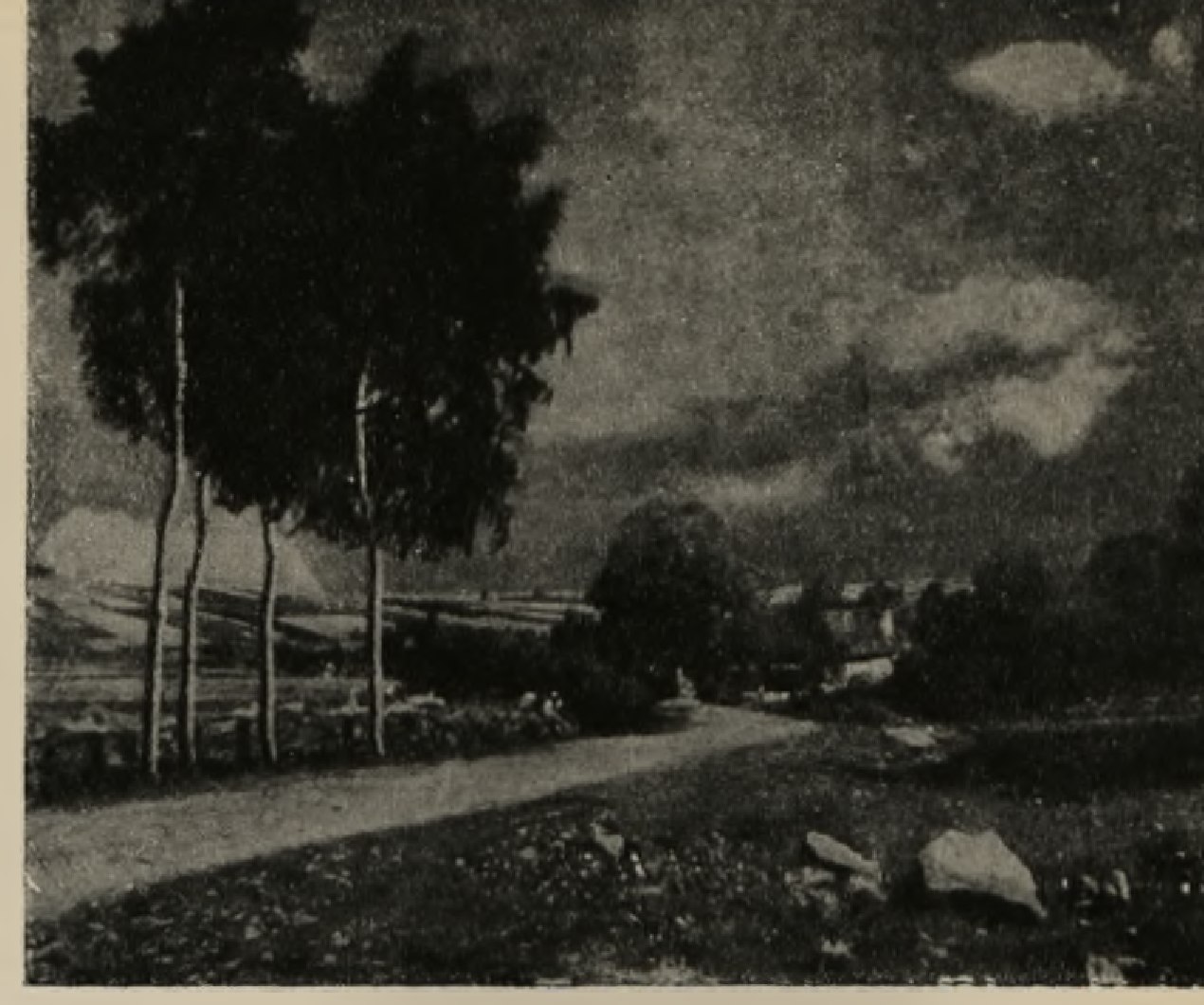
Two kinds of perspective are distinguished: aerial and linear. The air in the distance is always veiled in a light bluish haze that hides the details of distant objects and deprives them of bright colouring. The conveyance of this effect is a necessary condition for getting in the shot the impression of depth, remoteness, of the distances between the separate parts of the subject. Aerial perspective is conveyed satisfactorily on ordinary plates; working on orthochromatic plates with a filter, it more or less disappears (the esculin filter destroys it completely). The impression of aerial perspective is strengthened if the distance is taken out of focus. One can govern its conveyance by applying corresponding positive processes (dusting, bromoil and others), by covering parts of the negative in copying, and so on. Aerial perspective is well conveyed on the cover of No. 1 of our journal for the current year, then in Yaroslavtsev’s “Winter Road” (No. 2, p. 49) and in “Winter in the Ukraine” by N. Stalinsky (No. 4, p. 115). There are, however, exceptions. Turn to fig. 1 (a photo from “Photographische Rundschau,” the original executed in gum-arabic): the author deliberately did not convey the aerial perspective, in view of the interesting distance, whose straight lines, forming geometric figures, emphasise the bends of the lines of the near planes. The gathering thunder-cloud, with a damp wind clearing the air, makes a splendid dark background for the light greenery of the landscape lit by the last rays of the sun, ready to hide behind the cloud.
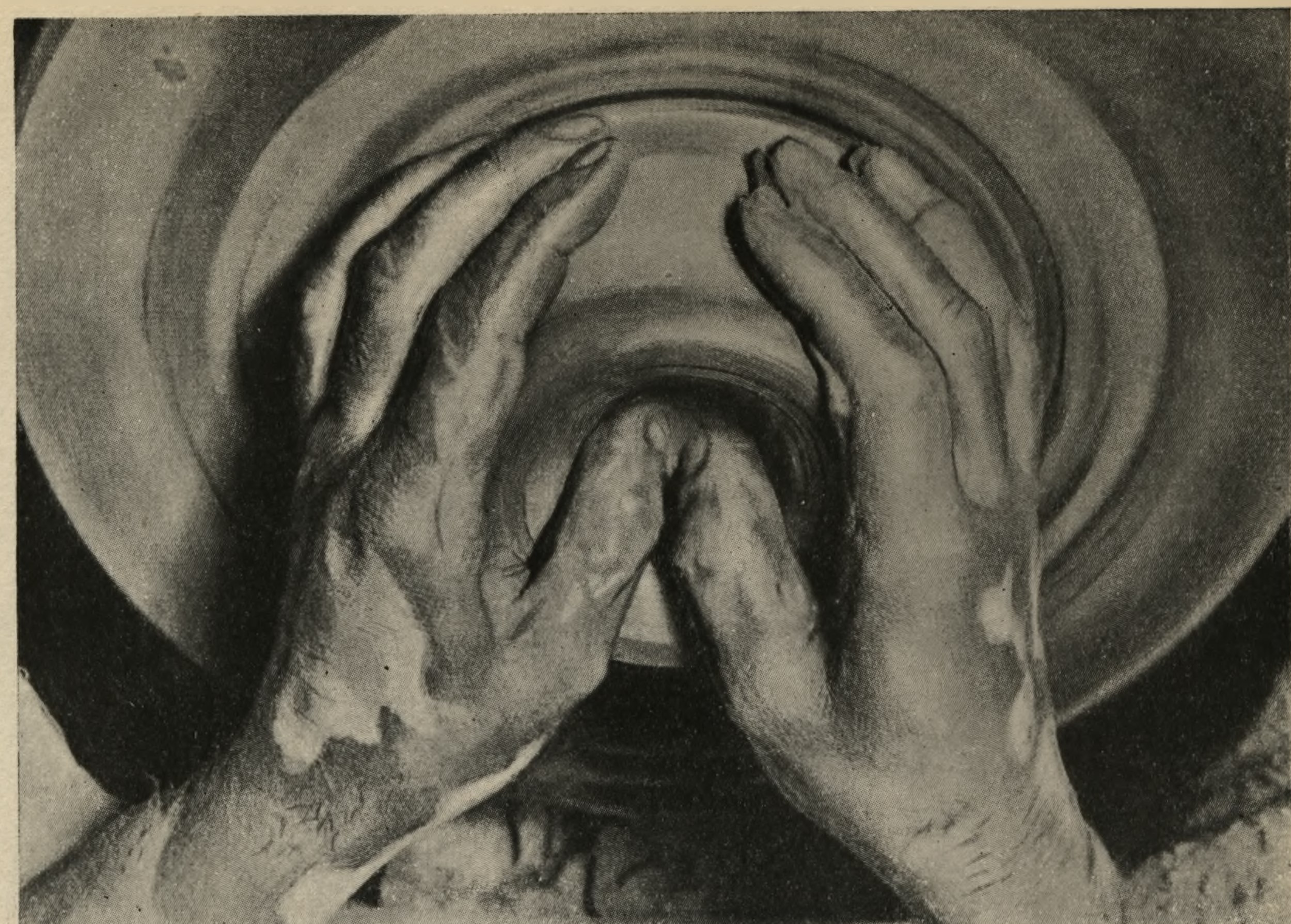
Linear perspective, in the elementary sense, is the phenomenon of the convergence of parallel lines going into the distance and the gradual reduction of the sizes of objects as their distance from the viewer grows. In No. 3, on p. 75, K. Blickensderfer’s “Railway Station” is reproduced, on which the described phenomenon can be well traced (the rails and the columns under the canopies). The effect of linear perspective, the necessary condition of “depth,” is got automatically on our shots. However, our lenses distort perspective, since the lens’s angle of view is much greater than the eye’s. The eye sees objects at once within an angle of about 30°, while lenses have angles of view from 60° to 90° and more. The result is an exaggerated perspective, i.e. the convergence of lines happens at greater angles than we are used to seeing, and the truth of the subject’s conveyance is violated. This trouble, however, is easily overcome: one must use not the whole field of view of the lens but only its middle part. The rule is such: the focal length of the lens should equal double the length of the longer side of the plate. This long-established “academic” rule has of late been violated by photographers. When the photographer sets himself the aim of conveying rapid movement, a mood strained to the highest degree, he resorts to shortening the perspective, exaggerating it by applying wide angles of view, reckoning that the energetic striving of the lines to converge will emphasise the general “dynamic” character of the shot. These attempts should be understood as a revision of the old template and a search for new effects; they must be welcomed, and the results of such researches attentively studied (see in more detail P. Grokhovsky’s article “The Dynamic Frame” in No. 1 and the following numbers for the current year). As for painters, they have, in the matter of perspective, gone far further than photographers — they have quite waved their hand at it. Fig. 2 represents a reproduction from a woodcut by the artist N. Kupreyanov. The viewpoint is set at the height of a standing man’s eyes — yet the seat of the chair is depicted from a viewpoint above the chair. Such a violation of the rules of perspective we do not blame the artist for. It gives his work the character of childish, naïve creation, and were the chair depicted by all the rules of perspective, the work would lose a great share of its charm.
In a word, we come to this conclusion: the conveyance of aerial and linear perspective is wholly at the artist’s disposal. There are no firm rules. And it is useless to establish them, since a rule worked out today will tomorrow prove refuted. One must study the various effects and be able to apply them at need — that is the only way out of the situation. Compare the photos: the “Railway Station” (p. 75) and “In the Fog” by V. Ulitin (p. 200). In the first the photographer used the lines of the rails to get depth. In the second, perspective is conveyed more subtly and elegantly by the image of a boat in the distance — mentally remove it, and the effect of a sea in fog disappears, the sea turns into a simple monotonous grey background. Original too is the conveyance of perspective on V. Ulitin’s “White-Sea Study” by means of highlights gradually merging into a continuous radiance of the sea. In the shots “A Moscow House” by Rodchenko and the radio-tower “Bolshoi Komintern” by Fridlyand, the properties of perspective are used for getting the effect of height, and not of distance, as usual.
The planes
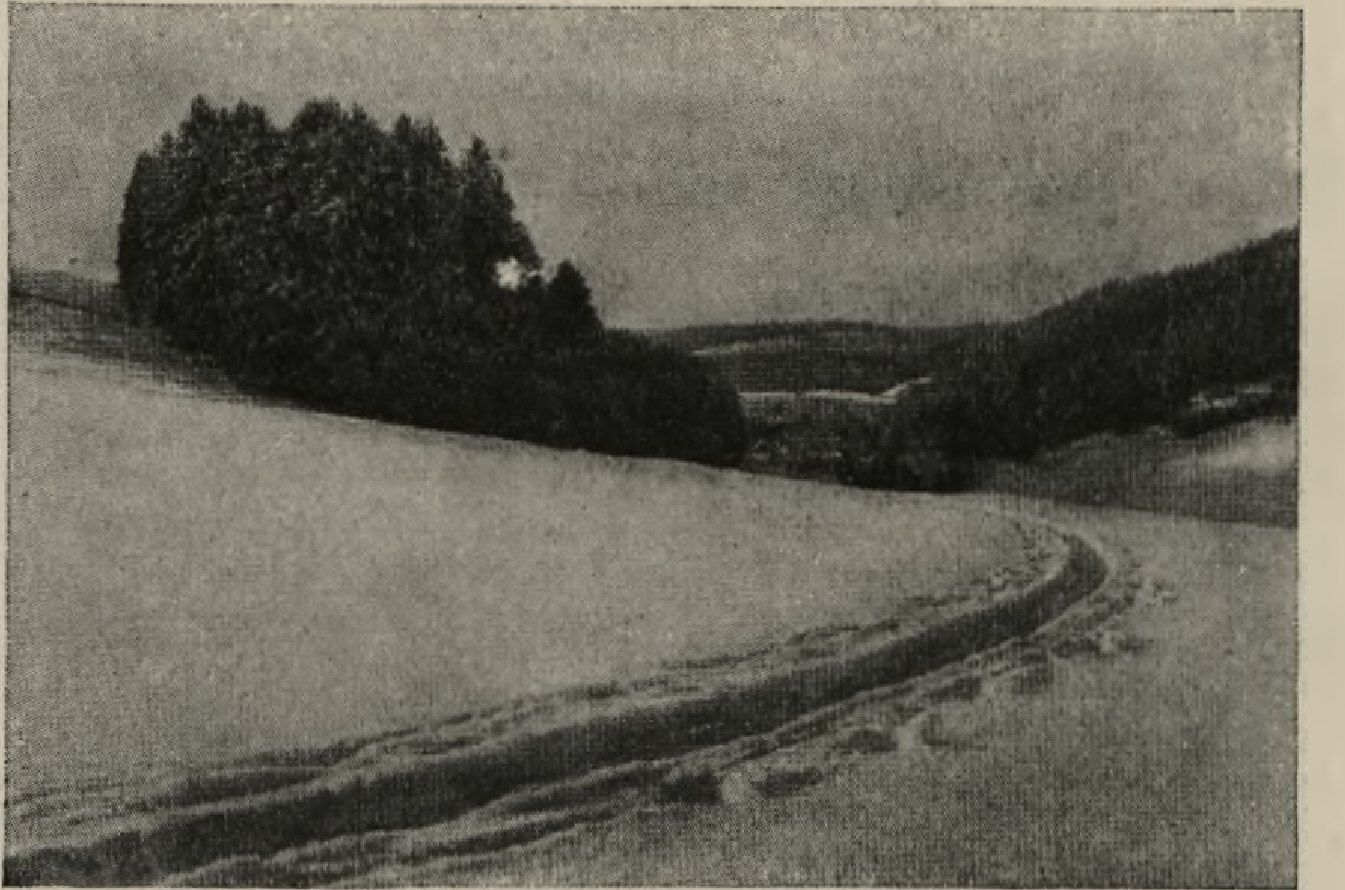
By the foreground (first plane) is meant the image of the objects placed nearer the viewer than the others. The foreground plays mainly the role of a “preface,” but it has to fulfil other functions too. A “typical” foreground we see on p. 117 of No. 4 (a shot of I. Yaroslavtsev): the foreground is formed by the earth covered with fallen leaves, water, and the reflections of trees in it. Another example of a foreground is on p. 10 of No. 1 (F. Römer, “Snow Landscape”): the even surface of the snow is cut by a dark, beautifully bent line of a path. What would the shot have become had there been no path? Beautiful, and very characteristic for our North, is the foreground in Ulitin’s “Ships at Low Tide.” Let us look at how the foregrounds are made in genre (everyday) scenes: F. Fain’s “Gypsies” (p. 61), his “All in the Past” (p. 60), and S. Tules’ “At the Lace-Making” (p. 121). On p. 147 is A. Samsonov’s shot “Children of the 1st of May”: here the foreground frames the shot on all sides. Two children’s figures, taken large, excellently contrast with the huge demonstrating crowd, and their lines, by their curvature and bends, contrast with the geometric lines and figures of the buildings; here the foreground plays the role of “contrast,” of a setting-off of the other parts of the picture. The foreground is not obligatory in a shot. Sometimes it even hinders the impression. On p. 7 there is a shot without a foreground, convincing us of this: the shot well conveys the impression of a sportswoman rushing through the air at the viewer — she is so near that one wants to step aside. So the foreground is introduced into a shot to explain and supplement its main part. It must, by its character, correspond to the subject of the shot. Its place on the shot is indefinite (it may even be at the top — e.g. a branch of a tree). The second, or main, plane serves for placing the main objects of the subject. This is the most important part of the shot; but we shall not dwell on it now, clarifying its significance and the methods of filling it gradually, in view of the complexity of the question. The far plane (the background, the distance) plays just the role of a background, i.e. of a weakly detailed, sometimes almost monotonous setting, against which the main parts of the subject could stand out brightly. Consider again the examples: p. 26 — “Winter in London,” the sky in fog; p. 39 — S. Fridlyand’s “Sailors’ Talk,” the background a sky with clouds of smoke; p. 90 — “The Yawning Tiger,” the background a dark wall — how well the beast’s head stands out on it! Magnificent and original is the background on N. Petrov’s shot “Locomotive” (p. 101): the colossal heavy mass stands out excellently against streams of light emphasised by the light grating of the windows. The opposite effect we see on V. Mikulin’s shot (p. 5) — “Night on Red Square,” where the background is the wall and buildings of the Kremlin, plunged in the night murk.
Unity (harmony, subordination)
On the shot there should be one main object — all the rest must be subordinate to it, fulfilling the role of its “accessories,” supplementing and explaining it. In this consists the requirement of unity. An illustration here may be B. Albitsky’s shot “Eastern Motif” (p. 35). Technically this requirement is fulfilled by various means: 1) the main object is placed about the centre of the shot; 2) about it are concentrated the strongest contrasts of light and shade (Yu. Zaitsev — “Mending Linen,” p. 51; Blickensderfer — “Railway Station,” p. 75; “Downhill on Skis,” p. 78; “Locomotive” by N. Petrov, p. 101, and the series of portraits on p. 109 and further); 3) the lines of the main object contrast in their character with the lines of the accessories. In “Horses in the Steppe” by Keene (p. 83) the figures of the horses, outlined by sinuous lines, contrast with the line of the horizon and the straight lines of the telegraph poles; in P. Grokhovsky’s “Winter near Moscow” (p. 71) the reverse effect: the geometric lines of the building stand out excellently among the net of the lines of the trees. For the most part one uses two or three means at once. Where there are several figures, unity is reached by binding them into one whole by some means: “Horses in the Steppe” are bound by a common movement in one direction; F. Fain’s “Gypsies” (p. 61) are bound by conversation; in Tules’ “At the Lace-Making” (p. 121) both figures look at one point. Now turn to p. 22 and look at “How Not to Shoot”: the three lower shots did not satisfy the condition of unity and … landed on the black photo-board, quite justly. There exist many other means of separating the main object from its accessories — the accessories are taken less sharp (out of focus), an animate object is surrounded by inanimate ones, a tall one by low ones, the accessories are placed in half-shadow or shadow, and so on. All these means reduce, in essence, to various contrastings of the main object and its accessories.
Fullness of effect
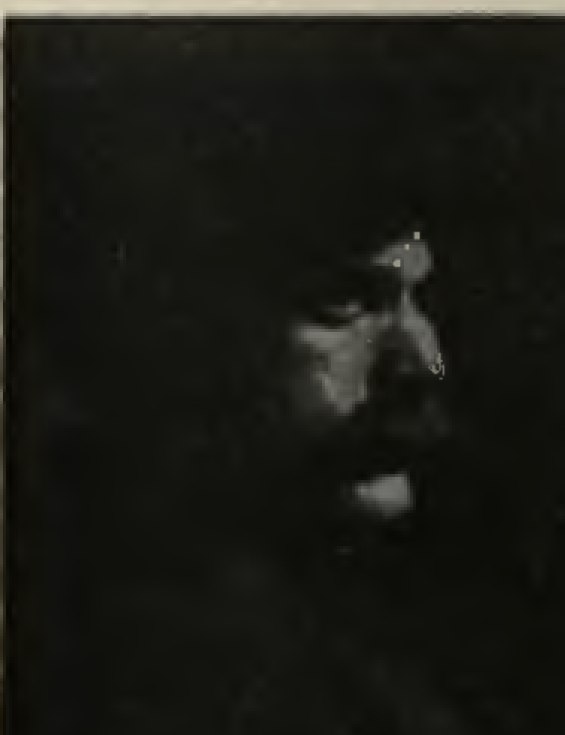
Whatever subject we choose for bringing out our idea, it will always contain objects and lines characteristic of the subject, indifferent, and sometimes directly superfluous ones hindering its general character. What would B. Albitsky’s “Eastern Motif” (p. 35) be if an automobile were placed in it? Or if the building had an iron gable roof? Or if on Yu. Zaitsev’s shot “Mending Old Clothes” (p. 51) an expensive tea-service stood on the table? On the shot there should be only that which has a direct relation to the theme, which expresses it most brightly and fully. The greatest effect is given by shots that contain few (often one or two) characteristic traits; the shot gains great expressiveness and is capable of producing a great impression. Therefore one must take care to omit those details without which it is possible to do. On the shot there should be the necessary and sufficient number of details. A beautiful illustration to this position is V. Mikulin’s photo “Night on Red Square” (p. 5). The Mausoleum has no details — it is drawn against the background as one mass, and only at the top is one stepped line caught, the most characteristic of the Mausoleum. Were the shot made by day, with all the details worked up, a simple protocol shot would have resulted. Fig. 4 represents a reproduction from a portrait of Stieglitz (a well-known American photographer) by the work of a professor of the Munich photographic school, F. E. Smith. Here the characteristic traits of the model’s face are caught and shown — and only these. There is nothing superfluous. This portrait represents a psychological analysis of a personality in artistic form and, as it seems to us, is a pearl of art, as in general are all the works of a remarkable master. Fullness of effect also stands out well on N. Vlasyevsky’s “Portrait” (the insert-sheet after p. 282), where all the superfluous is destroyed (soft-drawing optics and the positive process!); one gets a wide and full impression from this work.
Lines and spots
Lines and spots (masses) should, by their character, correspond to the character of the subject. We know that there are lines “smooth,” “strict,” “soft,” “monotonous” and so on. There are lines whose character is hard to define but is clearly perceived by the artist’s feeling. One must develop in oneself a “feeling of line.” Whatever the character of the lines or the outlines of a spot, they must be elegant. One must accustom the eye to see the lines in the subject and evaluate them by their worth. There are often cases when one line spoils a whole shot. Consider the simple scheme (fig. 5) showing the influence of lines on the character of the subject. Line a is a straight horizontal — the gaze moves calmly along it from one end to the other. Line b: the gaze moves calmly to the mark, there it is delayed, and goes on; the intersection of lines, then, delays the viewer’s attention. Line c: the calm character of the line is violated; it acquires the character of movement to the left (a flying arrow) or to the right (running people, trees leaning from the wind). Line d: accelerated movement in comparison with the previous case. Line e: the gaze moves slowly, indefinitely in both directions, “examining” the line. Lines a on the one hand, and c, d and e on the other, differ in that along a we simply “glide” with the eyes, while along c, d and e we “examine.” Let us analyse the lines on Römer’s “Snow Landscape” (fig. 6). The gaze moves along the line (fig. 7) 1, 2, 3 almost without delay; at point 3 the intersections begin, and we start to examine the subject more attentively. Then the gaze is directed along lines 4, 5 and 6, examining in passing the details of the spot (the trees), delays at point 7 (the distance, many details) and calmly leaves the shot along line 8. The shot is examined consecutively. The line 1, 2, 3 is present in almost every shot and is called the “leading” one (leading the gaze); there may be several of them. In portraits such lines are usually the lines of the costume. The lines of the examined landscape bear a calm character, which quite corresponds to its quiet and immobility.
Lighting
In this brief article we cannot describe even superficially all the significance of lighting for the artistry of a shot. For the light-painter light is all, or almost all. In books and in the numerous articles of the photo-journals there is extensive material for studying this most important factor of artistry. We limit ourselves to one indication: lighting in the highest degree influences all the described elements of the shot’s artistry, and at shooting the lighting of the subject decides the shot’s fate. One must study as much as possible, in practice, from shots and from literature, the influence of lighting on the subject. Establish no rules, work out no templates, but consciously choose the lighting for each case of shooting separately.
The gradation of light and shade
Let us compare two portraits: No. 10 on p. 113 and another on p. 138. On the first we see a full scale of gradations of light and shade — from deep black to white; on the second it is considerably less: from dark grey to white. This depends on the model. A man’s portrait should convey the strength and masculinity of the model, and the author this time used a wide gradation of tones. The portrait of the girl (a simple, domestic one, in no way pretending to the title of artistic), in light tones, has a “cheerful” look, which corresponds to the age, the costume and the smile of the model. One must govern the scale of tones on a shot, bringing it into correspondence with one’s artistic tasks. Let us explain this in its main features. Consider the scale of tones placed under the girl’s portrait. The original scale has, in gradation 1, a deep black tone, in gradation 14 a pure white, the other gradations changing gradually from one to another. Suppose we set ourselves the aim of using a short scale, for example of 7 gradations of this scale. Then the question arises: which 7 gradations do we use? We may take the interval 1–7, or 6–12, and so on — and we shall get prints with various artistic effects. One should not think that a short, light scale of tones corresponds to something light and joyful. By it one can excellently convey both the abundance of air and light of a clear summer morning, and a hopeless autumn fog. This depends chiefly on the subject, and this dependence one must accustom oneself to feel. To separate the main object in the subject it is necessary that 1) the strongest contrasts of light and shade be concentrated on it — this attracts the viewer’s attention — and 2) the general tone of it (of the main object) be not repeated (at least, not often) in the accessories. As for the highlights and the deep shadows, in the overwhelming majority of cases they lie on the main object.
Conclusion
On this we finish the examination of the elements of the artistry of a shot. Summing up what has been said, we come to the conclusion that the artistry of a shot depends on many factors, which at shooting and in the further processing of the shot must be taken into account. The general conclusion is such: in the shot everything should be directed to the fullest and brightest expression of its theme; all that does not express the theme, or does not contribute to it, must be excluded. Of the photographer is required the ability to find on a given theme a subject and to arrange it. One must develop in oneself the habit, already in the very process of shooting, of seeing the future shot, and of changing the subject in accordance with it; the defects in the subject that are irreparable at shooting will have to be corrected already in the laboratory, in conducting the negative and positive processes, and these defects the photographer must not only see before shooting but also know whether he can correct them, and if so, how. For developing in oneself such qualities the photographer should take care of his artistic education. It is quite necessary to be acquainted with the works of the best masters of painting and drawing, and of the best photographer-artists, both ours and foreign; one should use exhibitions of pictures and drawings, albums, artistic editions, and study all that is worthy of attention. Besides, one must unceasingly observe reality, and — shooting, developing, copying — watch the obtained effects, comparing the shots with what was before the camera at the time of shooting. One must develop in oneself that quality which in writers bears the name of a “light pen” — i.e. the ability to translate a thought, an idea, a theme into a subject and convey it to paper not “as it comes,” but as the task one has set requires. One must know well and freely command one’s camera and one’s photo-materials. Special attention should be given to the quality of the negative — for it is the starting point of the positive processes. At shooting, do not be stingy with plates, so that errors of exposure do not ruin the negative. We have had occasion to observe how recognised, famous photographer-artists work, and we can say that sometimes from one subject they made up to 8 negatives, and from these chose one. Of the positive processes one must choose one that gives freedom to process the subject to one’s own taste — bromoil, gum-arabic or dusting — but achieve a free command of it. Let us touch also on the question of lenses. With which is it better to shoot — an anastigmat or a monocle? That is, in other words, how to shoot — sharp or unsharp? The answer, it seems, is clear. One may shoot with any lens, on condition that the artistic intentions of the photographer are realised on the shot. The best photographers of the world shoot with both the one and the other lens, and their works are of equally high value. One should not miss the effects given by the cropping and the mounting of the shot. Cropping is that same arrangement, and one must give it significance as an element of artistry. The mounting much influences the general impression of the shot (by mounting is meant the colour and sizes of the mats and the card). But to this broad question a special article will be devoted.
— V. Makarov