
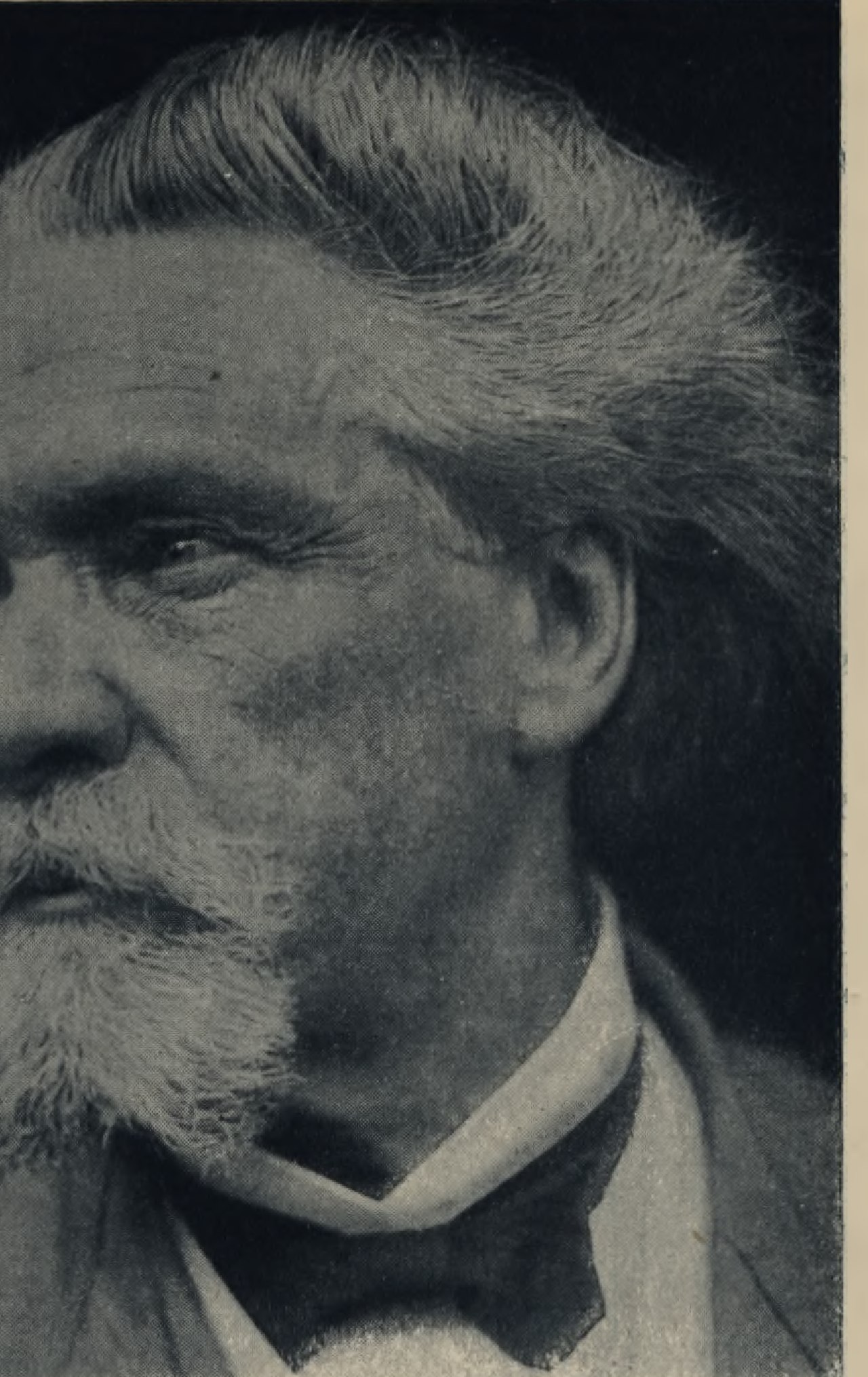
L. Mezhericher makes a long-focus portrait lens out of an ordinary short-focus one, by adding a 70-kopeck spectacle glass — and so carries a “portrait camera” in his pocket.
Sovetskoe Foto has already given counsels on the application of a spectacle glass for the aim of getting soft portrait shots. In the present note I should like to share with the readers of the journal the experience of work with a spectacle glass, the extreme simplicity of which is accessible to every amateur, if only his camera has a double bellows draw. I have a folding camera “Folding Gaumont” 9×12 cm with a Zeiss-Krauss Tessar F/4.9, with a focal length of 130 mm. The lens draws very sharp, “dries” portraits. Besides, being short-focus, it does not allow shooting “in close-up,” with a great approach to the object. In this case a sharply unusual perspective of the face’s proportions and an ugly dissimilarity are created.
I measured the outer diameter of the lens mount. I got 33 mm. In the shop of Gosmedtorgprom (Moscow, Kuznetsky Most 20) I chose a spectacle glass, double-concave (for the short-sighted), of two dioptres. It cost 70 kopecks. I left it till the next day, having asked that it be given a turned diameter of 33 mm (this is done without additional payment). Having got the glass ready, I glued it into a cardboard sleeve of the size of the lens mount; the sleeve I pasted inside with a strip of soft material. By this the attachment was ready. When I put the glass on the front end of the lens, the focal length of the latter increased to 220 mm, requiring a corresponding draw of the bellows. The image, in shooting from the same place, became almost twice as large, the perspective distortions disappeared. Naturally, with the increase of the draw the light-power of the lens had to be counted less (about F/9), and the exposure increased fourfold. In respect of the quality of the drawing the result came out splendid: I got a long-focus lens, with an insignificant difference between the optical and the chemical focus, a satisfactory depth and field of sharpness, and a tender, airy drawing. The field of sharpness at full aperture has a diameter of 95–100 mm, which at the format 9×12 cm is quite sufficient. At a small diaphragming the correction sharply improves. By the attached shot one can judge of the results I obtained. The “Portrait of an Old Man” is made with the Tessar F/4.9, at full aperture, with the attachment of a spectacle glass of 2 dioptres, in July at 2 o’clock in the afternoon: a sunny day, deep shade, exposure 1/15 second, orthochromatic plates “Red-Star.” The shot is reproduced whole (the plate 9×12 cm), the edges not cropped. I much advise the comrade-amateurs, and the photo-reporters too, to get the described attachment; it will give the possibility of carrying with oneself an artistic portrait camera.
— L. Mezhericher