
N. D. Petrov opens a new department — guiding criticism of the work of the already-succeeded photographers — and reviews five shots.
(From the editors: The editors with satisfaction note that in comparison with the past year the general level of the shots sent by readers has now risen so much that the editors find it necessary, from No. 1 of 1928, in connection with the increase of the journal’s volume, considerably to increase the quantity of placed readers’ shots, introducing a permanent department in which would find a place all the best of what is sent by our readers.)
In photographic works where the technique is definitively conquered and serves only as a means of the author’s expression, where the devices of this technique are imperceptible to the viewer — in them already dominates the element of artistry. Such works our journal places in the form of independent artistic illustrations, serving as models for work. On the other hand, the photographic processes do not present such huge difficulties for those who wish to master them. In the very process of mastering this technique, many photo-amateurs can give, and do give, works on which one wishes to stop attention. Besides the usual model illustrations, “Sovetskoe Foto,” going to meet the wish of its readers, will place on its pages these works too. Thus for the readers opens a still wider possibility of placing their works in the journal, and thereby a greater possibility of revealing themselves and comparing themselves with other authors. In the department “Reviews of Shots” will be placed little-successful works — there the approach to them is pedagogical, and on the first plane is study; in the department opened by us are works of already-succeeded photographers — to them we have a guiding criticism. Before us are five works of various authors.
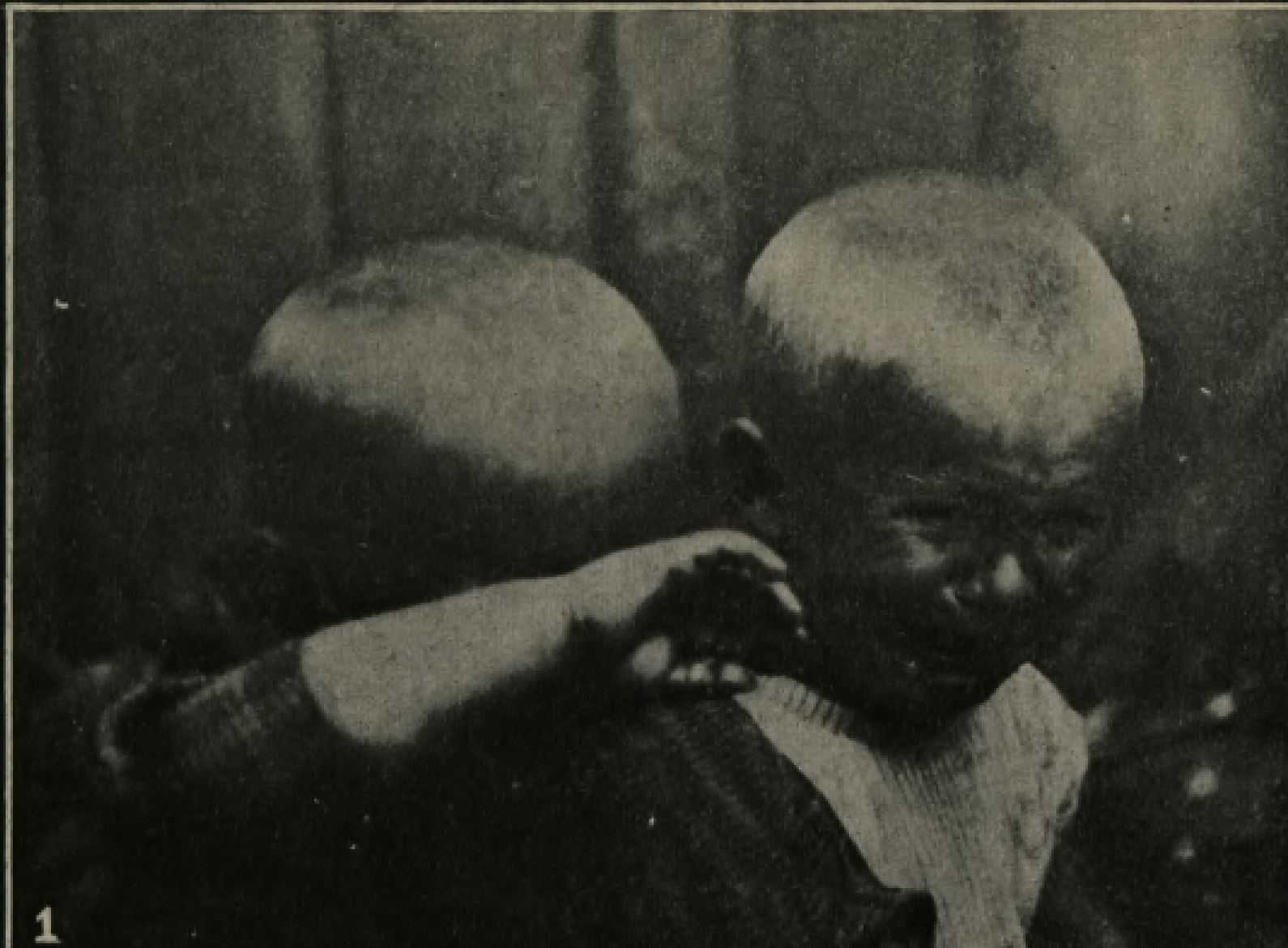
Yu. Zaitsev (Bezhitsa) produces a big impression on the viewer. His “Hurt Ones” are caught with skill and not badly lit. Let the reader cover a little the upper part of the shot — then it is easy to be convinced that the shot would gain even more in expressiveness. At a good photographer even the scissors should be one of the means of the expression of his own thoughts.
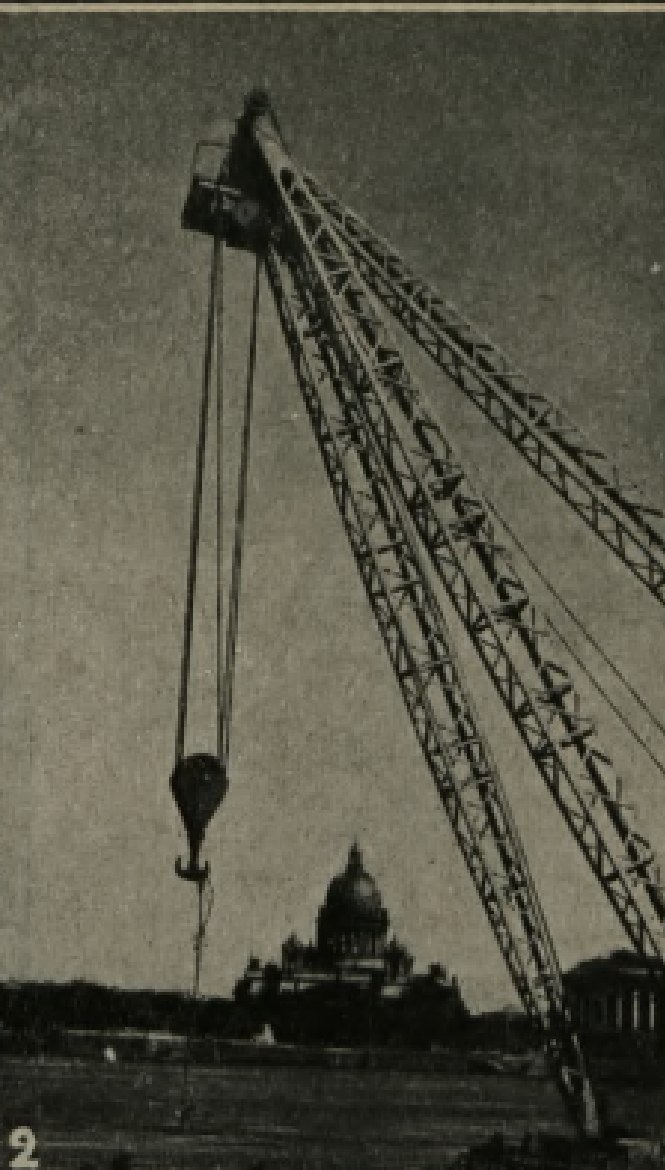
A. Teleshov (Leningrad). Here the construction and the height of the hoisting crane are interestingly revealed. The juxtaposition of the grandiosity of the mechanism with the buildings on the other bank of the Neva, the skilfully covered surface of the sky, create a correct perspective in the shot. The technique is good.
“Cabbage” by Akmolinsky (Moscow) — a simple print on bromide paper. The lighting chosen by the author does not spoil, but rather emphasises the structure of the cabbage leaves. The technique is good. In the compositional respect it would be better not to give the female figure so centrally; the presence of this figure is necessary, but it should have been much more to the right.
Pavlovich (N.-Novgorod) — “Melted Hoarfrost.” To convey all the fineness of the nuances of these water-drops on the feather, technique was needed, and the author has it. The subject is chosen interestingly and the design quite succeeded.
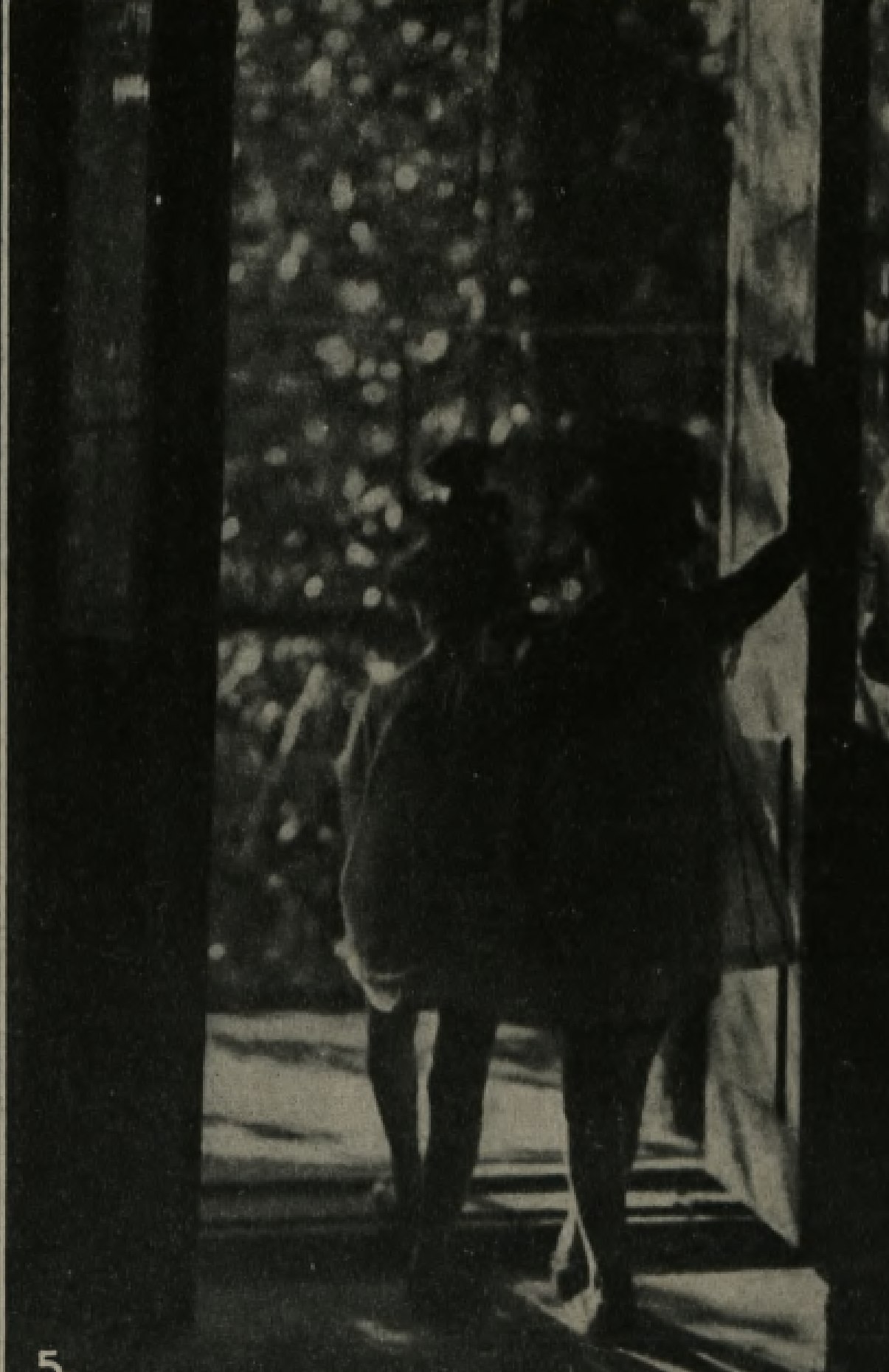
N. Ozerov (Kiev) gives a beautiful study of shooting against the light. Usually such shots present significant difficulties, both by the presence of great contrasts and equally by the possibility of getting halos. Despite this, the photographer managed to give the shot a peculiar softness, up to the working-out of the details in the shadows. The figures of the children are amazingly proportional in this, though not new, but interesting composition.
— N. D. Petrov