
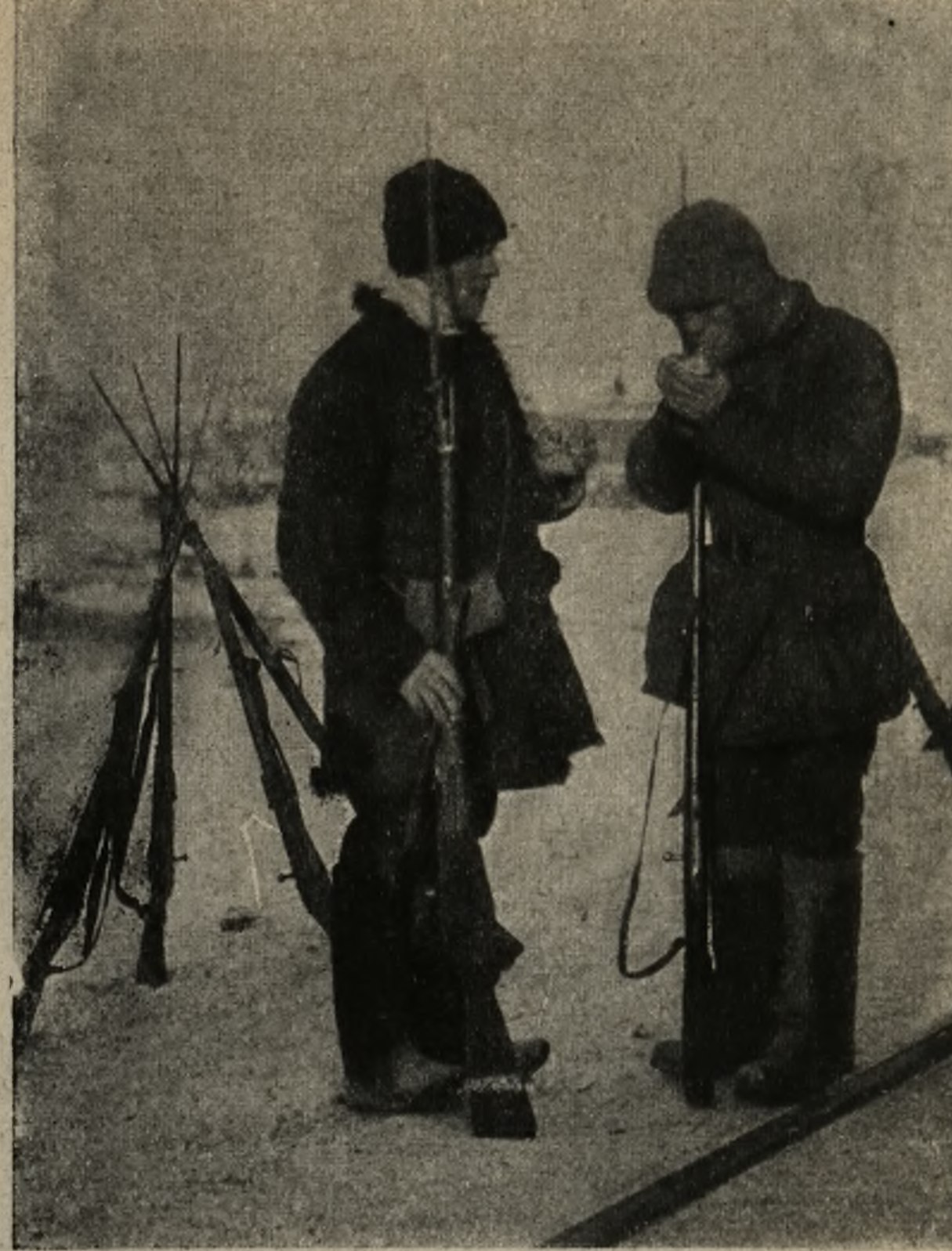
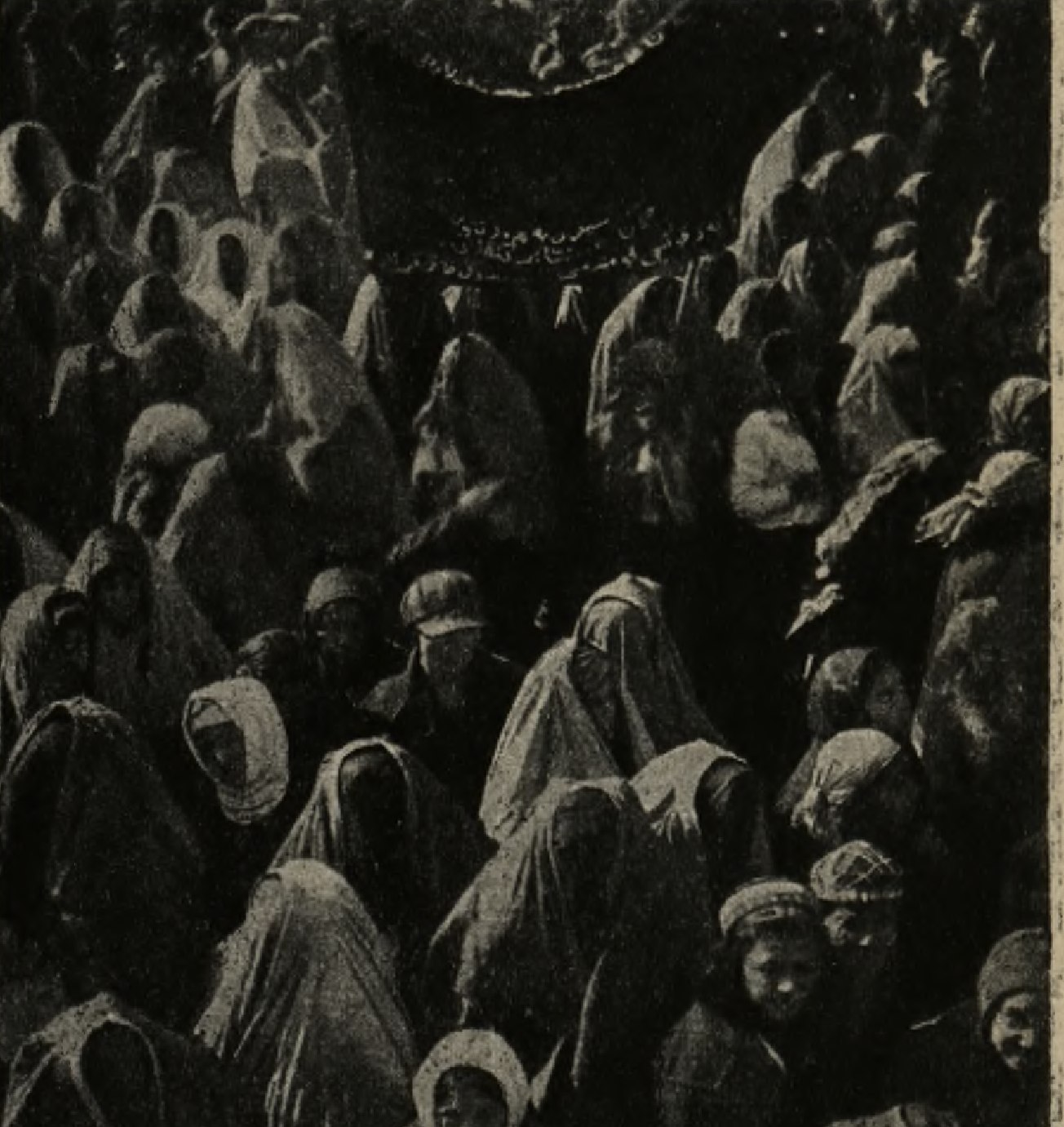
N. D. Petrov’s review of readers’ shots — why the editorial office often prints the shot the author least expected. Borovsky’s sincere “In the Fog,” Koretsky’s fairy-tale genre, Nebylitsky’s too-close harbour cranes, Zelmanovich’s over-centred Moscow lane, Usov’s “Pre-conscripts,” and the finest of all — Velikanov’s “Uzbek Women at a Meeting,” snatched from the crowd.
The photo-amateur is sometimes surprised that of the series of shots sent by him the editorial office of “Sovetskoe Foto” chooses for placement in the journal such as he least of all, in this respect, reckoned on. This happens from the fact that, besides a minimum of technique, in a shot one wants to see also the simplicity and liveliness of the subject and its no less simple working-out; the photo-amateur, however, either often does not yet notice the richness of the themes surrounding him, or at times underestimates his own achievements.
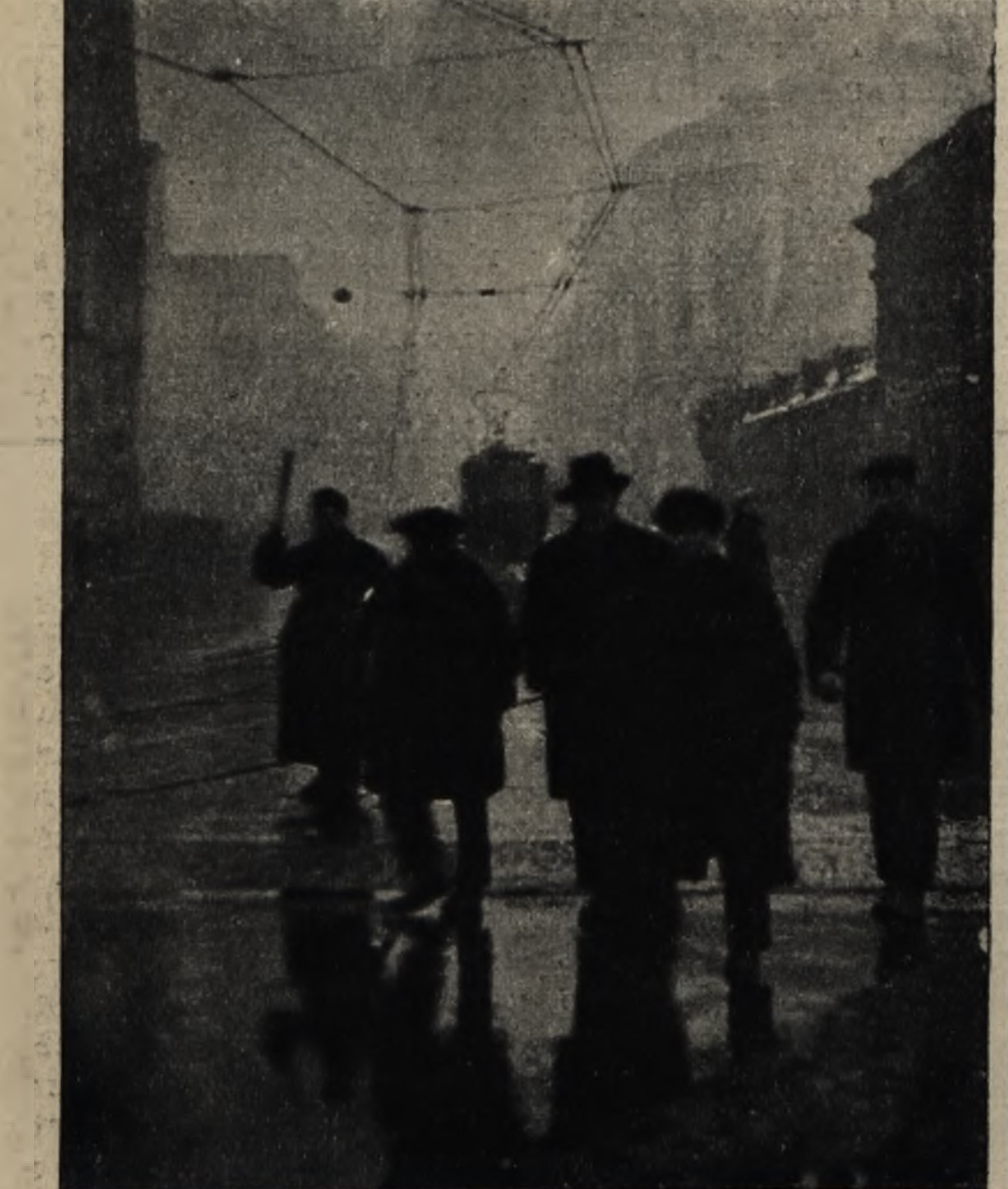
It is possible that neither S. Borovsky nor A. Koretsky (Moscow) exactly do not appreciate the works placed here. The first has a shot, “In the Fog”: it does not shine with novelty of theme, but on the other hand bribes by its sincerity. Although the author has not yet clarified that the movement of the pedestrians would be even more emphasised if they were going, in the given case, not toward the viewer but away from the viewer (the shadows would then be behind), nevertheless the depth of the street and the foggy air are conveyed sufficiently vividly.
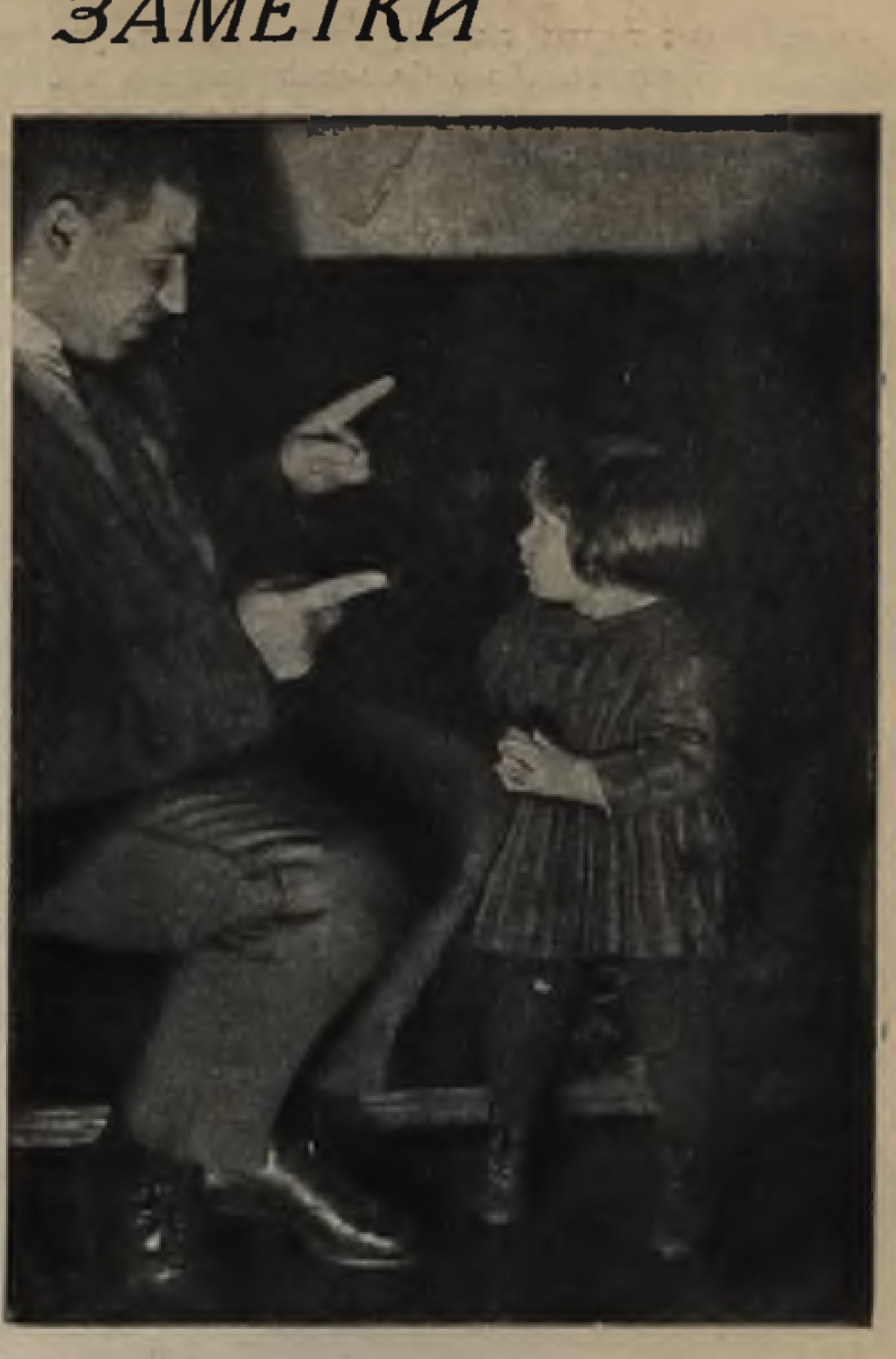
The second author not badly managed a subject of genre character. His shot, “Tells a Fairy-tale,” is not only simple but expressive, thanks to the fixed attention of the viewer: the two fingers of the storyteller and the turn of the child’s head are the emphasised elements of the shot. The author correctly threw out of the shot the superfluous (the back of a model), but in vain left the attention-breaking light patch on the footwear. Genre shots with children as model are difficult, and therefore the author’s attempt should be welcomed.
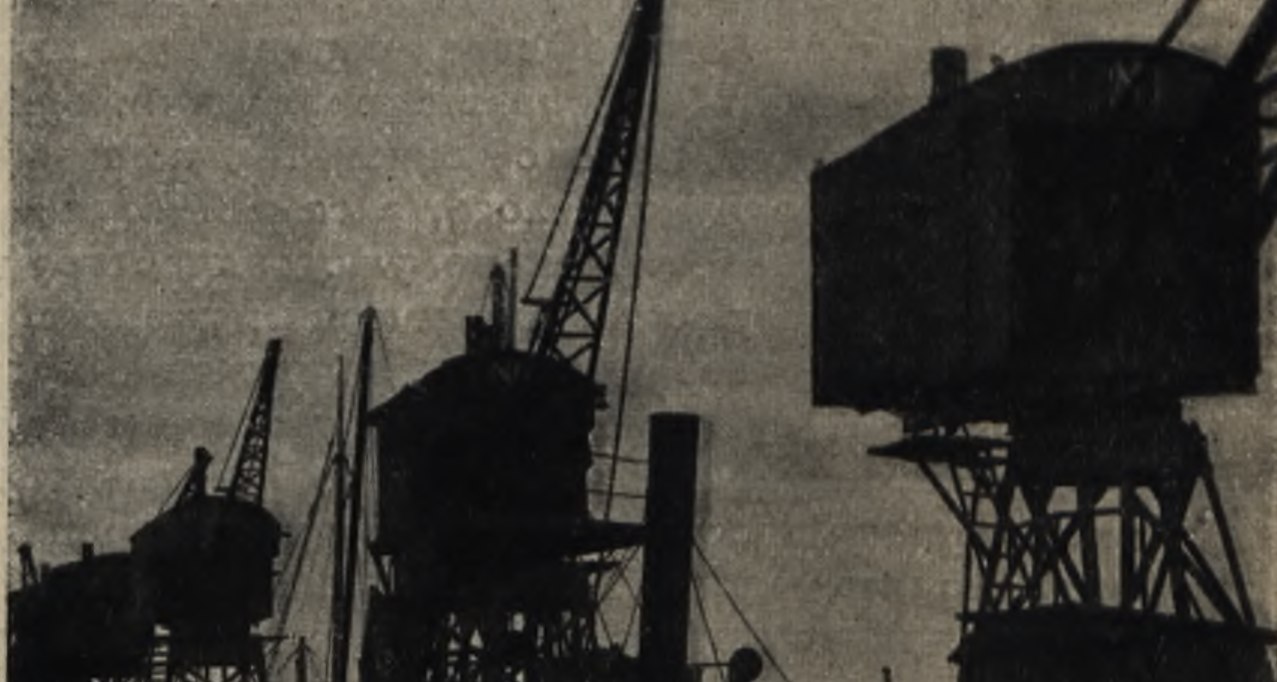
With Nebylitsky (Odessa), “In the Port,” there is a completely correct attempt to give, by a corresponding choice of point of view, an impression of perspectivity from a row of coastal lifting-cranes. More or less successfully the perspective is conveyed. But because of the circumstance that the point of view is taken all the same too close, this impression is lost. To this one should add that, thanks to the little advantageous lighting, the shot does not produce that impression which is conceived by the author.
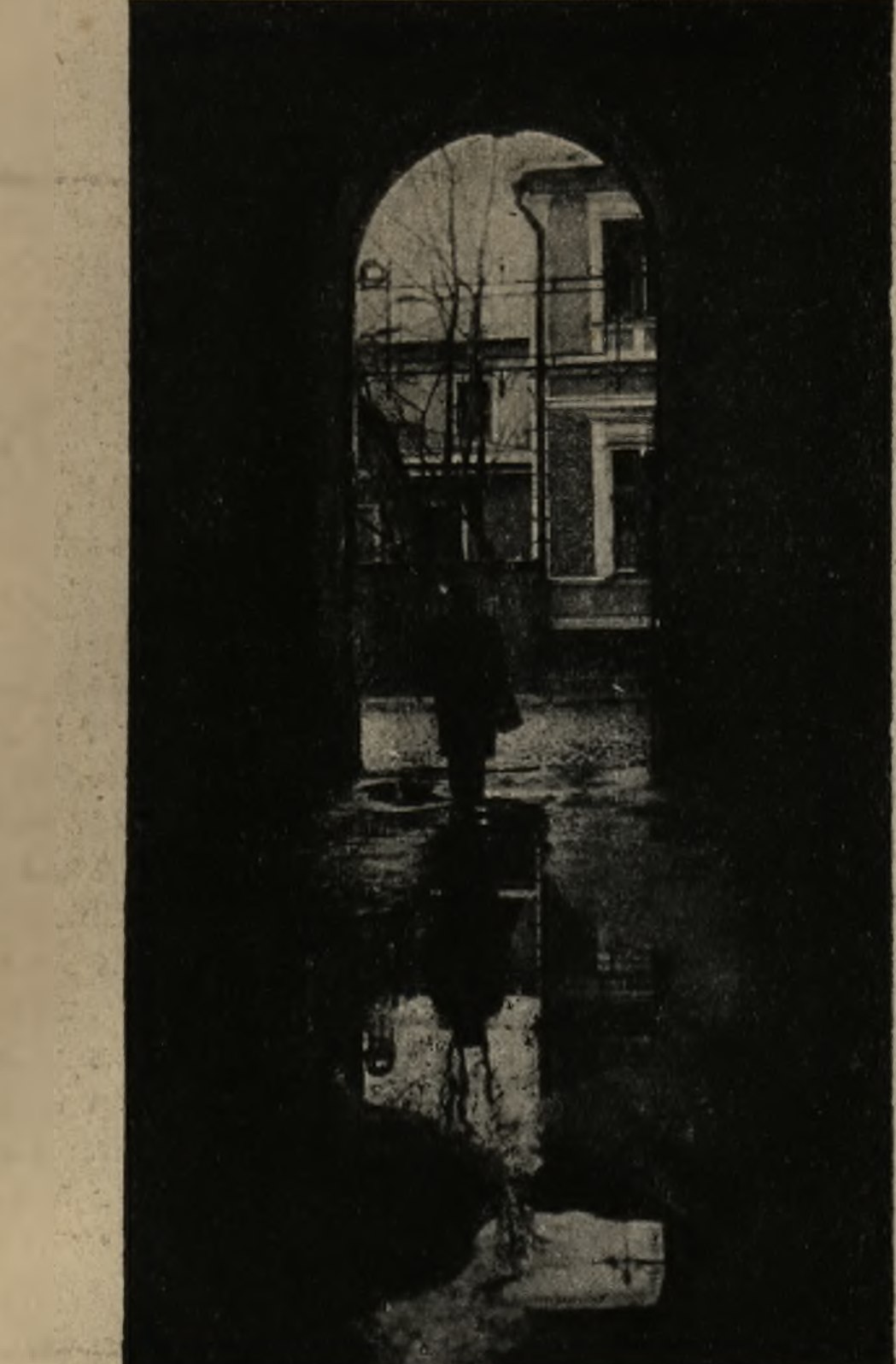
In his shot “In a Moscow Lane,” G. Zelmanovich (Tashkent) works out the theme of the contrasts of dark and light and, together with that, tries to give an impression by medium tones. This work is interesting by conception (a difficult shot!), but with the compositional side the author did not cope. It seems to us that the interesting-in-itself foreground (the puddle and the reflection in it), technically well worked out, occupies in the frame too central a position. The same also in relation to the gate with the figure: were they a little to the left or to the right, the impression would be greater. All the same, in this shot there is more good than bad.
The shot of V. Usov, “Pre-conscripts,” would unconditionally significantly win at a more expressive lighting. Besides, it seems to us that the figures of the pre-conscripts should have been taken less large (farther from the apparatus). Nevertheless, both by tone (the gamut of tones of the print) and by the sincerity of content, the shot is very interesting.
Just as A. Velikanov (Old Bukhara) did, one must frame shots of a human crowd, always in its mass more or less monotonous. In his shot “Uzbek Women at a Meeting” not only was the point of view skilfully taken (from somewhere above), but still more skilfully, and even boldly, was snatched from the crowd its most characteristic part. It seems to us that this is the best by expression shot of all considered in this talk.
In conclusion one should note with satisfaction that also by their thematic approach the shots of our photo-amateurs little by little acquire the character of that content-fulness of which we so often have to speak.
— N. D. Petrov