
N. D. Petrov’s running critique of readers’ submissions: a pushball game shut into too narrow a frame; a soft, aplanat-made “Portrait” from Kiev that refutes the belief that only anastigmats make good portraits; a child’s portrait that would gain from cropping; a “Blacksmith” strong in technique but weak in showing the labour itself; an original study of “Shadows”; and a Baku attempt to render the very texture of glass.
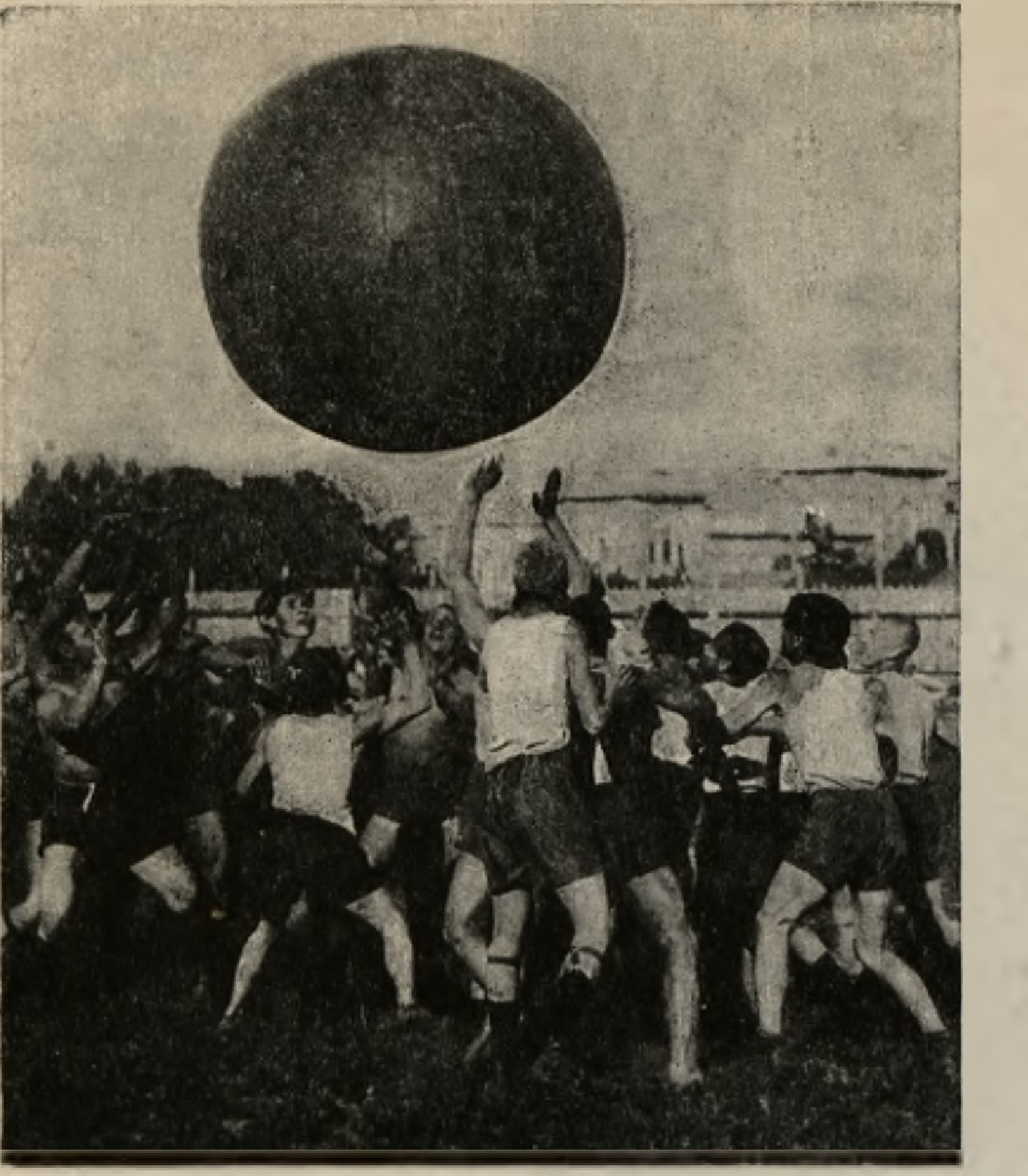
“The game of pushball” by S. B. (Moscow) — by the successfully-caught moment the shot could have been very interesting. Unfortunately, one does not feel in it the free area of the field where this game takes place. Meanwhile, summer mass sport is characterised precisely by the free space of the field and of the air. The quite natural and sufficiently expressively-conveyed crowd of players the author in vain limited and shut into a narrow frame of the shot. If on the shot the planes surrounding the players had been given, one would have felt in it both the space of the field and the air; and what is so characteristic for sport — movement — would have been conveyed more distinctly. On the theme of mass sport in the field our young photo-amateurs should work. This theme is instructive not only for the beginning photographer, but also for those who — like the given author — are already close to the right road.
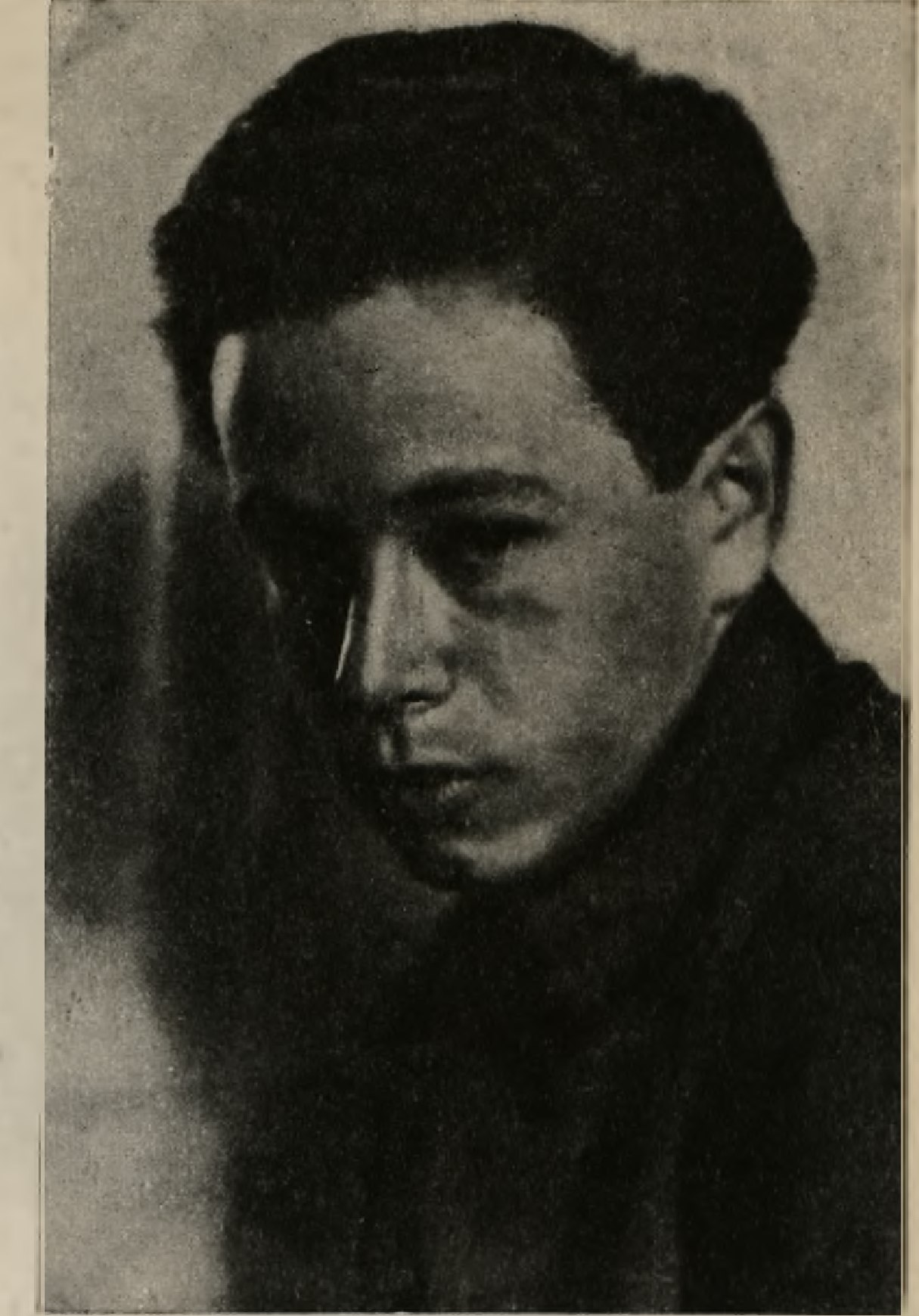
A far-from-bad “Portrait” is given by L. Shamrinsky (Kiev). It was shot with an aplanat. The pleasant, expressive softness of drawing in this portrait can once more serve as a refutation of the still-widespread opinion that only with fully-corrected lenses (anastigmats) can one get a good portrait. In fact, anastigmats least of all suit this kind of shooting. Besides the reasonable choice of optics, the author sufficiently well organised the lighting of the model (daylight with illumination by an electric lamp), from which the volume of the head and the modelling of the face were brought out. As a reproach one can put the restless (light) stripes on the background and the superfluous highlight (the second one) on the nose.
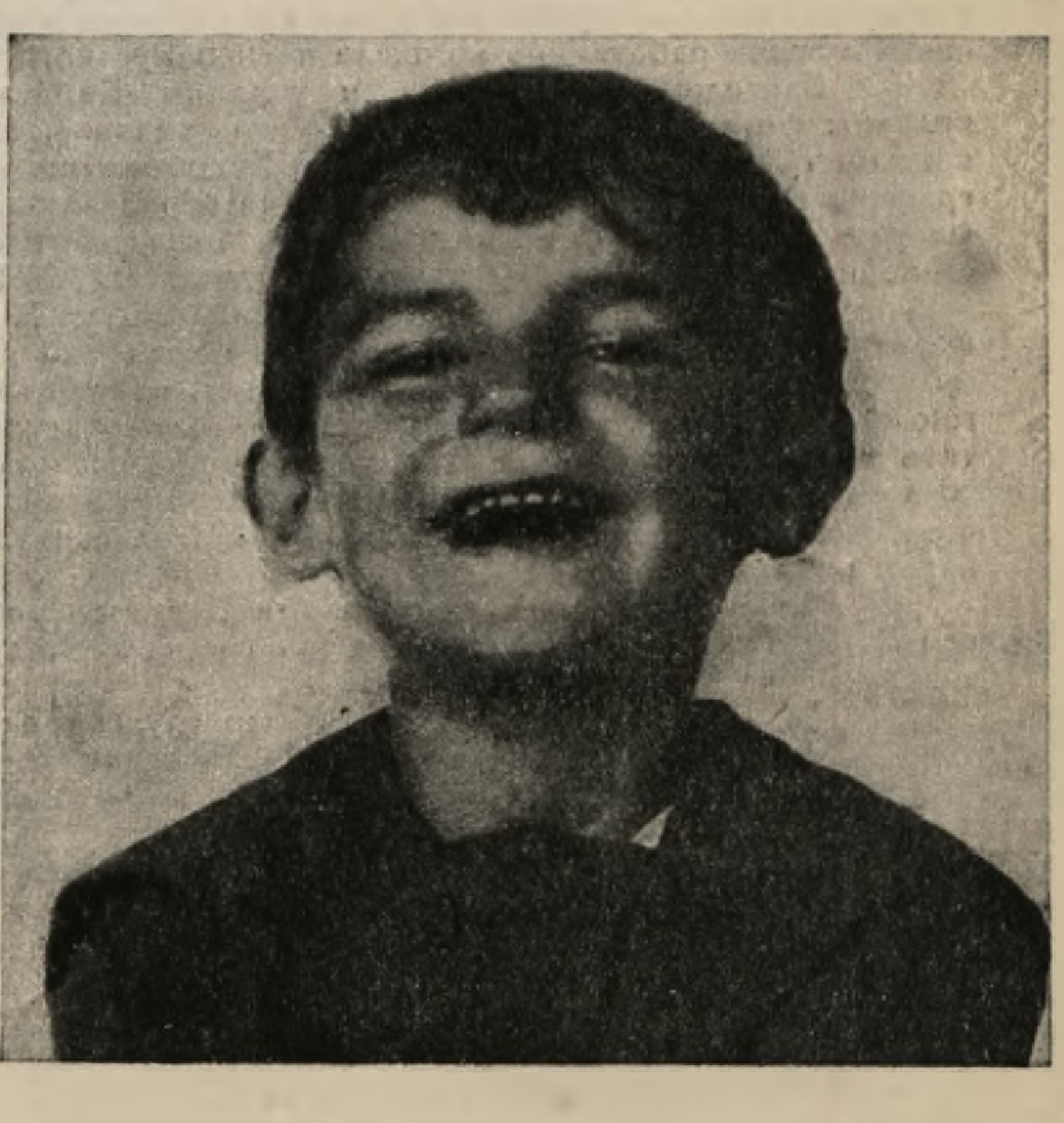
If P. Moiseenko (Kharkov) does not finally solve the task of a child’s portrait in photography, then his approach to such shots is quite correct. The model is well lit, and the conveyance of the softness of the child’s face quite succeeded — which again an anastigmat could hardly give. It seems to us that this portrait of a boy would gain from its enlargement, on condition of the destruction of all the superfluous that hinders in a portrait the fullness of impression (cropping the print at the edges, along the verticals, right up to the shoulders).
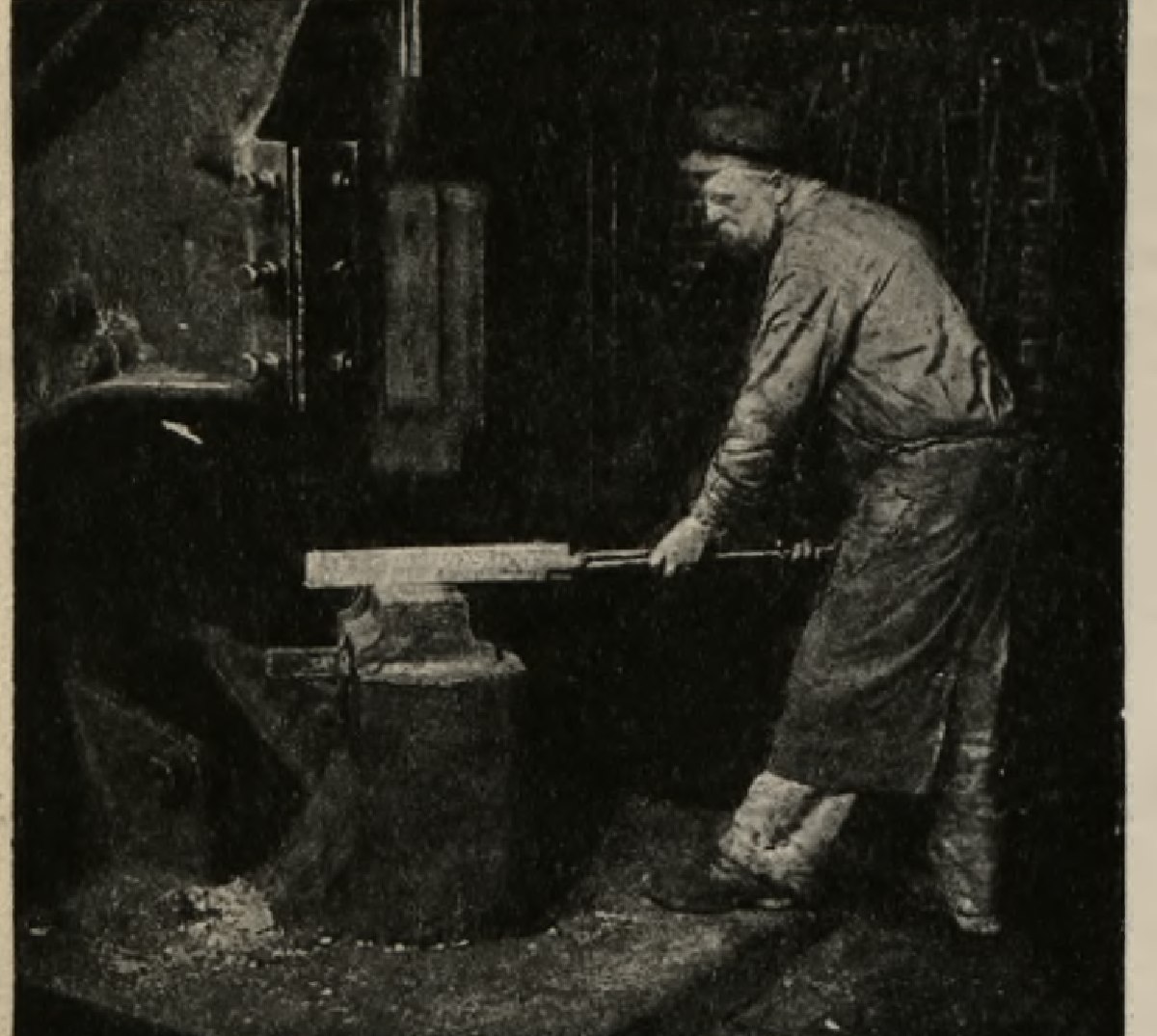
More and more our photo-amateurs devote their attention to the fixation of labour processes. These subjects of shooting are always attended with known technical difficulties, and do not often succeed even for experienced people. Therefore the shot of F. T. (Moscow) — “Blacksmith” — must be assigned to the number of more or less successful attempts of such a kind. In any case, for his purely technical achievements no reproach can be thrown at the author. Only in the compositional part did he not yet manage to give the figure of his “blacksmith” such a position at which precisely the labour process would be felt, and not the posing of the model. Nothing is given at once: having overcome the technical difficulties, the author will attain also the rest.
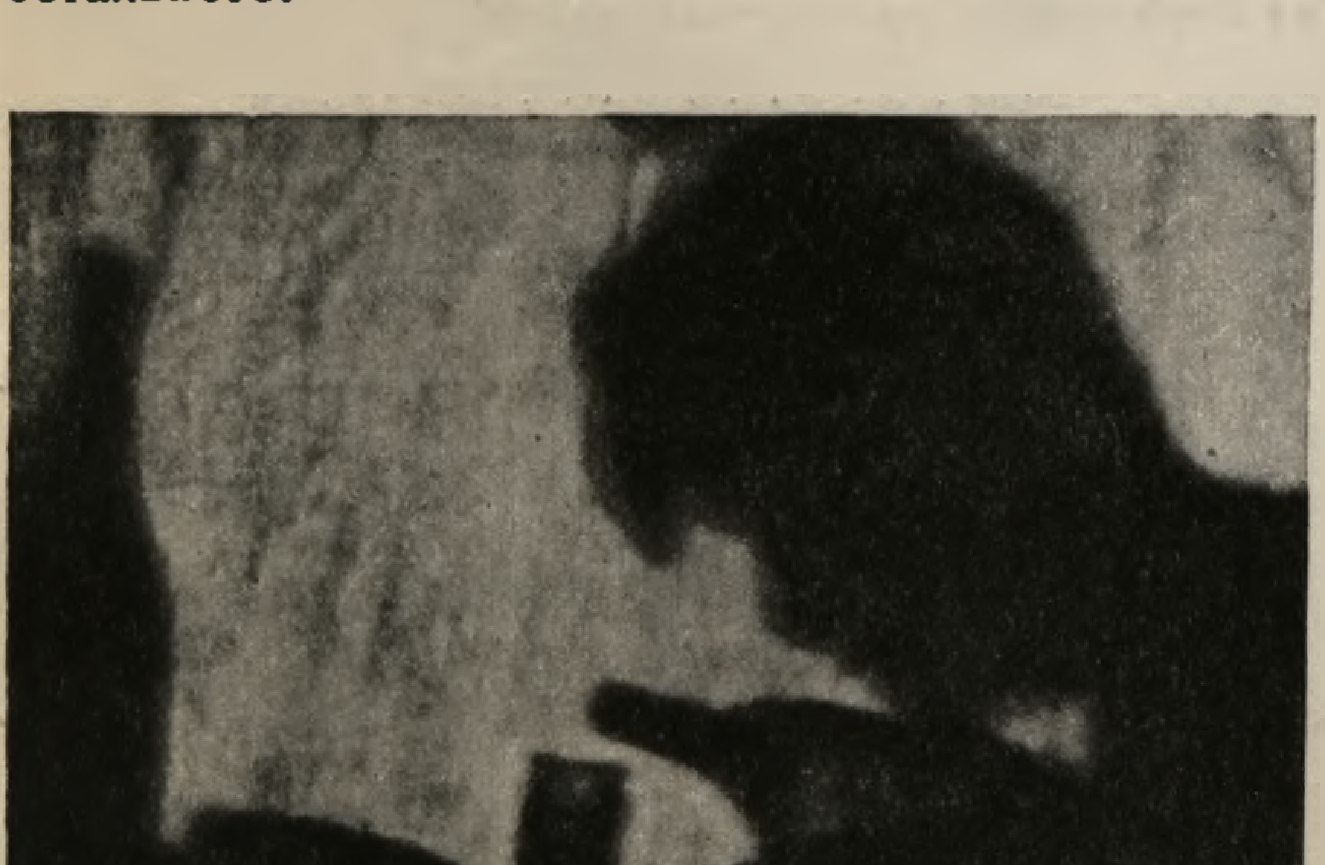
“Shadows” — a work unsophisticated in content, by the photo-circle of Gosplan (Moscow) — is original in the device, which is used comparatively rarely. It seems to us that this device can be used also for a more substantial theme.
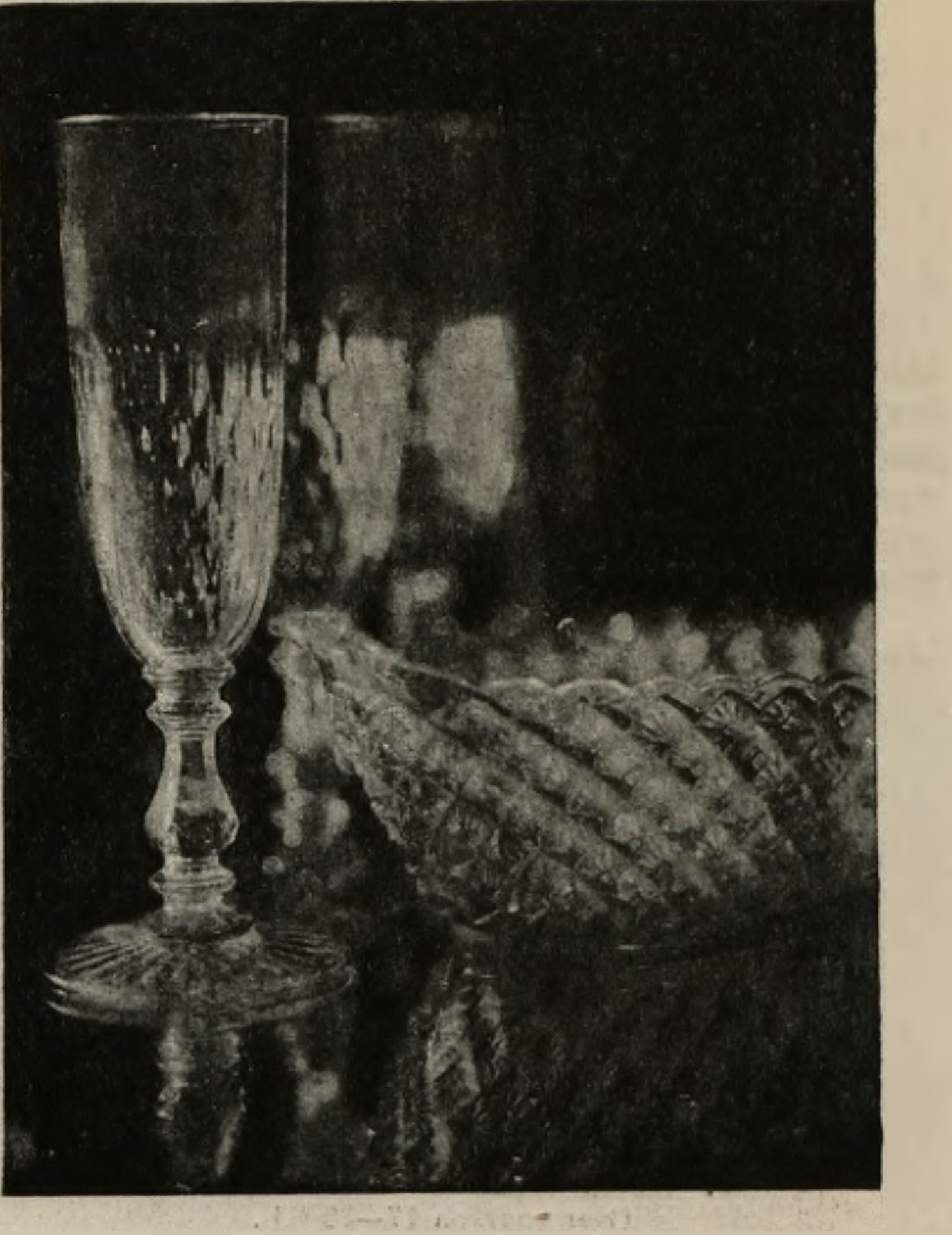
Interesting is the attempt of M. Fridolin (Baku) to convey the texture of glass as the material of things. In such a task the deciding moment is the lighting — it can emphasise the form of the object and the texture of the material, but can also distort them. All depends on where and how the light-source is placed (with the author the model was lit by three half-watt lamps). If the general impression from this work still leaves much to be desired from the author, then partly he all the same coped with the task. If this photograph had not borne the title given it by the author — “Glass” — the viewer would all the same have seen this glass on the shot, and nothing else. This one thing alone is already a significant achievement of the photo-amateur.
— N. D. Petrov