
N. D. Petrov’s critique of readers’ work: E. M.’s “Still Life,” the most interesting of the batch for the clarity of its conception; A. T.’s caught “physical-culture moment”; Ya. Legran’s “Cloudy Day,” really only a study of clouds; Kivkutsan’s technically fine but unreadable “Paris Mansards”; Penson’s far more telling “Corner of Old Tashkent”; and — a standout — the beginner Afremov’s “At Home,” a child bent over paper, whose lines and tones a more experienced amateur might envy.
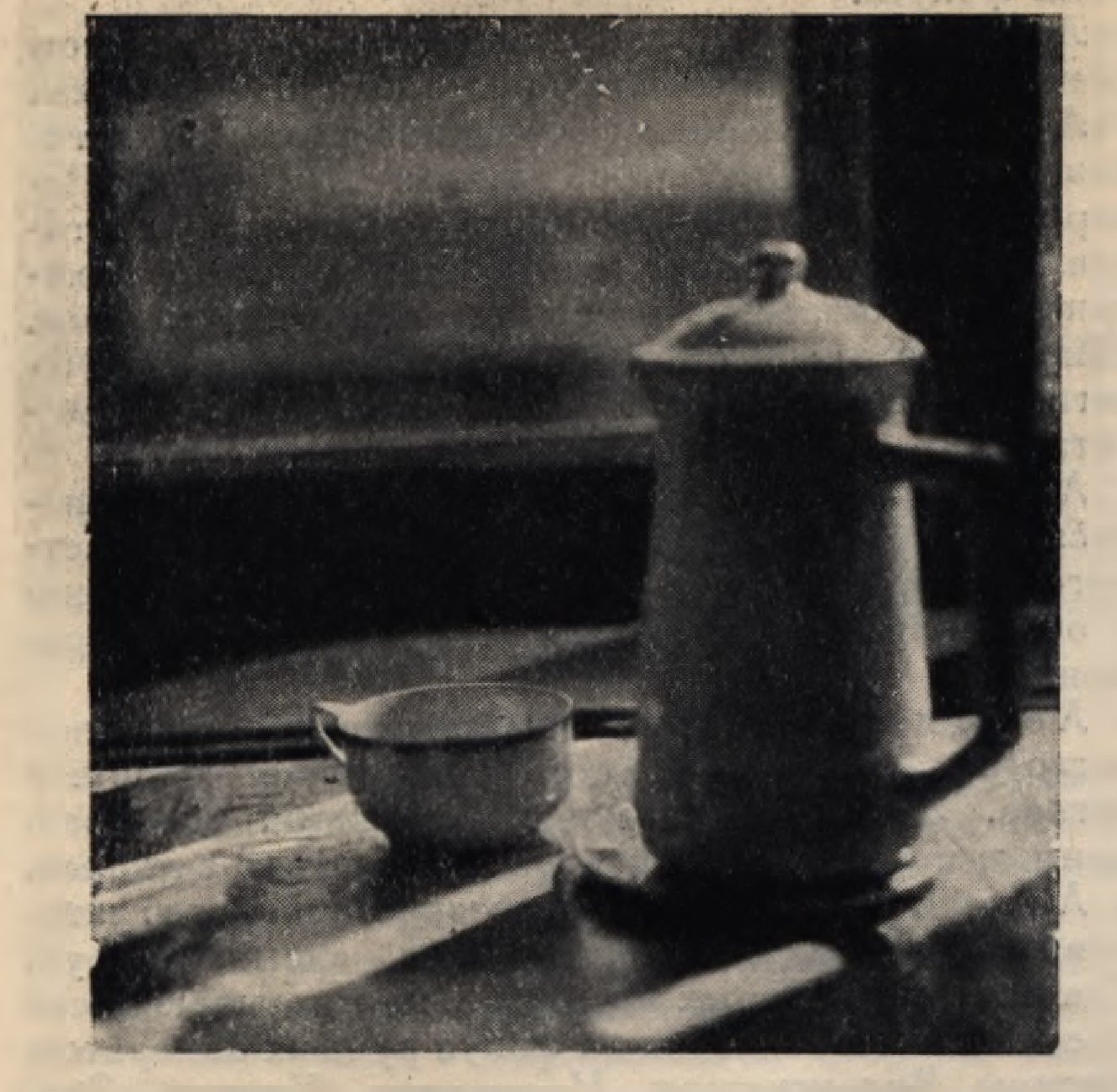
By the clarity of conception, the shot of E. M. — “Still Life” — should, perhaps, be recognised as the most interesting of the whole series examined here. On a theme extremely unsophisticated in content, the photographer managed to impart an interesting light-design, discarded all superfluous details, and by a good technique of conveyance made it so that the shot is looked at with interest.
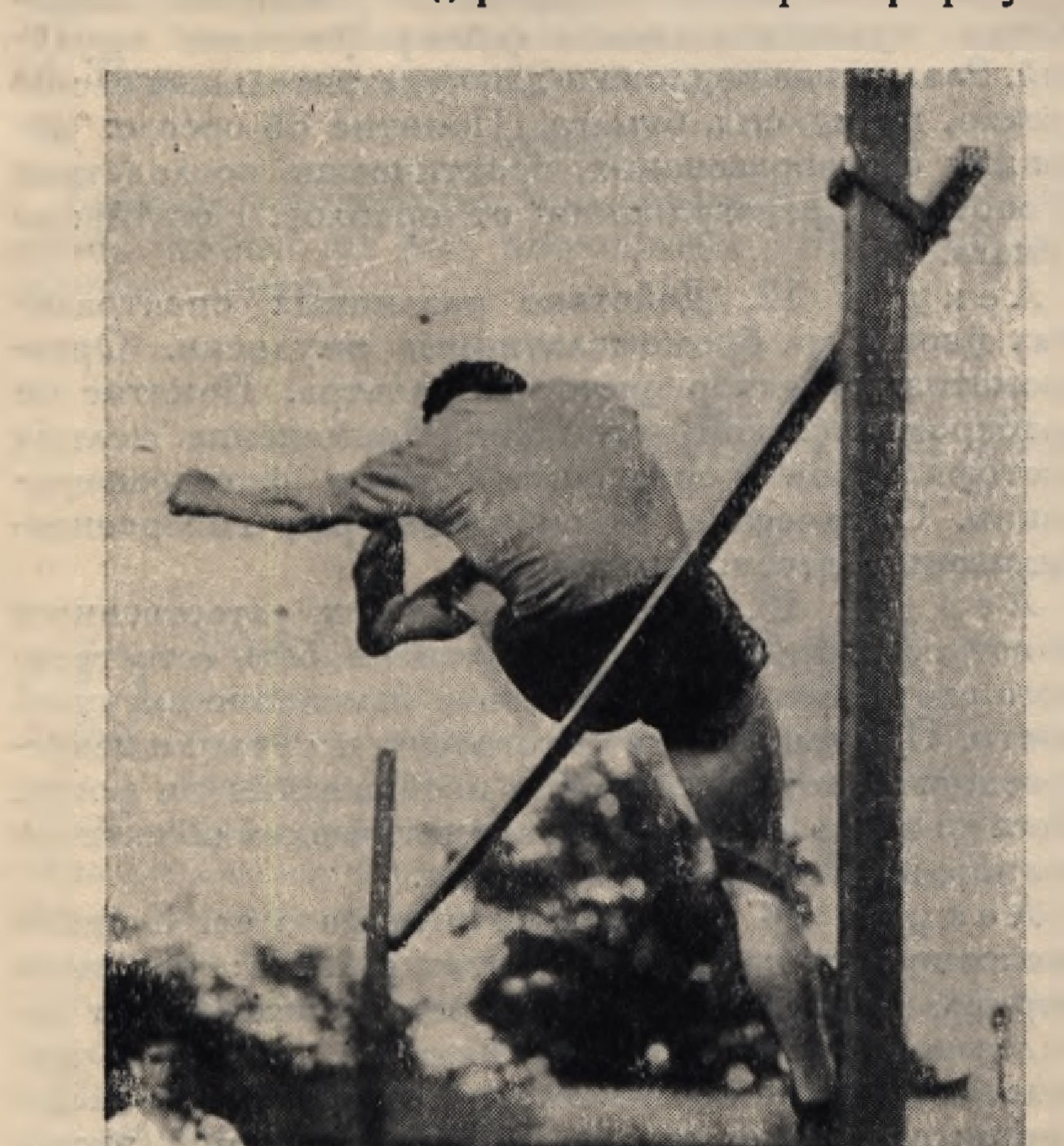
Successfully caught is “A Physical-Culture Moment” by A. T. To shots on this theme — and in general there are very many of them — one now wants to present requirements of a certain design and from the compositional side. It is difficult to say what in this shot hinders the fullness of impression: perhaps the point of view is unsuccessfully taken. In any case, the shot gives more impression at examination from afar. The working-out of such themes is immeasurably more difficult than any others whatever, and therefore this in itself quite not-bad shot deserves attention as an experiment in the fixation of a moment of physical-culture movement.
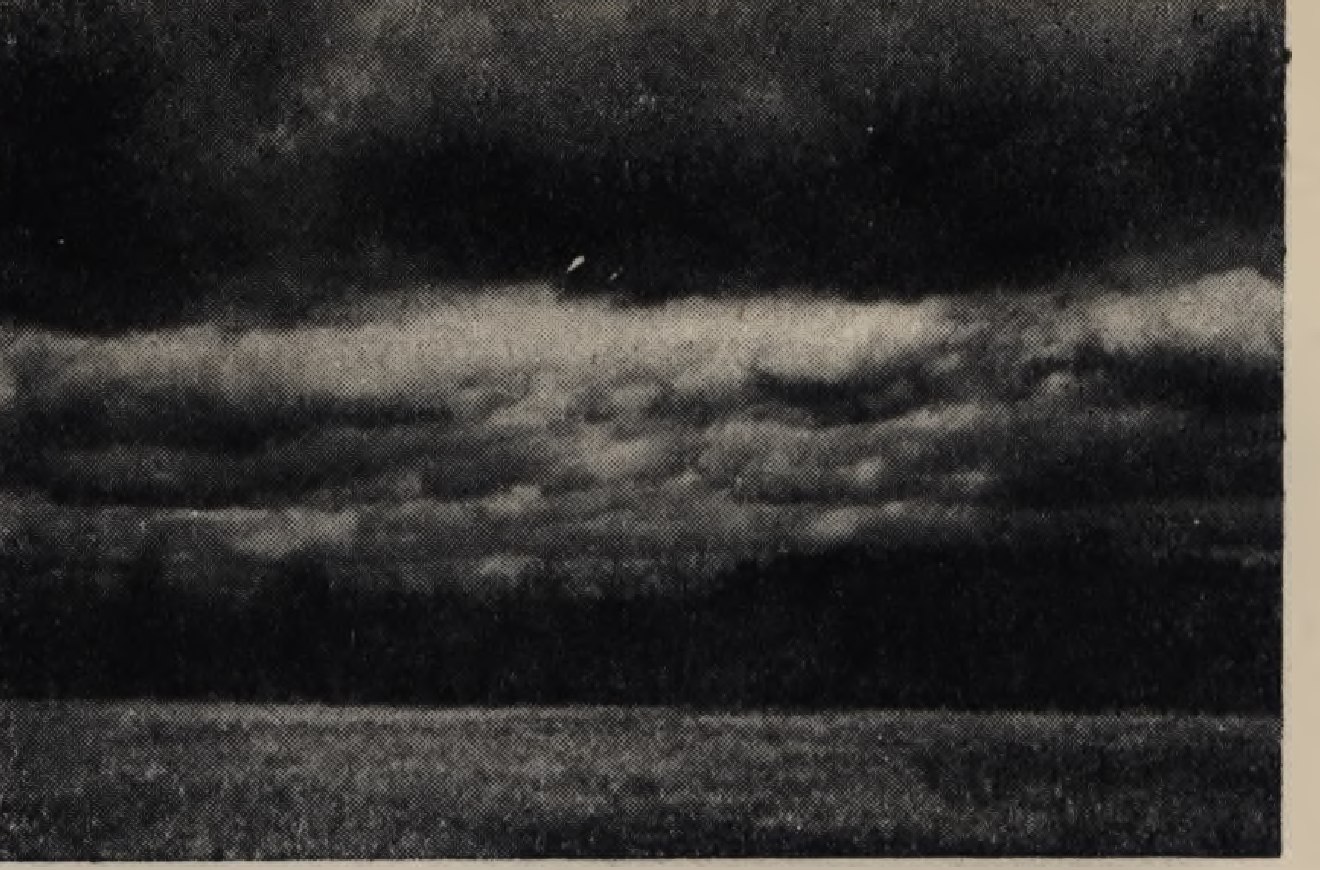
The shot “Cloudy Day” by Ya. L. should rather have been called “A Study of Clouds.” If the latter had not been on the shot, it would have presented decidedly no interest. To shoot clouds and print them from the negative is a task not so very difficult; in any case, a cloudy sky in a photographic landscape should be only one of the links of the general content of the shot. In the shot there are no compositional bases except the cloudy sky, and this in the given case is little.
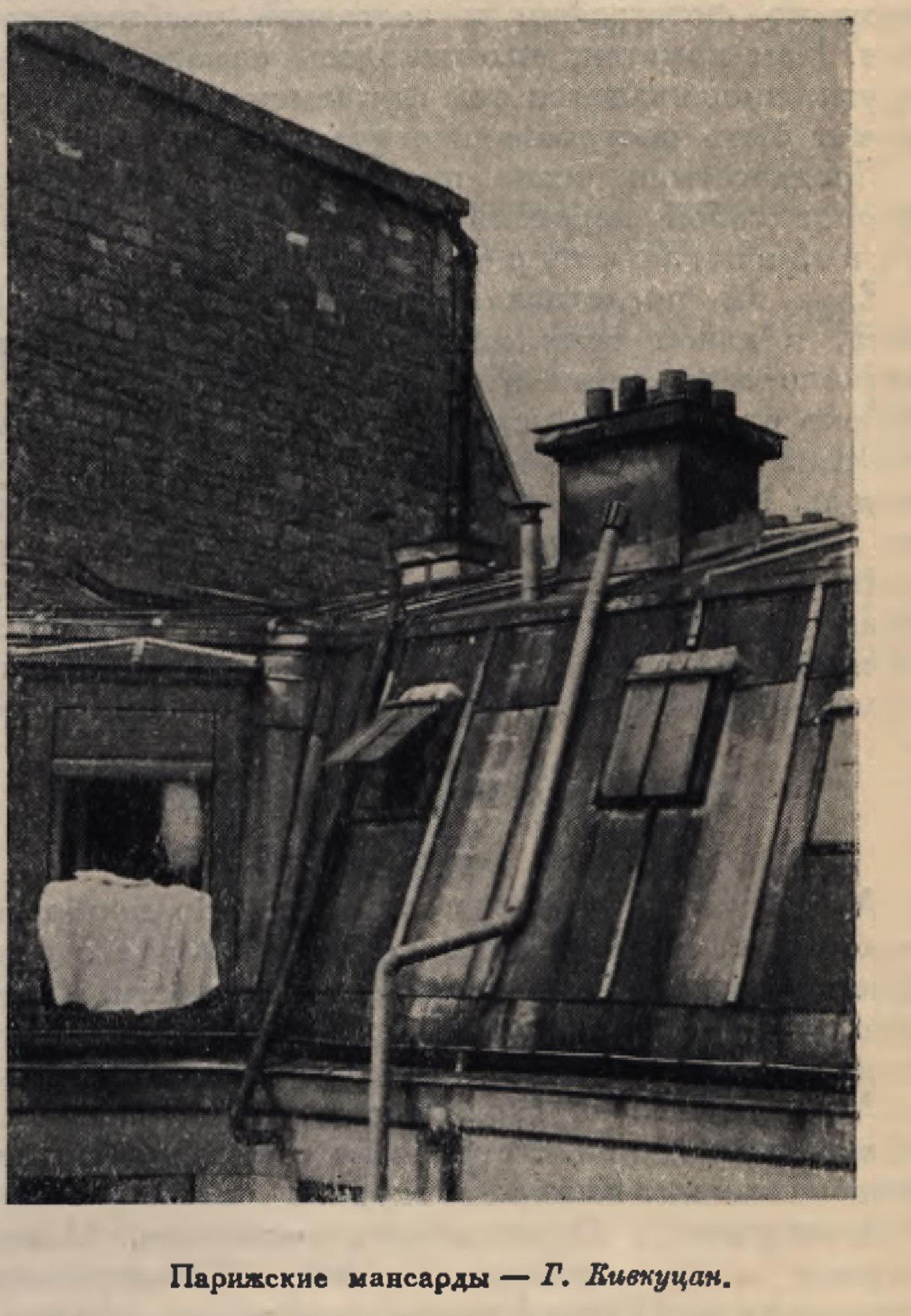
Technically very well executed, the shot of G. Kivkutsan — “Paris Mansards” — unfortunately does not produce the impression conceived by the author. A mansard is the inhabited attic of the tall Paris houses, the refuge of the poor. From this shot an uninitiated person will find it difficult to grasp what the author wanted to say. In the shot there is no impression precisely of that height on which the inhabited mansards of Paris are perched; there is no air (thanks to the white, paper-like plane of the sky); and the city is not felt at all. Good technical execution, perhaps the architectural details, and… only.
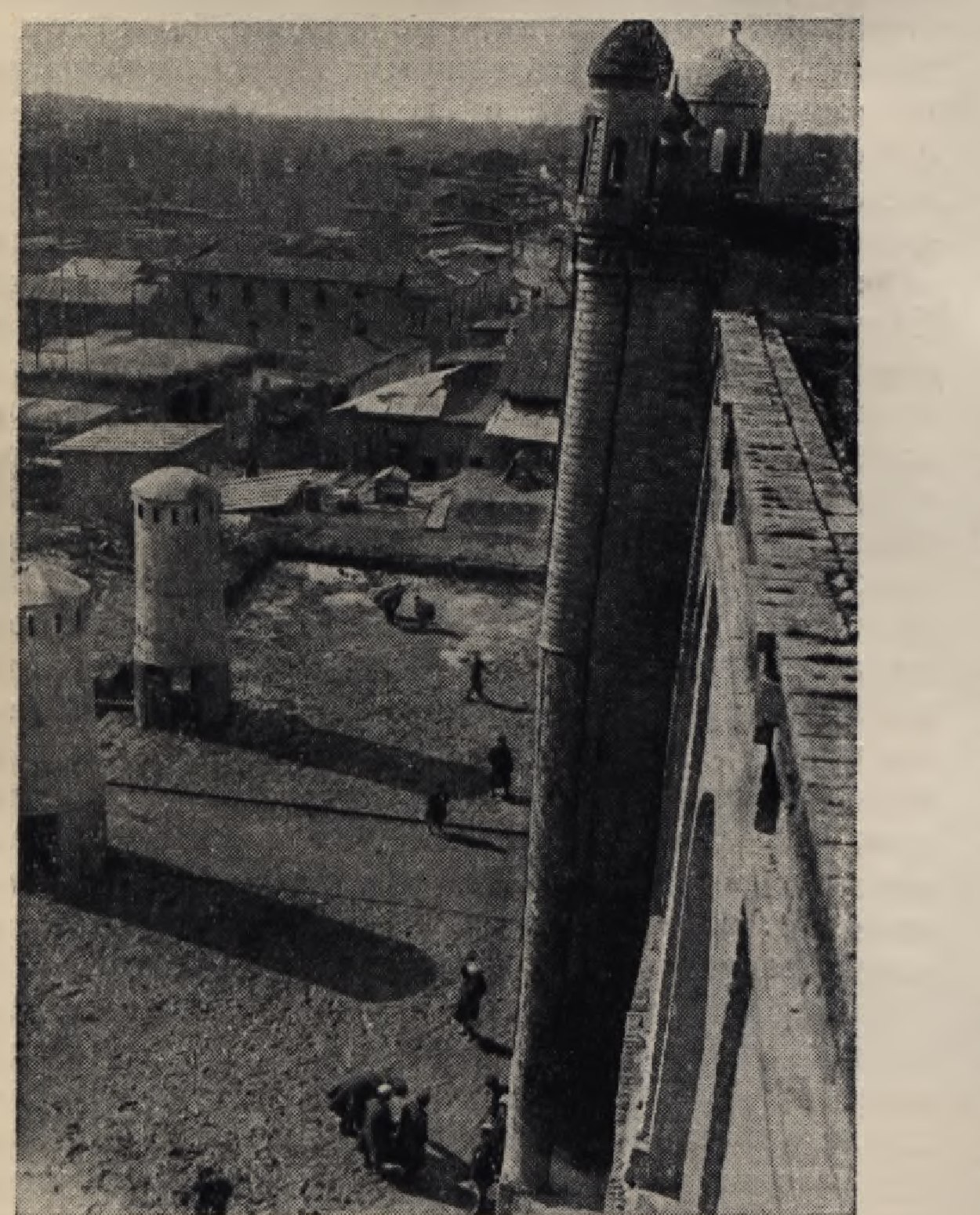
From this side the shot of M. Penson — “A Corner of Old Tashkent” — says much more to the viewer. Here the city and the character of its architectural ensemble are felt. The part of a huge building (a mosque) included in the right side of the frame gives not only an impression of the size of this structure, but also strengthens the impression of perspective. The moment of lighting (the time of day) is chosen successfully — these shadows from the two towers on the square are logically tied, in tone and in direction, with the lines of the buildings in the far planes. An original and not-badly executed shot.
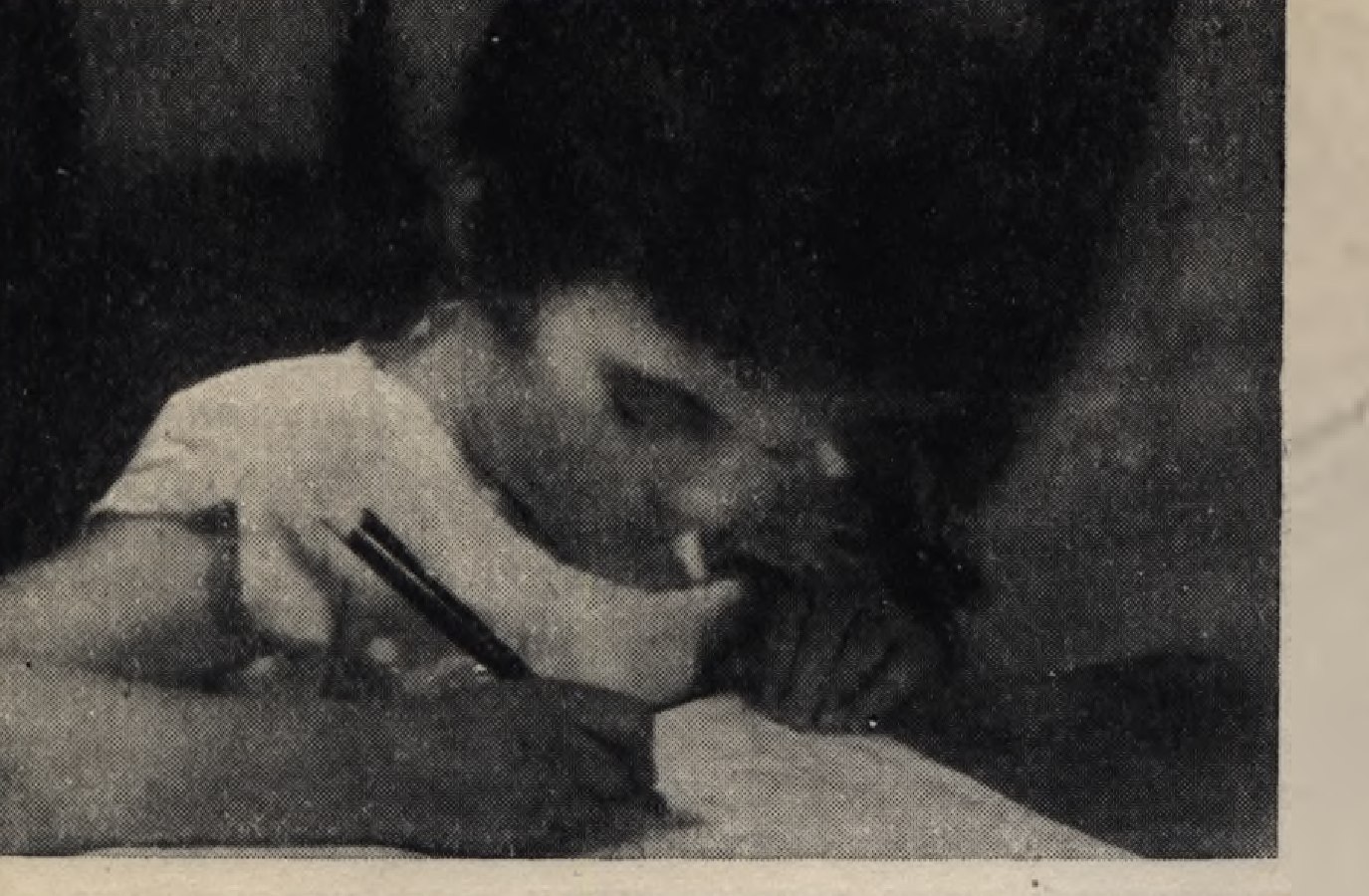
If one takes into account that G. Afremov is a beginning photo-amateur and has worked only a few months, then his shot — “At Home” — instils no doubts about the author’s further successes. Indeed, this photograph, whose lines and tonal spots even a more experienced amateur might envy, splendidly conveys the tense concentration of a child bent over paper. The position of the right hand with a pencil is such that it leaves the viewer no doubt about what the child is doing — one feels even the movement of this hand. Softly conveyed is the face of the child, and with sense is discarded the importunate sharpness of the background. A good shot.
In conclusion it should be said that the authorship of the shots examined here belongs, with very few exceptions, to little-experienced amateurs. Examining these works, we are more and more convinced of the reality of those successes which the readers of “Sovetskoe Foto” show.
— N. D. Petrov