
N. D. Petrov’s greatly-expanded critique of readers’ work (enlarged, the editors note, at the readers’ own request). The aim is to show, through good and bad examples, how one should and should not work — and, since every shot carries a meaning its author put into it, to ask why some comrades still spend effort and plates on subjects a pre-revolutionary amateur would have thought worth nothing. From a lit-scattered Budyonny portrait and a razor-scratched “highlight” experiment, through workers’ themes (the Tiflis porter, the forge, “Fastening the Beams,” the glass ceiling shot from below and the waste-basket from above), to two shots held up as useless — a man posing with six skeletons (“Our Future”) and a kitten in a lady’s shoe — and closing on a French comrade’s model “Shoemaker.”
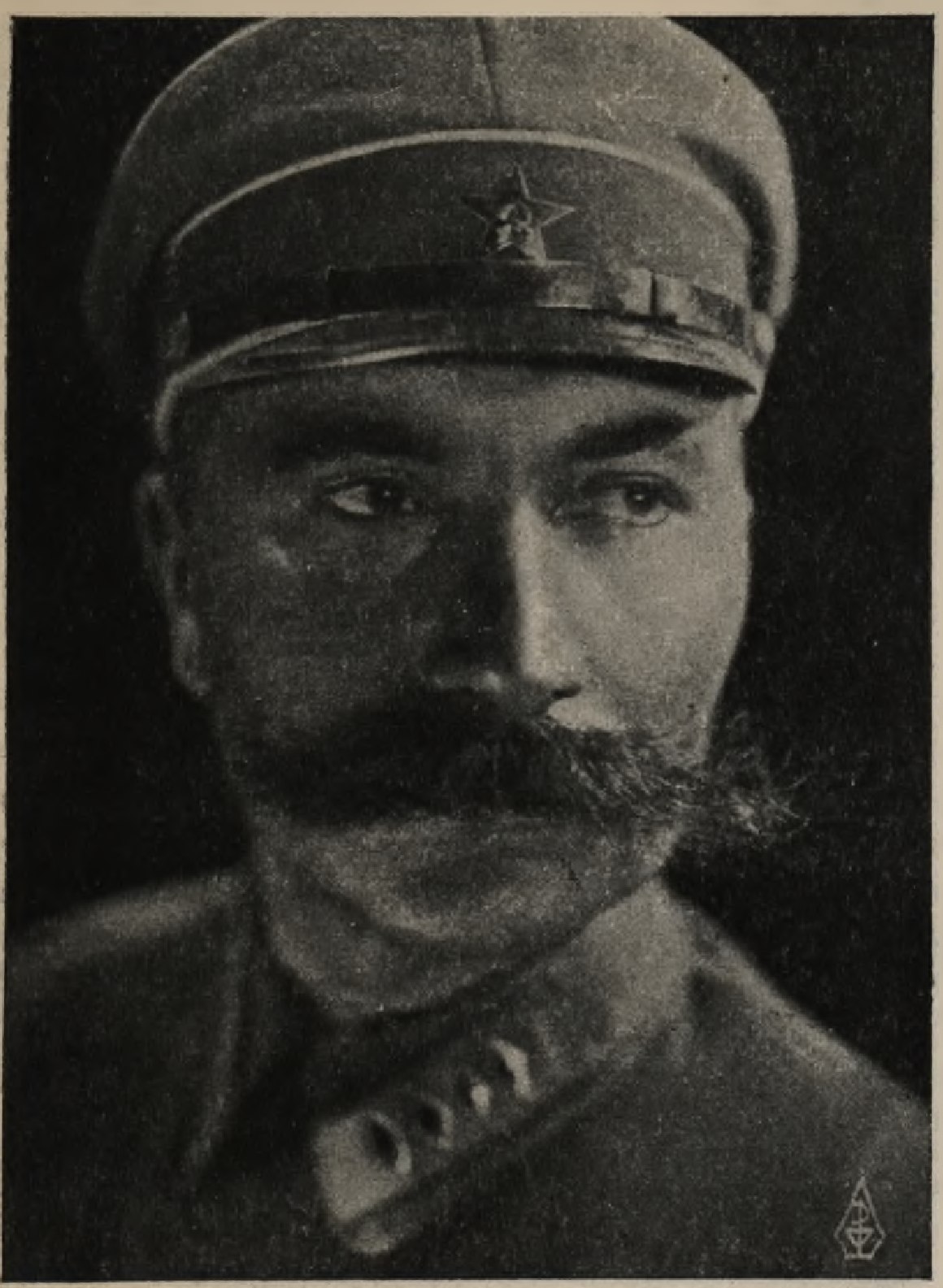
Portrait of comrade Budyonny (S. F., Tiflis) — the author reports it was shot “at the cine-factory during comrade Budyonny’s inspection of it.” A more or less experienced photographer is visible; unfortunately the available lighting was used insufficiently definitely — lights and highlights of almost equal force are scattered over the model’s face without logical sense, and the expressiveness of the moulding is lost. A photographic portrait wins, for the most part, when the highest (brightest) light lies in one place characteristic of the model, and the rest of the tonal gamut fills out the impression. The ratio of the head to the part of the body also seems not quite successful — here it would be more advantageous to give the head less large. Good positive technique is spoiled by pencil retouch: the filling-in of small spots should be done not with a pencil but with India-ink (or a mixture of it with a suitable paint) and a very fine brush. All this is said not to offend a good photographer, but to warn the rest from mistakes; with the lighting the author had, a far better portrait of comrade Budyonny could have been made.
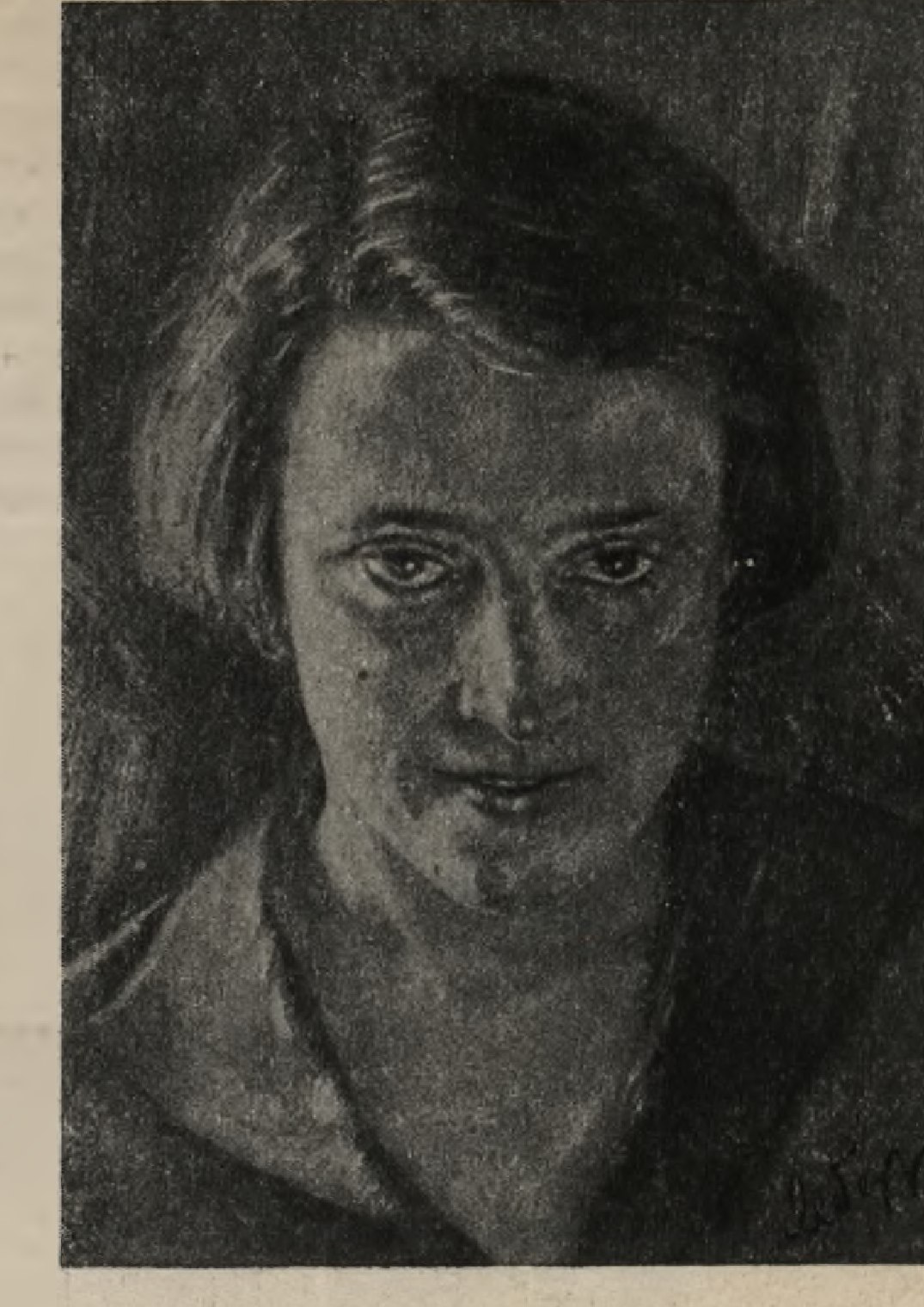
Comrade L. (Leningrad) sent his work (a portrait) with the inscription “One of the methods of processing the print.” The method consists in scratching the surface of the in-essence not-bad photograph with the blade of a “Gillette” razor in the places that should represent light-highlights. What came of it, let the reader judge. We not only cannot recommend this method in general, but must warn the author against further enthusiasm for such “handiwork.” The scratching of a print, as one of the devices of positive retouch, may have place only in extreme cases — somewhere in one spot and so technically perfectly that the viewer could not suspect this crude device. To propose scratching as a self-sufficient “method” means not yet to have made sense of the essence of the light-written image; we are sure comrade L. will himself soon renounce it.
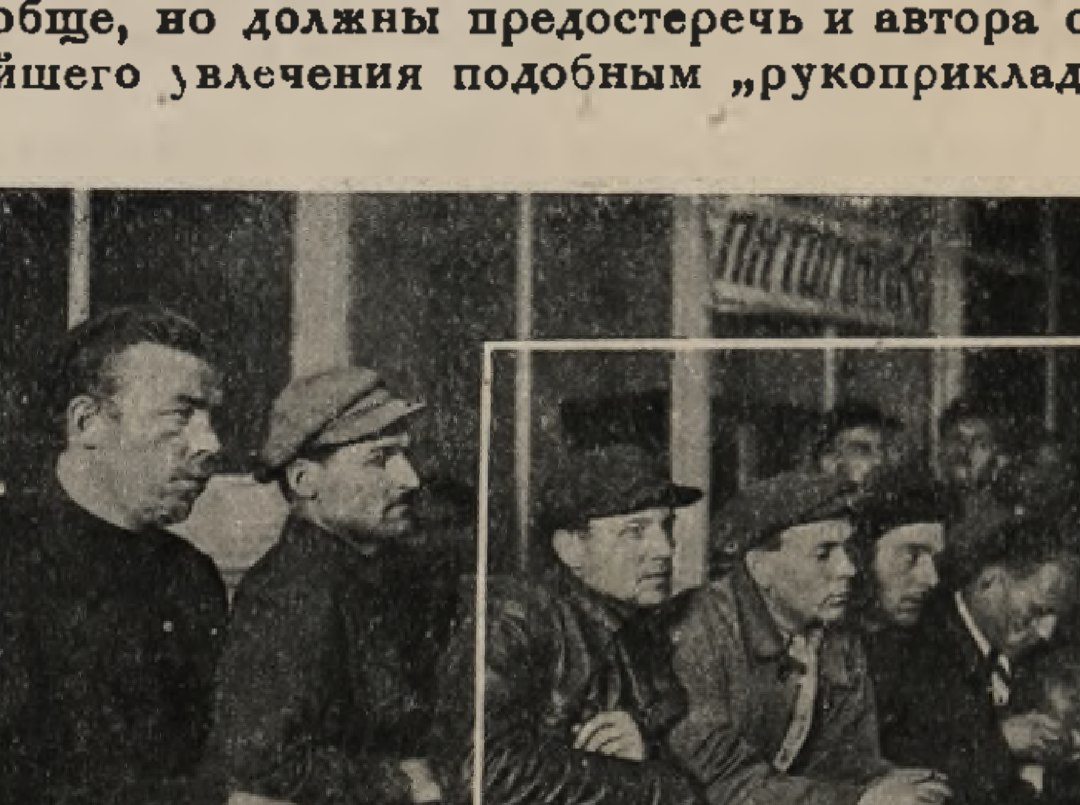
“Listening to a Report” — a far-from-bad shot by F. Kislov (Moscow), shot with an aplanat at F/8 by magnesium flash. The point of view is more or less successfully chosen, but the left part of the shot reduces the impression (too large), so the shot is usefully cropped as shown by the white lines; it would be not bad to diaphragm the lens to F/12, taking more magnesium for the flash.
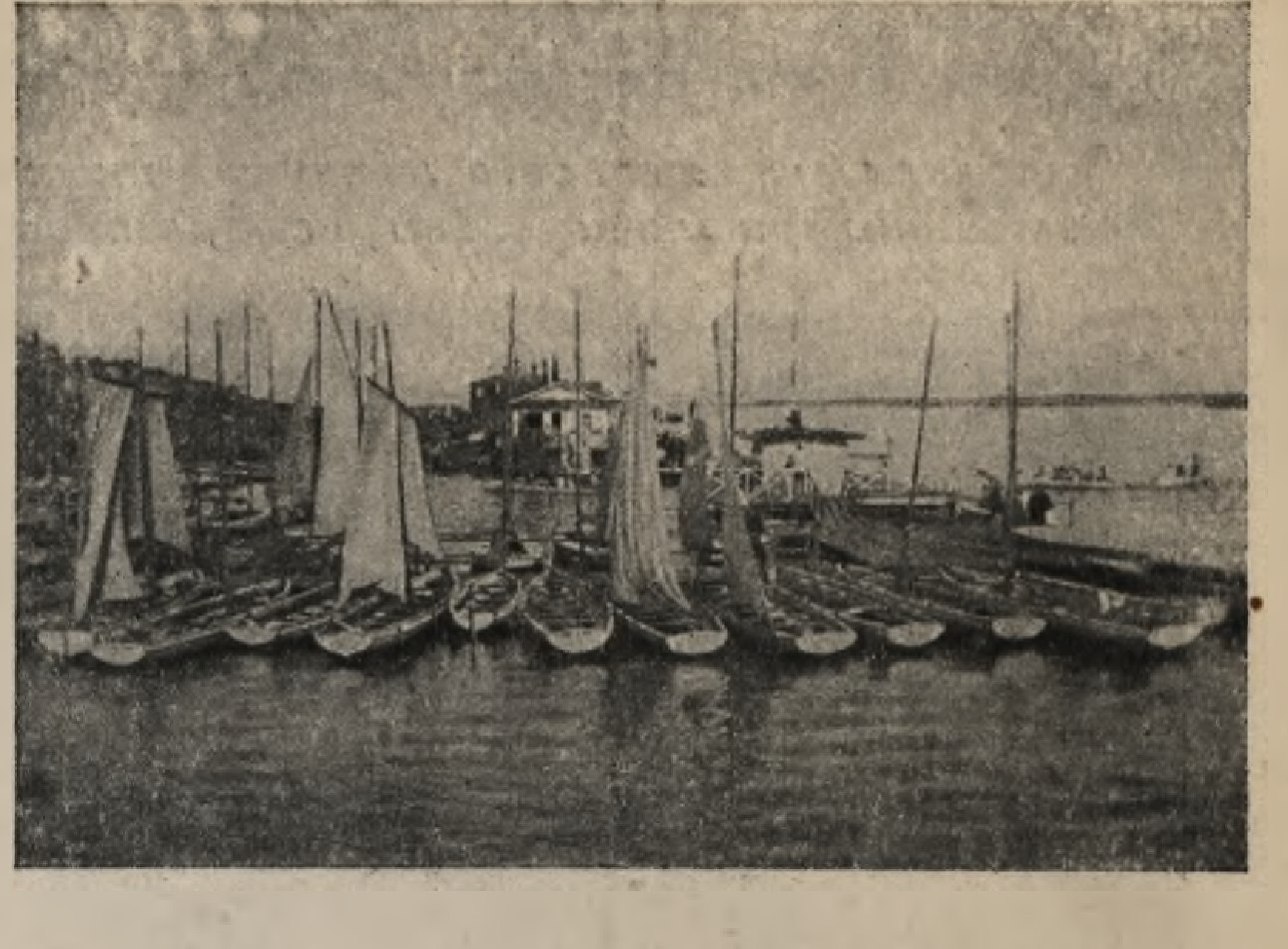
The grey tone of N. Yurtaev’s shot (Saratov) — “Water-Sport Base” — does not seem to us flaccid (the print has contrast enough); but the interest is positively killed by the almost straight line of boats, and moreover parallel to the horizontal (lower) edge of the shot. Such a composition is rarely advantageous, and here it is simply boring — the shot should have been made from some other point of view.
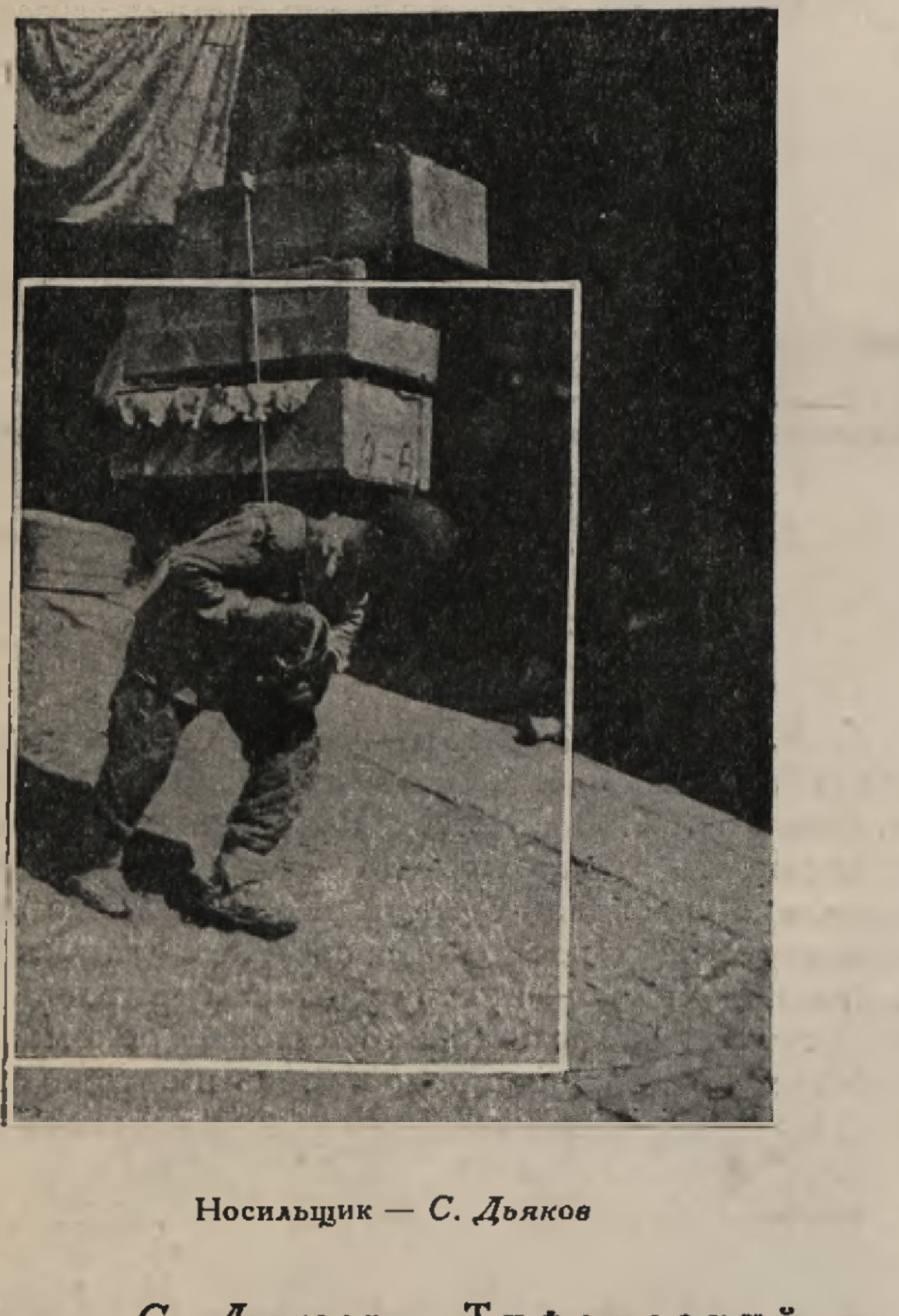
The shot of S. Dyakov — “A Tiflis Porter” — is of significant interest by theme and by the successfully-caught moment. The original is 11×15 cm; if it is an enlargement, then only that part representing the basic content — the worker’s figure bent under the weight of the load — should have been enlarged, the rest discarded as hindering (even irritating, e.g. some piece of cloth in the upper left corner); the foreground (the cobbles) could be a little sharper. In general, something seems not right here with the focusing.
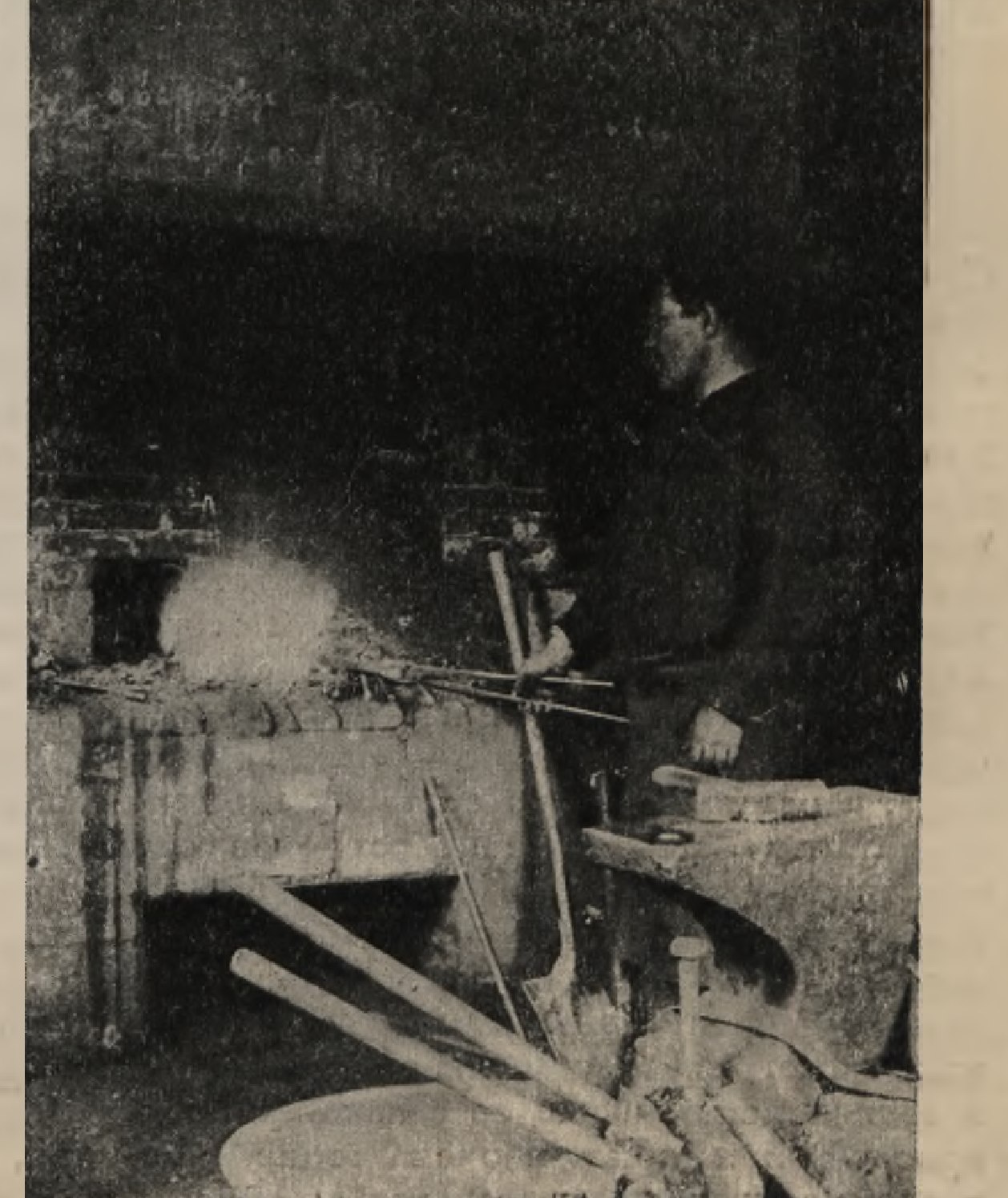
Comrade A. (Kostroma) treats an interesting but extremely difficult subject — “At the Forge” (12×17 cm). It is first of all too contrasty — so much that the light distorted the form of the smith’s instruments; the foreground irritates the viewer (too light) and distracts from the main content, and precisely in this is the whole defect. The author does not report the light conditions, but it seems a large window was somewhere here by the anvil; if so, its lower part should have been curtained (with thin grey paper, a sheet and so on) to reduce the intensity of the foreground light. To weaken the negative with ammonium persulphate for a more harmonious print is possible, but it is hard to say how far this is coupled with the risk of spoiling it.
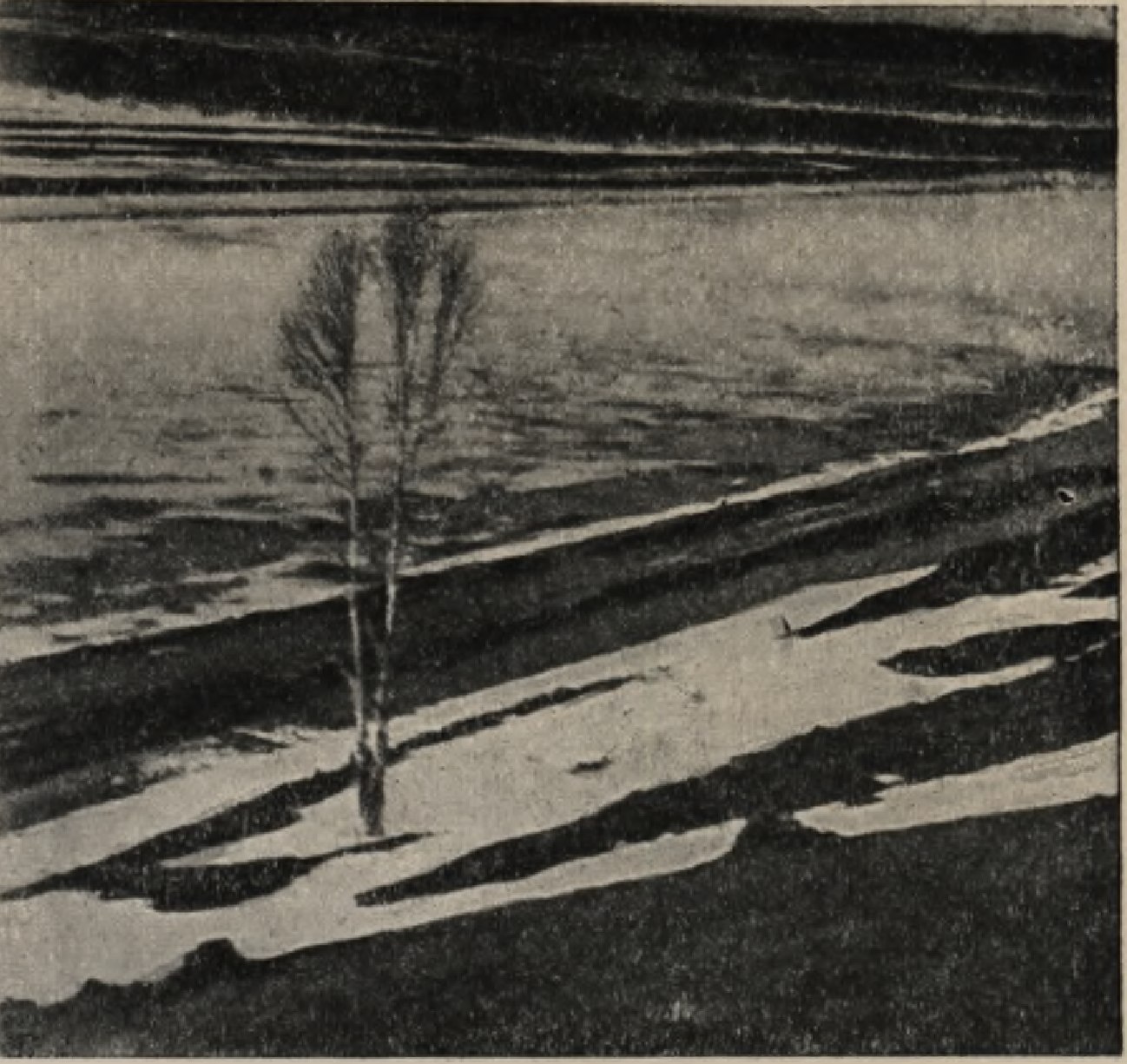
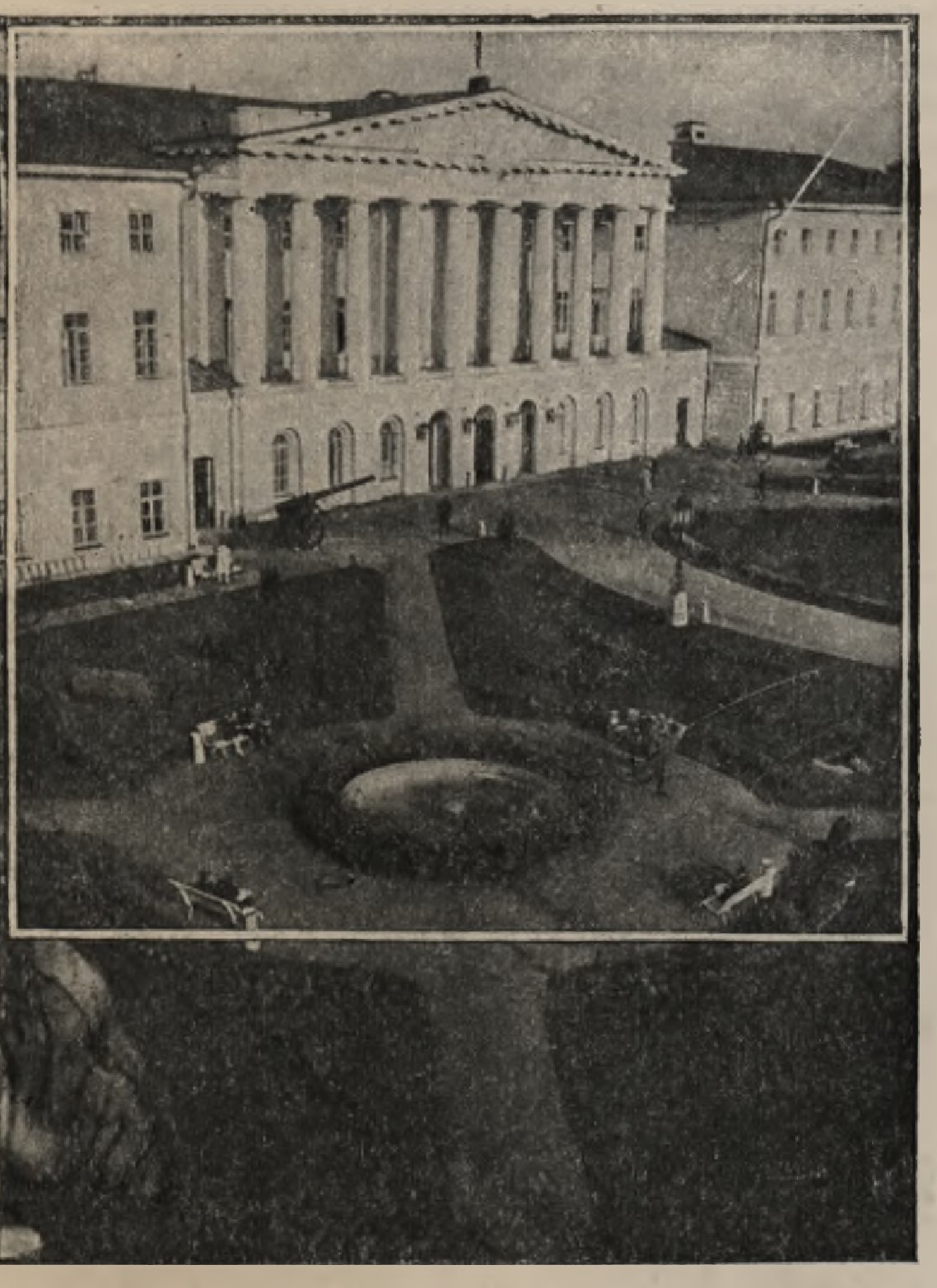
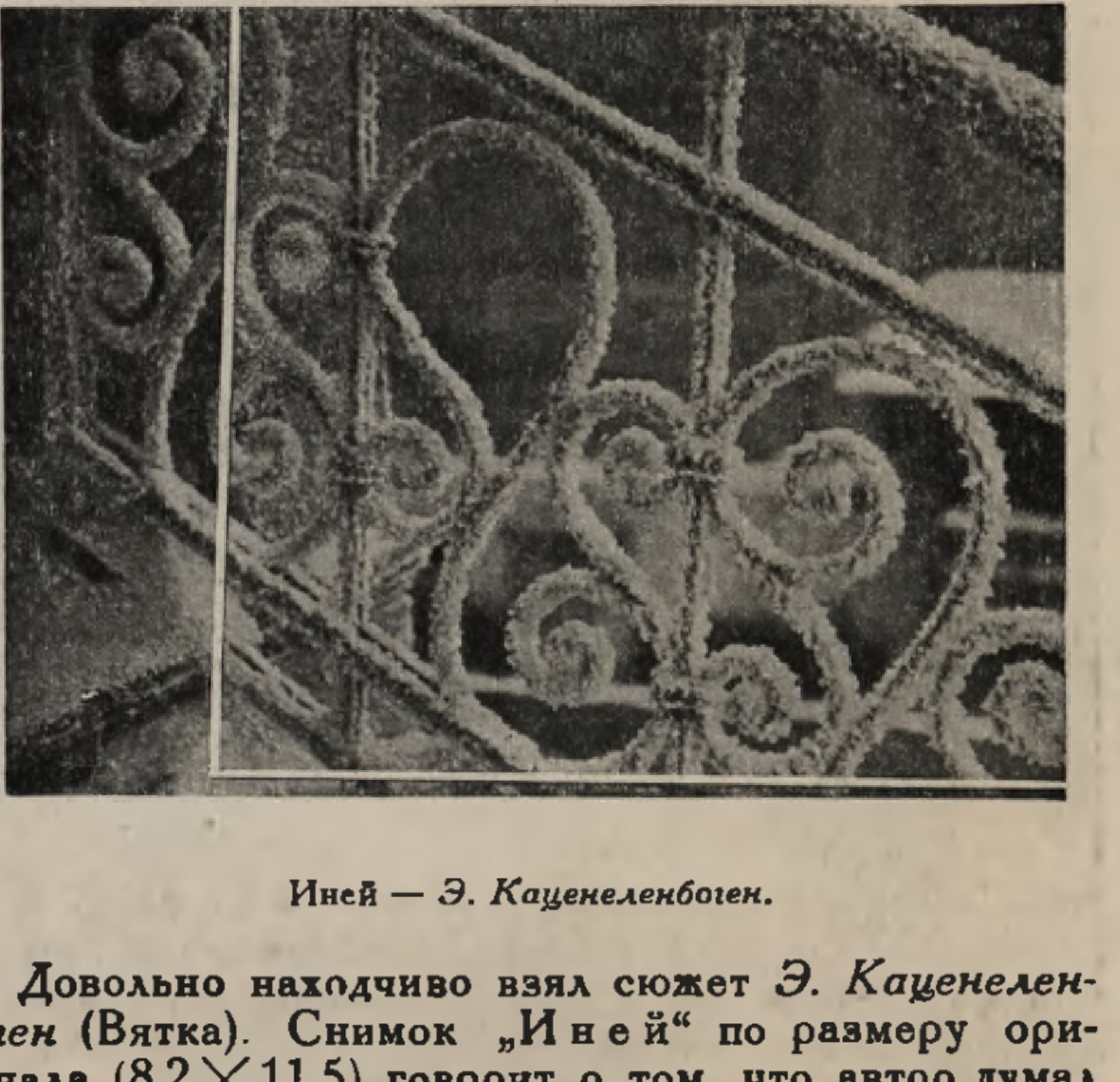
Not at all badly conceived is “Spring” by A. Shishkin (village Sovetsk). His shot (7×7½ cm) is technically quite satisfactorily executed and definitely fresh in composition; despite some defects of the negative order, one can learn something from the author. The shot “House of the Red Army in Moscow” — for a beginner such as comrade Afremov (Moscow) — is far from bad; the negative and positive technique develop correctly, though the print is somewhat flaccid. One should get used now to a more logical choice of frame (if only by cropping at printing) and to a more attentive handling of the negative layer (scratches, streaks). Rather resourcefully took the subject E. Katzenelenbogen (Vyatka): his “Hoarfrost,” by the size of the original (8.2×11.5), shows that the author thought over the frame and cut off some part as superfluous (printed from a 9×12 negative) — one cannot object, except that still more should have been cut. Shot on an overcast day with an exposure of 1/25 second, and, it seems, over-exposed; this good photograph could be still more expressive (if the print were stronger — it is flaccid), and, within the frame we marked, original.
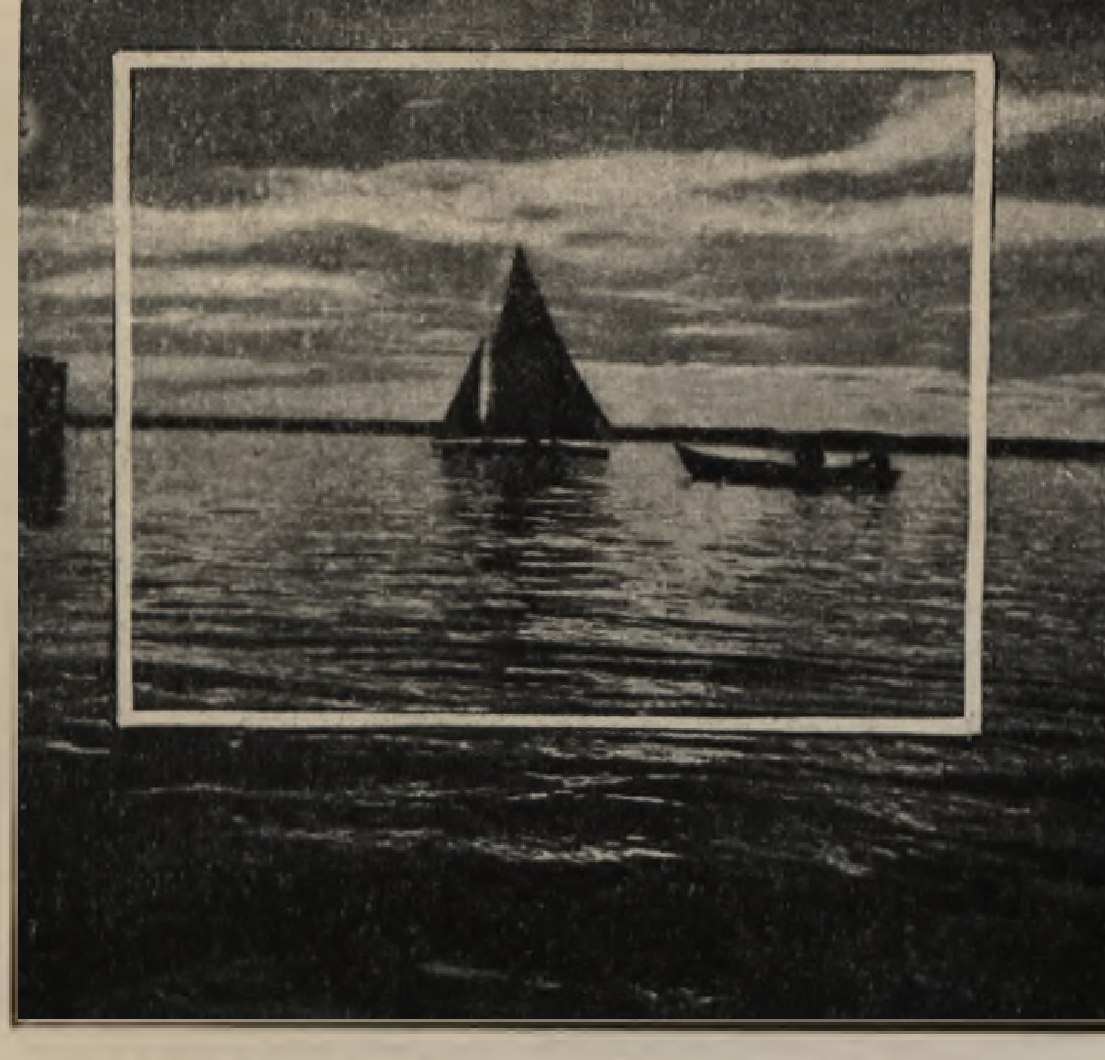
By his miniature shot (original 4×4.3 cm) “Evening on the Volga,” A. Flerov (Samara) produces a pleasant impression; the negative and printing technique are good. Compositionally, because of the central position of the sailboat, it is rather hard to indicate the most correct frame, but the one outlined by a rectangle seems to us the most acceptable. If this photograph is socially useless, then on it at least one can learn the technique of photographing.
The aim of these reviews is, by showing technically good or unsatisfactory works, to indicate to the amateur how one should and should not work. We cannot overlook what meaning is laid in this or that subject. There are now many subjects very actual for our modernity: if they are difficult of execution, still we approach the study of them; there are subjects on which we simply learn the art of photographing. But with whatever requirement one approaches a photographic image, we always see in it this or that sense laid in it by the author. Many comrades stubbornly achieve mastery of technique in order to realise in the photo-image the burning themes of modernity; but there are photographers who continue not to know — why, in essence, did they study photographic technique and master it in sufficient measure? Surely not to make nobody-needed, senseless work?
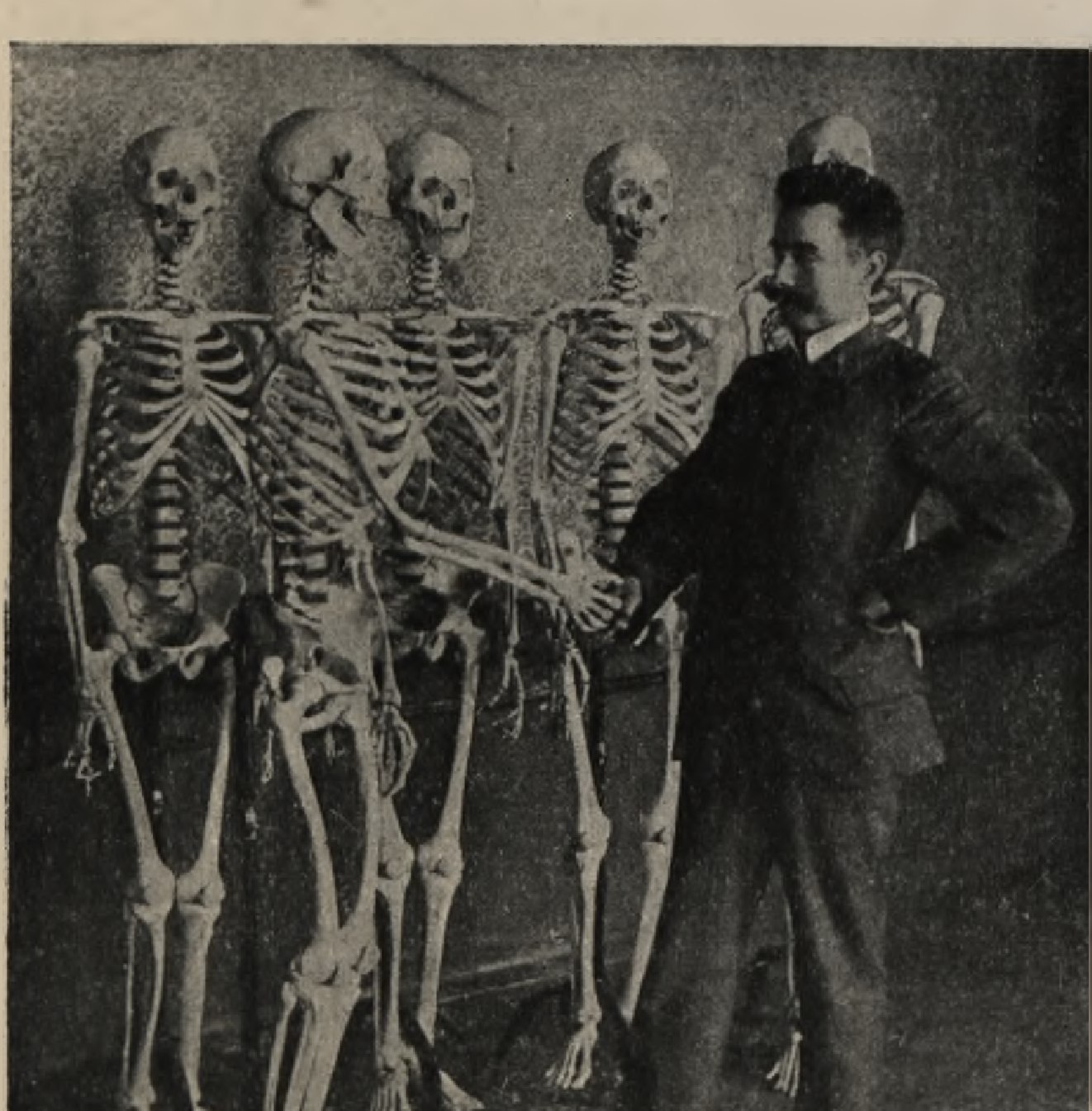
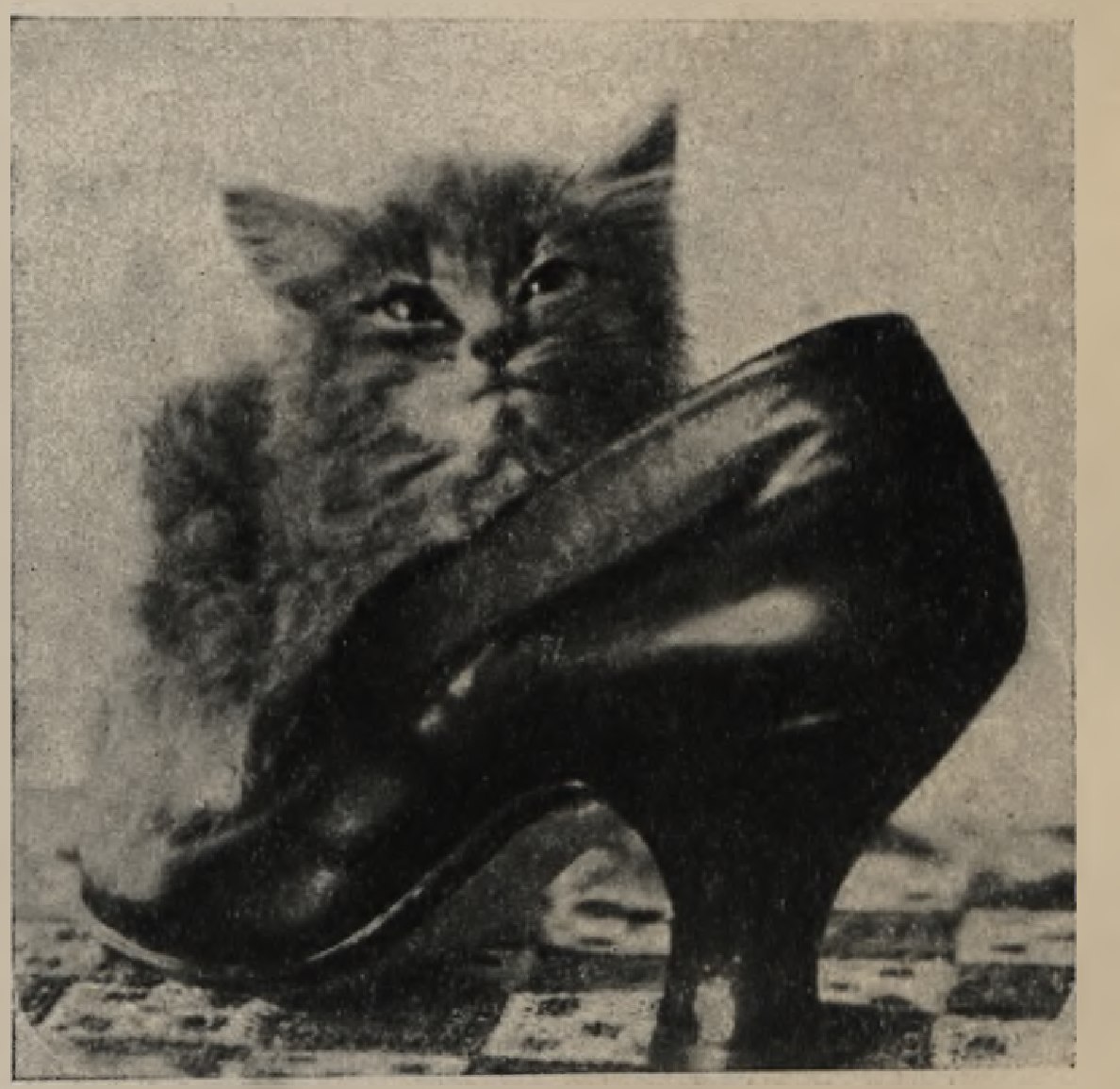
Just such seems to us the photograph of S. S. (Maikop) with the image of six skeletons (six, indeed) and a citizen, arms akimbo, with the face of a porcelain doll — dead — and with some mystical title: “Our Future.” Just think, what a novelty! Also nobody-needed — perhaps even by the author himself — is the shot “Haze” (Dymka) by comrade N. (Leningrad). There are still, unfortunately, cases when amateurs spend much effort, time and photo-material on subjects whose treatment even pre-revolutionary amateurism considered a trifling occupation. Around us now is an enormous quantity of simple, lively and gripping subjects — it is hard not to notice them; so it is no wonder this shot (a kitten in a lady’s shoe) surprises us. Even if an amateur is only learning photography, one can with desire find more instructive subjects. In the work under review the technique does not redeem the wretchedness of its content; let the author not reproach us for wishing to see him relate more seriously to photography.
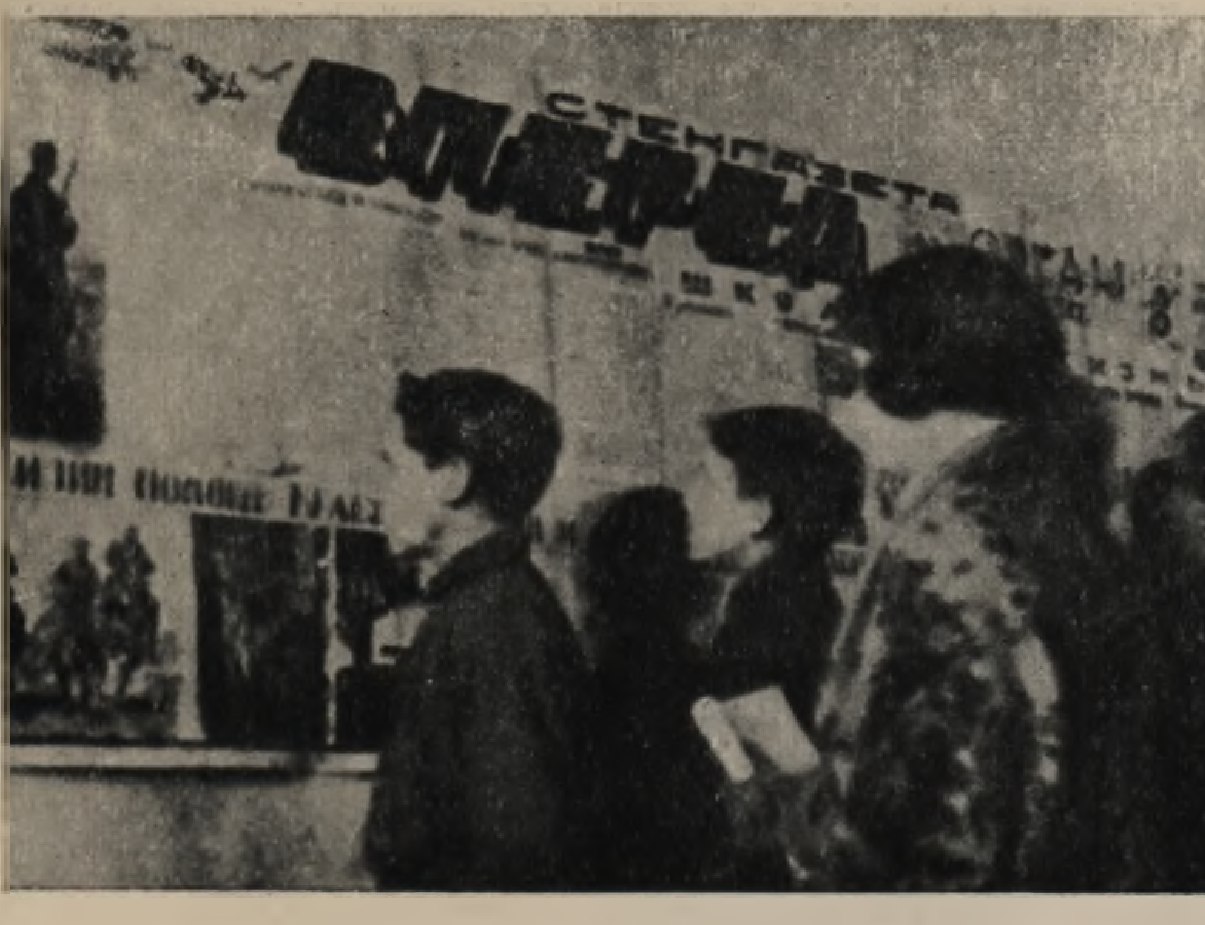
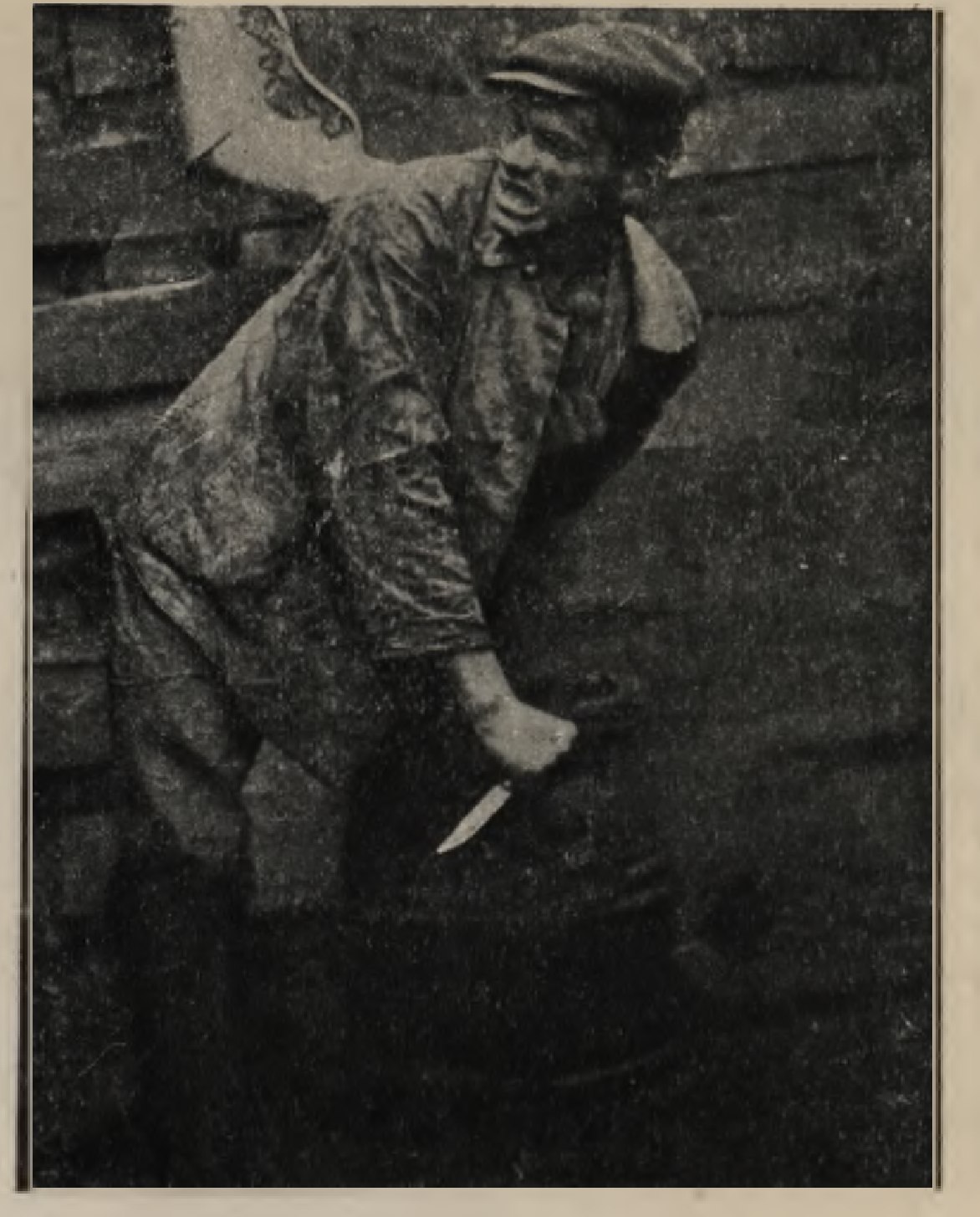
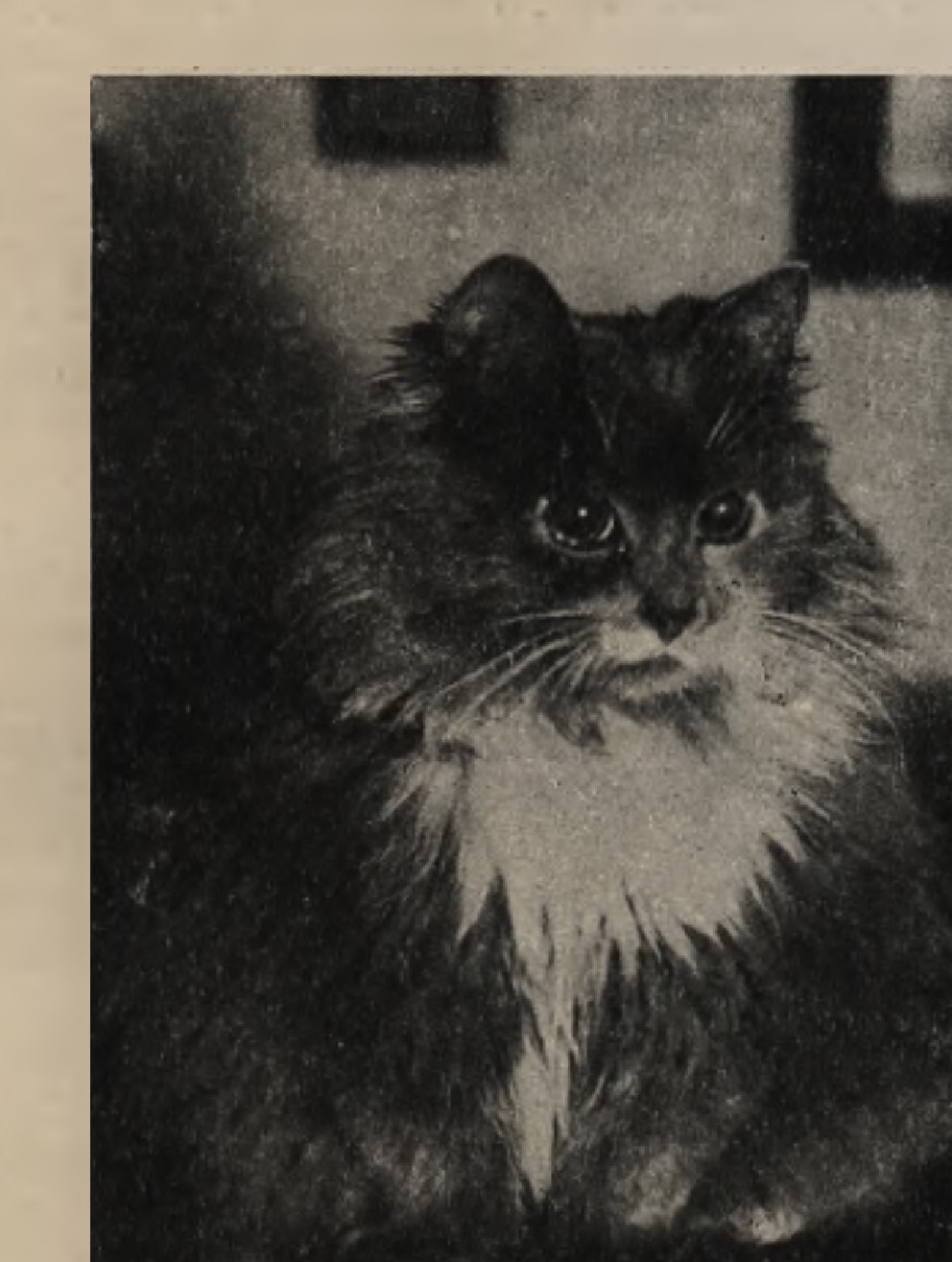
In contrast to this, we equally understand the successes and errors of comrade B. Antonov (Vladimir). Just think — to shoot a cat (“A Siberian”) almost magnificently, and to get a group of schoolchildren reading a wall-newspaper (“At the School Wall-Newspaper”) “blurred”! A pity. Shots like comrade Sh.’s “Hooligan,” placed in a wall-newspaper, can have significance in the plan of the struggle with hooliganism, as calling up a repellent impression; one would wish to see it more convincing, but the staging is very much felt. (The first subject was shot by magnesium flash, the second at 1/10 second; but despite this amateur’s failure we see in him not only a stubborn struggle for technique but a meaningful working-out of the picture-plane.)
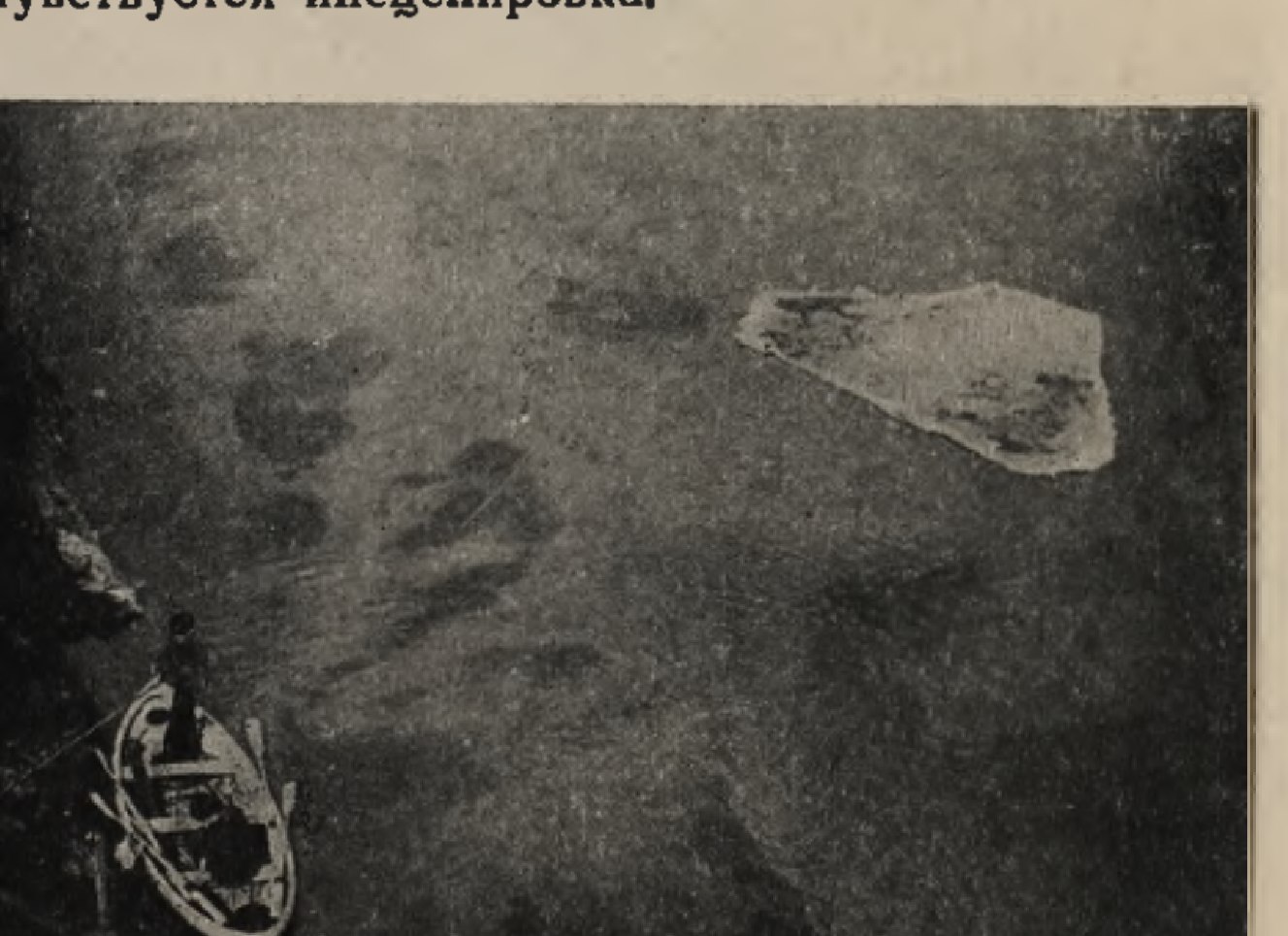
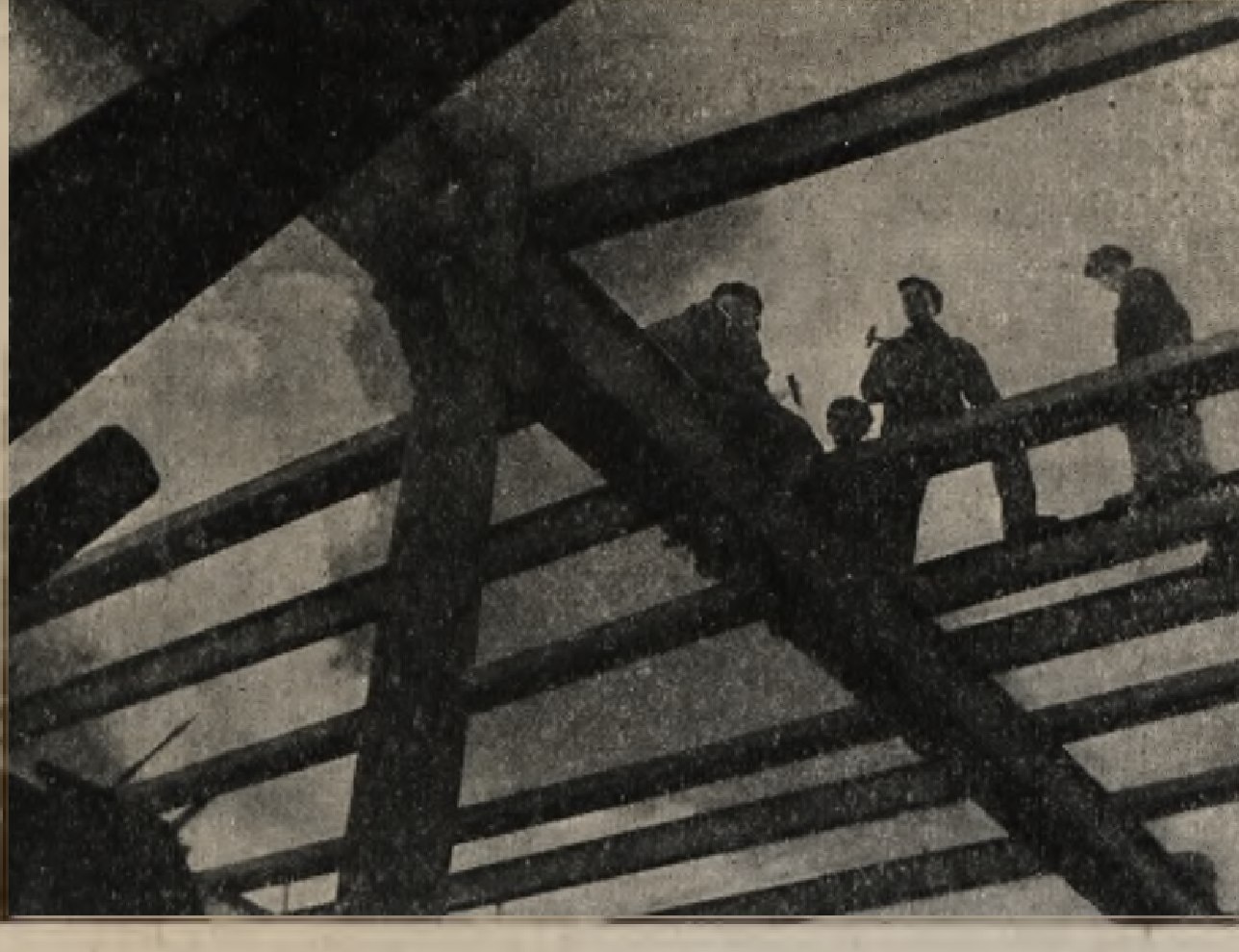
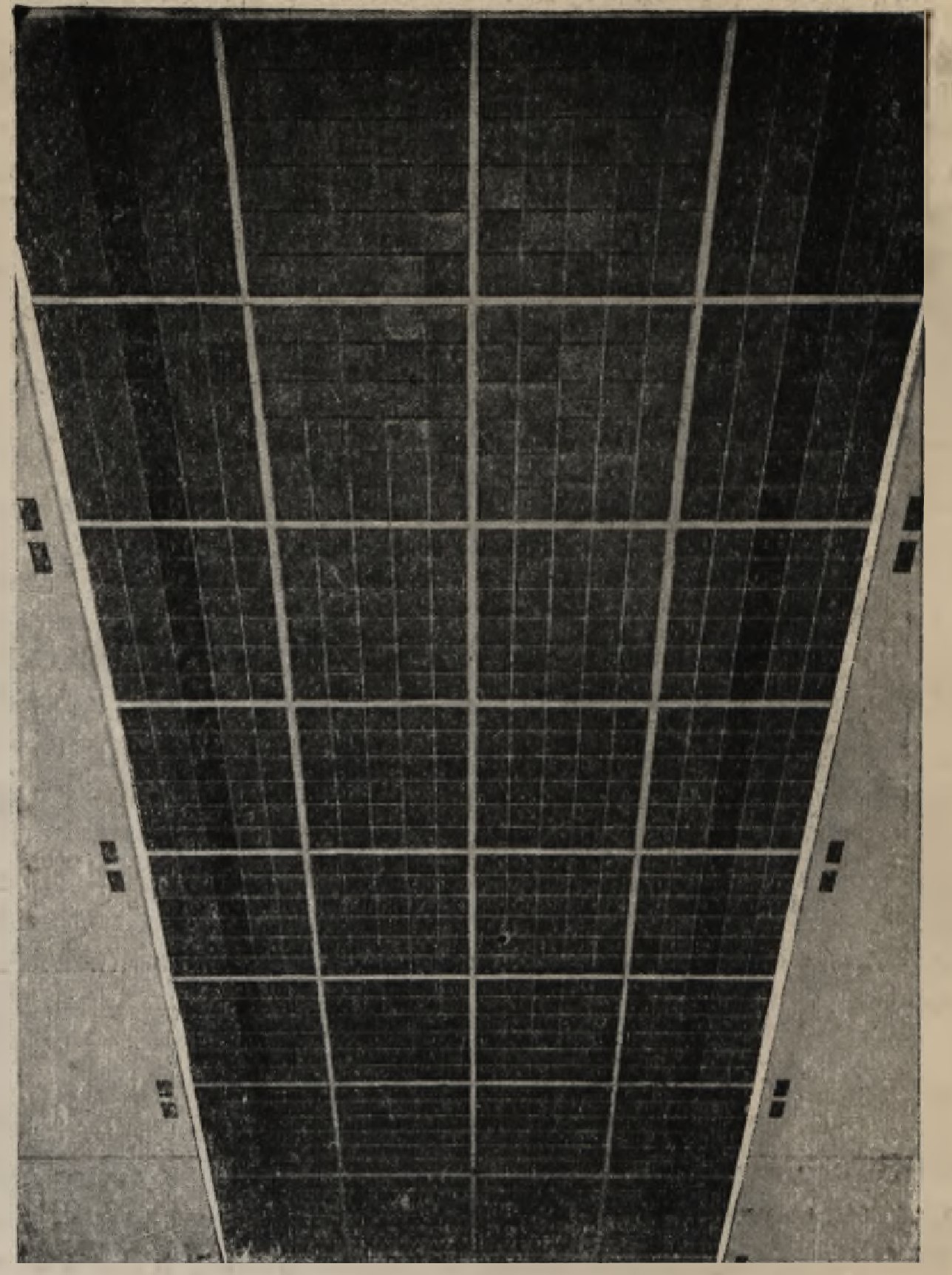
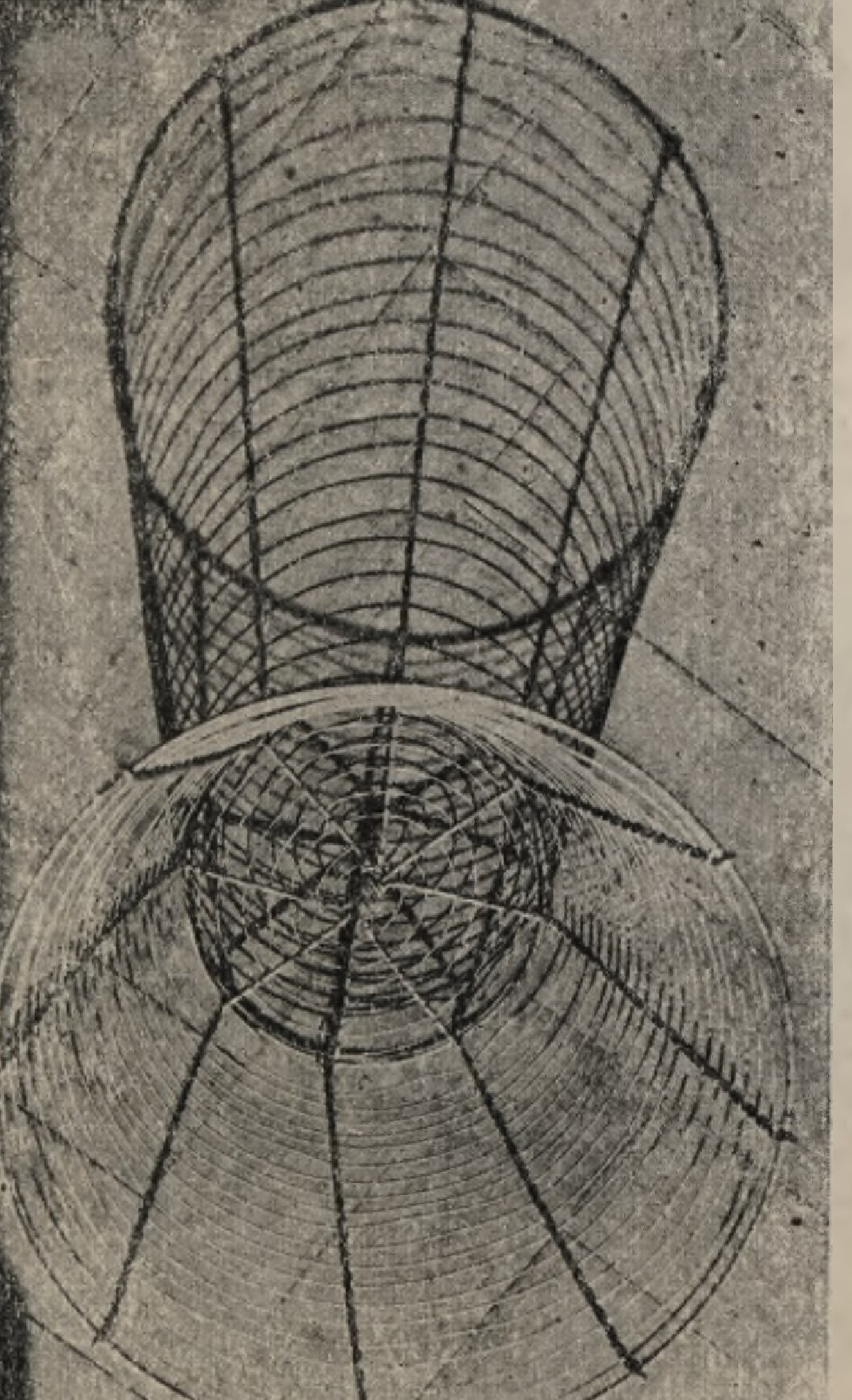
“Spring Flood” of the Narpit photo-circle (Moscow) is a photograph almost perfect in compositional conception; the author only did not quite solve the tonal task — two light spots, the floating ice-floe and the boat, are not balanced, they argue in tone and break the impression; it would have been far better for the boat of the foreground to be darker than the floe. This could not be done in the given light conditions, but the negative could have been developed less contrastily. Still more interesting in conception is the work of the photo-circle of the Spirit-Vodka Factory (Moscow) — “Fastening the Beams” (enlargement 23½×32 cm): against the ordinary sky, the iron rhythm of the beam-constructions is surprisingly distinct; apt in the frame are the dark diagonal in the upper left corner and the group of workers. A good theme worked out skilfully — the photo-circle can be congratulated on a good work. Not without interest too are the workings-out of shots from new — already becoming old — points of view: the shot from above, “A Waste-Paper Basket” by E. S. N., and the shot from below, “A Glass Ceiling at Night” by the photo-circle of the Central Institute of Labour (Moscow) — curious as proof of a known kind of searching among our young people; both are technically quite satisfactory.
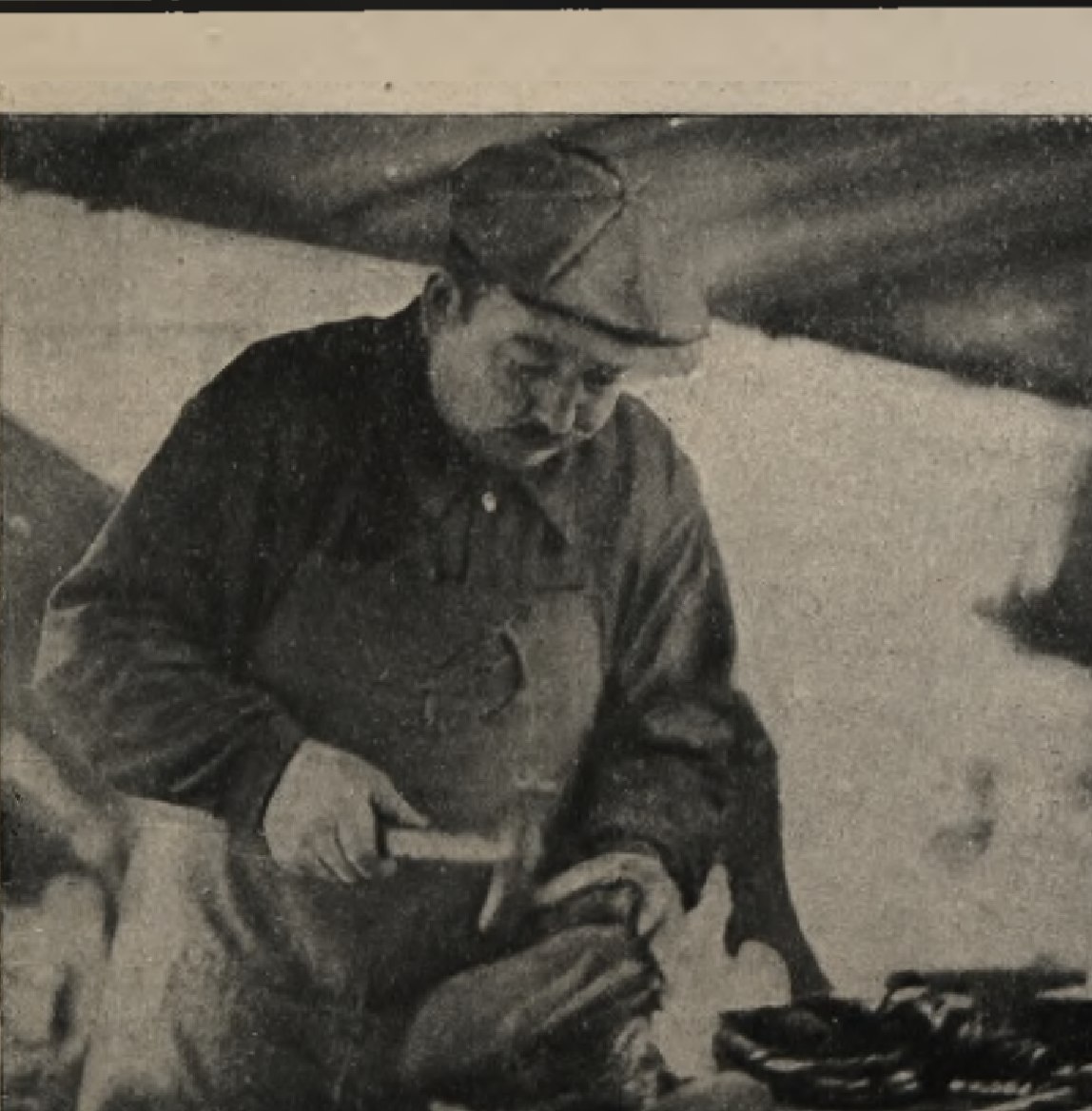
We shall end the review with the shot of comrade Kivkutsan (France) — his “Shoemaker” works under a canopy somewhere in a workers’ quarter of Paris. The light, large spot of the background (evidently a part of the sky) is somehow apt here: it made the figure and face of the worker, as it were, more relief, more convex. This small photograph (8×9 cm), extremely simply and competently made, can to a known degree serve as a model of instantaneous shooting.
— N. D. Petrov