
USSRPhoto.com

Forums / Collectors and Users Open Forum

A strange Zorki 4

36 posts in this thread showing replies 21-35 of 35
Reply with Quote Edit Reply Delete Reply
Found!

http://www.ussrphoto.com/UserContent/532018_MO.png

https://www.zenitcamera.com/archive/history/masters-of-optics.html
yranslation
Of great importance for the improvement of photographic production was the proposal of Nikolai Mikhailovich Marenkov - Combine the upper cover of the outer casing, the casing of the curtain, the objective plateau and the camera's rangefinder case into one cast piece. (Previously, these parts were manufactured separately and attached to each other.) To assess the economic effect of the introduction of this proposal, you need to imagine that the top cover of the camera passed 19 mechanical and finishing operations. The body of the curtain shutter had 18 mechanical operations. Only by reducing the mechanical processing of parts on each machine, the time savings was 46 minutes. And this is without taking into account the release of workers, machine tools, the elimination of assembly and fastening of these parts. In monetary terms, the total savings during the transition to casting was at least 200 thousand rubles a year.
Such a solid body was used in the development of new plant equipment. (Page 114)
Year 1957
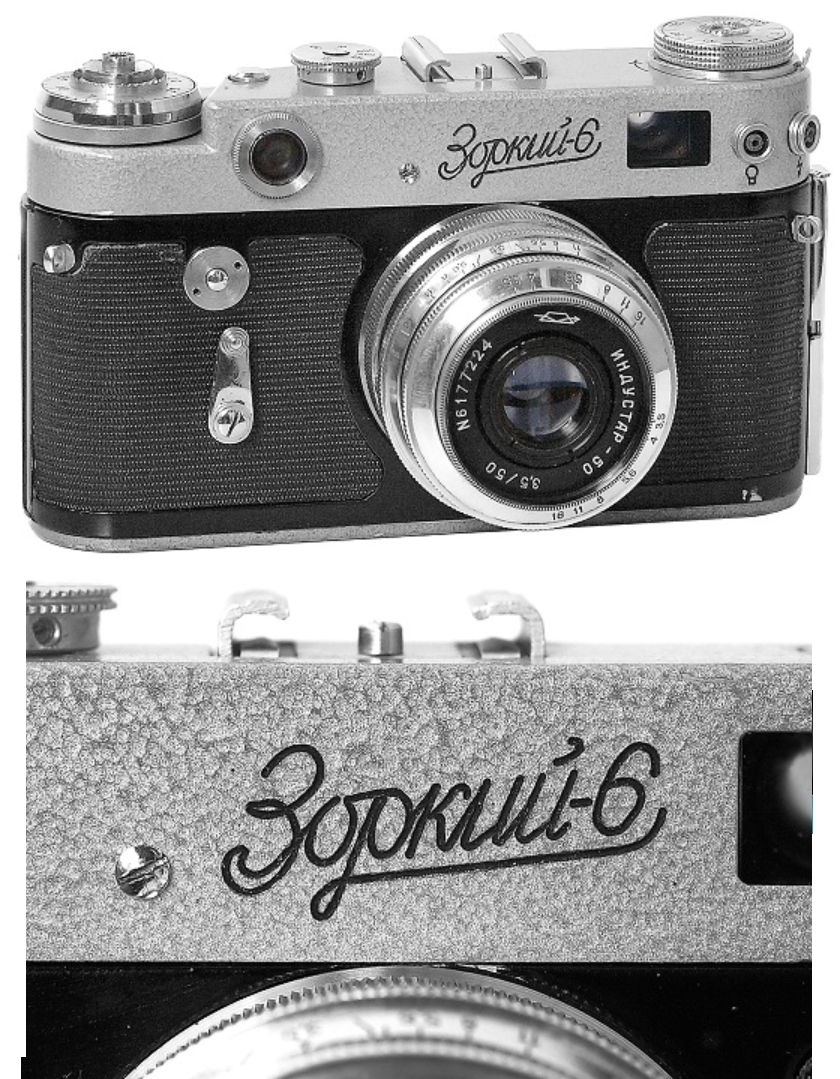
Reply with Quote Edit Reply Delete Reply
Hello,
I agree with Yuri. The milled top case undoubtedly says it is a prototype ; this would be much too costly for serial production, but is definitely the way for prototyping because you already have the machine-tools in shop for other things to do, and the cost (and time) of developing a mold + process for the cast part is way too high for just a few parts ; especially as it is more difficult (and costly) to achieve high precision on cast parts than on milled parts. Same in aerospace that I know well...
To Juhani's point, casting will allow to produce parts of complex shape easily (once you have the mold) ; however when the shape is complex it is fairly difficult to ensure high quality, and to control it. The geometric tolerances are not as good as on milled parts, so you may run into later difficulties during assembly. Also, due to uneven alloy cooling-down if the shape is complex, you may have inconsistencies leading to micro-cracks, voids, that will make the parts more fragile. This might well be why, despite significant time savings, a consolidated design was not retained in the end... Of course, bureaucratic routine would be another credible reason :-) !
Reply with Quote Edit Reply Delete Reply
observe that Kristall asr thefollowing camerato use ths process but it died there wit no further productuin using similar technology.
In Checoslovakia the Etareta used a similar technich
regards
LP
Reply with Quote Edit Reply Delete Reply
Of course Alexey!
The exact shoe mount finish is another Strong reason of my suspects and of course the name engraving!
My best regards!
LP

PS I can't understand the abscence of this model in your site.

Reply to Topic

Forum code enabled