USSRPhoto.com

Not logged in

Forums / Collectors and Users Open Forum

Kiev III 1949 and Contax III M series.

42 posts in this thread showing replies 21-40 of 41

Hello,

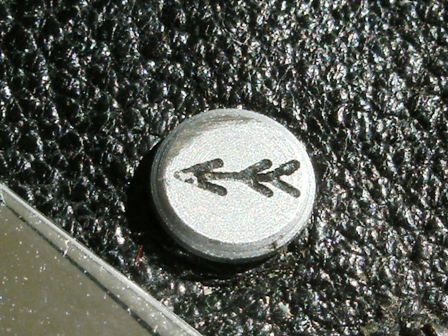
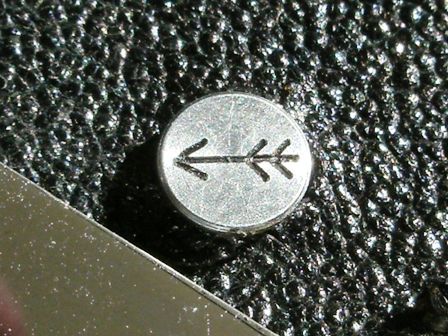
Ulrich is right. The arrows of the selftimer and their feathers can be important to date a Contax/Kiev camera.
So, I have shot some of them.

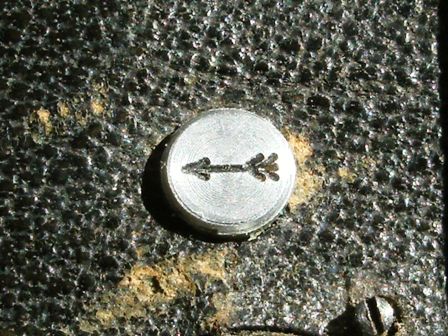
About the Contaxes, no surprise. That they be II or III, prewar or wartime, they all have the same arrow with "five" feathers,if we call a feather the extension of the arrow.

Here is the one of my Contax O series:


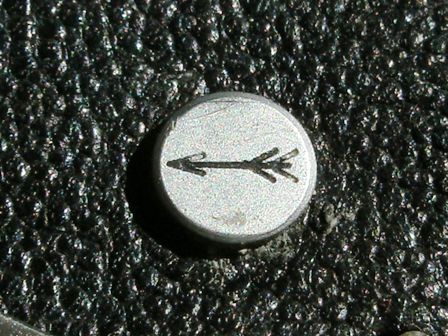
Now, the ones of my two Jena Contaxes.
Same general drawing for the # 11826, even if the arrow is a bit bigger:


The Contax Jena # 30536 is like the # 11826, but the button is in inox rather aluminium. A camera for the rich ?


Following message for the Kievs!

The pictures of the same part...
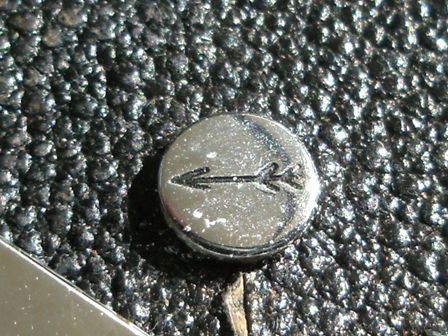
My three early Kievs II (1949 and 2x1950) have the same button. In fact, exactly the same as the Contax O series:


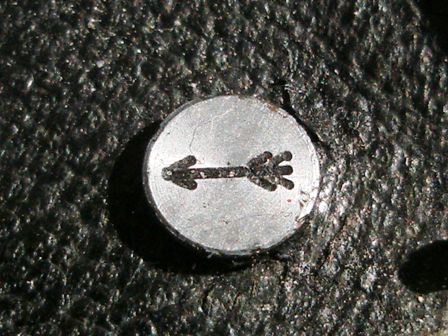
The big surprise comes from my 1949 Contax III. The general drawing and the size are the same as the Jena Contaxes ones, but it has four feathers only:


The last picture for my 1958 Kiev III:


What to conclude? Nothing for the moment!Big smile
Some more pictures would be of great use to complement the collection...
One can too imagine that in those years, Arsenal used what they find: spare parts coming from Germany, new parts made by themselves or ordered outside... All is open!

Amitiés. Jacques.
PS: thanks once more, Ulrich, for your very important articles you sent me a while ago. Alas, in German...
Dear all,

I decided to summarize the discussion of this thread. Here is a picture of different Kiev III light-meter scales. One can distinguish four types of them whereas, the scales of the first two types and the scales of the last two types are very similar to each other. The very first column shows markings on the Dresden Contaxes. They are almost identical to markings on Kievs from the first Kiev's column. These are very early Kievs and their lightmeters were most probably assembled by using parts from Dresden. The markings on the other early Kievs III are different and probably were introduced in Jena.

It seems that in Jena some attempts to build Contax III were made and if you look at the famous LIFE photo of a man with Kievs you will see Kievs III there as well. But as far as I know, Saalfeld people have problems with light meters. At least up to 1946 they had problems with the selenium cells (probably some of them were brought from Dresden?). Hence not much Jena Contaxes III were produced officially (still they assemble some amount for the black market).

All this Kiev story is very confusing.


Concerning the image, with red I marked Kievs IIIa and some strange Kievs or Kievs not in the original state I marked with the question mark. Hope this picture could be useful.

Ups, sorry. I posted in the wrong thread Shocked But still the information could be useful Smile
Hello everyone!
Altiks great job! Very rarely, people paid attention to the scale of exposure meters ....
I have the camera Kiev III ¹ 49133.

http://ussrcameras.ru/?rp=1&action=tovar&tovar_category=190&id=269
Maybe it than anything will help you ....
Best regards, Alexey!
Dear all,
Alexey, your Kiev is included in the list. I've found one more interesting thing looking into the instruction manual of Contax II and III. Look at this picture:

This image is quite strange. The scale belongs to the 4th and 5th column of my table. But I did not see any of this kind on Dresden Contax III. I assume, that the camera presented on the photos is a pre-war prototype with the light-meter assembled in Jena in their research facility. In Dresden the scale and hence the whole light-meter was adopted to their production line. However, after the war the constructors in Jena used their own blueprints of light-meter with this "Jena-type of the scale" which is quite common on Kievs. Probably some Kievs III from 1952 were equipped with Dresden parts. Sounds reasonable to me. One note, I think that differences in scales are not purely design differences. The structure of light meters (e.g. of galvanometer) could be different for Jena and Dresden Contaxes. This results into different gauge of the scales.

Most interesting!

Are the different sensibilities of the lightmeter (10 to 33 DIN) too in relationship with different scales?

It seems (but I have not exactly checked) that on a same year of Kiev III (let us say, for example 1952), we can find 10 DIN lightmeters and 33 ones, as if Arsenal had received all that in a box and use the lightmeters just as they come...

Amitiés. Jacques.
Dear Jacques,

I did not really understand what is the difference between 10 and 33 DIN light-meters (sorry, probably missed the information from the tread). I am waiting my Kiev III from the first official batch of 1952 (52472). If I get it I will inspect it carefully.

What I find rather confusing, is the A-letter on Alexanders Kiev III of 1948. From my table it appears that this letter appeared systematically on 52 Kievs III with 6 digit numbers. Some early exceptions like 1948 or 1951 Kievs III bear quite different type of this letter engraving. What do you think if it stands for Attrappe (dummy)? It is quite ridiculous idea since I would expect more likely V for Versuch (prototype).

Why some early Kievs bear this letter and some don't? Lettered Kievs were marked with A according to the GOST standards but the DIN scale has been used (strange, isn't it?)? Lettered Kievs were sent to Soviet Union and without A-prefix remained in Germany? This could be a good explanation. I definitely know that my Kiev III (without A) that I bought in Germany was in Germany all the time since fifties. Do you know the prehistory of your cameras without (with) these letters?

Sorry, my posts could look like a flood, but I think that it worth to write down some questions and hypotheses since this is a good way to look on the problem from all possible sides and probably to find the answer.
altix,
you are absolutely right. I have disassembled the Kamera, it was really from 1952. That was my bad luck to buy it some years ago Sad.

Regards, Alexander
Sorry Altix, my writing was faulty.
To be more clear...

The Contaxes III lightmeters were made with four different sensibility of films:
- 6-24/10° DIN,
- 9-27/10° DIN, from K series,
- 9-33/10° DIN, changed during the M series,
- 17-35/10° Steiner for export models,

according to Kuc's book. The top sensibility (24 to 35) can be seen on the window of the turret.
Perhaps the light meter scales must change accordingly? But on my two cameras showed at the beginning of the thread, the scales are different whereas the maxi sensibility (33) is the same...

I already tried to find an answer to this question. But the detailed pictures of Contax III/Kiev III are not so common...

Amitiés. Jacques.
About the Saalfeld production, I only find 7 Contax Jena III produced in my datas, some of them with the double Kiev + Contax numbers...
I think too that Dresden parts were used to make them. Kucs insists on the difficulty to produce the electronic parts at Saalfeld. It explains why the real production of Kiev III only became in 1951-52...

Jacques.
Dear AlexanderK,

you mean that your Kiev is fake? It is interesting to hear your arguments why this is 1952 Kiev. I do not think that it's fake.

I think that indeed no one was able to produce Kiev III before 1952 in Kyiv. The guy from Dresden who was involved in light-meter production was left after Zeiss factory dismantle in Jena. According to Werner Widders recollections, people from Jena were able to assemble light-meters only starting from 1948. From this fact it follows that:

1. Very few Contaxes III were assembled in Jena prior 1948 (probably as prototypes)
2. Some Contaxes III were produced starting from 1948 (just my guess)
3. Some "Kievs III" were produced starting from 1948 until 1952 in Jena (could be, that due to the order of SMAD, Kievs III were assembled instead of Contax III. Again my guess)
4. Some Kievs III and Contaxes III were assembled for German black market.
5. Official production of Kiev III was started in 1952 in Kiev.

I have very simple explanation why Kiev III appeared before the official production with the light-meters from 1952. (I suspect that that was your, Alexander, doubt about the originality of your 1948 Kiev. Correct me if i'm wrong). In Dresden period everyone was able upgrade Contax II to Contax III by sending the camera on the factory and paying some money. Very probable that the same practice was adopted in Jena or Kiev. Somebody who possessed 1948 Kiev II wished to upgrade it to Kiev III in 1952 so he went to Arsenal and made the upgrade. To mark properly this modification the cold shoe got the letter A as the standard Kiev III from 1952.

I have the next set of questions:
1. Kievs 1947 have 5 digit serial number; Kievs 1948-1951 have 6 digit numbers. That's fine. Suddenly Kievs III of 1952 got again 5 digit serial number. Why? People did not expect to produce more than 999 cameras?
2.With growing number of Kiev III in 1952 the serial number became 6 digit. The reason to do this is clear. My data shows that with the switch from 5-digit number to 6-digit number in front of the serial number appears "A". What happened?
3. The serial number engraving was quite uniform during 1950-1951. Suddenly the deviations in fonts appear in 1952 as well as the changes in the way how it was engraved and in the filling with paint (many of serial numbers do not contain this filling at all) New engraving machines on the factory? New personel? Another place of production (not the Arsenal factory)?

Some pictures:
5 digit Kiev III 1952. (Jn www.sovietcams.com I found another 5 digit Kiev III)


6 digit Kiev III 1952 with quite standard A-prefix:

Oh, thank you Jacques for explanations.
I will try to analyze my Kiev III from 1952. It is from the first 500 pieces produced that year and could shed light on some questions. I expect I will get it tomorrow. It has 5 digits in serial, Jena-like arrow on rewind knob and Dresden-like scale of the light-meter.

Well, altix,

due to your questions and explanations I would start now the second round of my investigations.
I am not sure, that my Kiev 480075 is a fake (I hope it is not Smile). One of my ideas is, that this camera was returned to Arsenal for repairment and some parts of the camera were replaced. Why has this Kiev got an 'A' to the number? May be because it was already a standard for the s/n of Kievs III at this time.
I would be very thankful, if you can help me to find out eventually, what camera I really have. It seems to me, you have much more experience with Kiev cameras.

Regards, Alexander
quote:
Originally posted by AlexanderK

It seems to me, you have much more experience with Kiev cameras.


Dear Alexander, it is not true. But I would be very excited if you could share with me for inspection some pictures of your Kiev. As the proverb says, two heads are better than one Smile In order to clarify some strange facts about Kiev I think I need to visit the Arsenal museum and its archive.

with best regards, altix

About your 1948 Kiev III, the repair later was my guess when you showed it for the first time, Alexander. It can be an upgrading too: I had not thought of that. And with parts which can have been made in three places, and assembled in two ones (officially!), things are not simple...

It's why I am really very interested by Altix's study concerning the screen of the light meters: it is a parameter more which can help us to understand a bit more what happened in those days.

For me, the 1945-1950 period is the most interesting. Not only about Contax/Kiev history, but too concerning Fed... And Ikonta/Moskva's!Smile

Amitiés. Jacques.
I found myself in a couple of cameras on this topic.


I received today the early Kiev III with the serial 52472. Unfortunately the ribbons are broken so it needs to be overhauled. One more example that perfect cosmetic condition indicates some inner defect.

I would like to concentrate on the light-meter of this Kiev. It's completely from Dresden! This verifies my guess that Kievs with the scales from the second column of my table have Dresden light-meter.
Here is the bottom of the light-meter housing:


D stands most probably for Deutschland (Germany). Makes sence since it is calibrated to DIN. 33 denotes the maximal sensitivity. R - denotes resistance?

Selenium cell is covered with some plastic that is untypical for Kievs

Back side of the cell. All wires seems to be connected to the external contacts mechanically (!!!) and not brazed.

I did not succeed to look at the galvanometer since the housing was sealed and I was afraid to break the glass.

Concerning the "tower" knob. Look at this detail:

It was surely modified to fit the other tower details. Some number:


Some more details:
The arrow on the self-timer has 5 feathers like on Kiev 1958. Bayonet ring bears comas not dots but 3 is already with round top. Shutter has some cosmetic features that distinguish it from later shutter I've seen (e.g. Kiev 1956). The rewind knob mounting to the housing is different from standard Kiev III way of mounting. Here are the number on the shutter:

Bayonet mount has very good finish that is much better than of later Kiev models. It bears the number 1735 and the letter B. The winding knob has very shiny look and differs slightly from the other chromed parts (e.g. rewind knob). And of course the are no traces of Contax name on the front plate.

It would be interesting to compare these pictures of the light-meter with the corresponding pictures of the early Kievs III.
Hi, I see your picture of the selenium cell wrapped in cellophane - this will be a Zeiss on as I have just stripped a 1938 Contax 3, which had the identical cell. The cell was continued post-war, as I was able to fit a better cell from a Super Ikonta into it. Basically, there is a brass frame, which is soldered to the camera, then the selenium cell is simply slotted into the back of this frame and held in place by the earth spring and the glass diffuser that fits to the front of the cell. I beleive the cellophane was an effort to seal the cell, preventing oxidisation and loss of sensitivity. My Contax cell was stamped in ink 'FEB 1938' to show date of manufacture. The later,Kiev manufactured cells are less easy to replace as the wire is soldered direct to the selenium cell itself.

Cheers,

Steve
Hello,

I have just dismounted the covers of my Contax III M series (wartime) and of my 1949 Kiev to know what is hidden inside.

No problem on the Kiev. There are several inscriptions on the part behind the diffuser: E....cell; 21 Jan 1939 and 858 which is handly written. So, made in january 1939, and German.

The surprise comes from the Contax. At the reverse of this same part: F & P ; 17 Aug 1954. So, the Contax was repaired at this date.

There is a plastic wrapping on the two.
All being the same concerning sensitivity, I wonder why there are two different scales under the screen...

Amitiés. Jacques.

Reply to Topic