USSRPhoto.com

Forums / Collectors and Users Open Forum

Prewar Fed Optics (once more)

55 posts in this thread showing replies 1-20 of 54
Reply with Quote Edit Topic Delete Topic
Some of you might not yet know this, at least I think so. It is not an April fool! Smile

After reading three books about photo-graphical optics, visiting some web pages and the Fed book I came to a surprising conclusion. I also did some work on these Lenses.

Some claim the Fed 2.0 lens is a copy of the Leitz Summar, everything on this lens is however different. It shares some looks and double gauss type design, but that is where the similarity ends.


When you compare the optical diagram of the Fed and the Summar, you will see the lenses of the Fed have 5 flat grinded surfaces. The ones of the Summar are all round (sferical) shaped.


The Taylor Hobson f/2 shares an equal optical design of the Fed. This design has two special remarks. First, five flat surfaces are more easily and more quickly produced. Second, it only takes two kinds of quite regular optical glass to construct this lens. Compared to the Summar which uses a different one for each element.


It is very obvious for Fed to choose this kind of lens construction. The Taylor-Hobson proved to be a very good lens, performing just as good as the Summar. Easier to produce and less valuable optical glass was needed.

Another Britisch design was used for the Fed 28mm f4.5 known as the 'Ross Wide Angle'


Images where taken from 'Het Fotografisch Objectief - H.M. Dekking' and 'Photograpic Optics - Arthur Cox' and 'Camera Fed'
Reply with Quote Edit Reply Delete Reply
That's interesting Milo.
7 elements with 13 round surfaces in 3 groups: Jupiter-3
6 elements with 12 round surfaces in 4 groups: Summar (Biotar, Planar)
6 elements with 10 round surfaces in 3 groups: Jupiter-8 (Sonnar)
6 elements with 7 round surfaces in 4 groups: Fed 50/2.0
6 elements with 7 round surfaces in 4 groups: Taylor-Hobson f2
4 elements with 6 round surfaces in 3 groups: Industar-22

So, if the Fed 50/2.0 was so good and so cheap to produce, why didn't they continue production after the war? The Fed should be much cheaper than the Jupiter-8 and not so much more expensive than the Industar-22.
Reply with Quote Edit Reply Delete Reply

Fed had to recover after WW2. It took them several years. During that time, the Jupiter line was made in production, thanks to Zeiss war spoils.
More: the 2/50mm Fed lens was not coated. It was definitely a prewar lens, always interesting now by its special rendering.

Jacques.
Reply with Quote Edit Reply Delete Reply
I fully agree with Valkir1987. Great description, thanks.
Before and after WWII - there were complitely different situations in USSR regarding camera and optics production.
Before WWII there was probably cooperation with Leitz but russians could not produce such good glass as germans did. So they had to simplify their optical constructions. They wanted to produce something with aperture 2.0 so they had to simplify Summar. Even Industar 10 was not copy of Elmar 5cm.
After WWII there was complitely other reality. Russians had equipment from Carl Zeiss Jena plant and additionally it was possible to make coated lenses.
And I don't see Valkir1987 wrote Fed 2.0 had been good lens.
Reply with Quote Edit Reply Delete Reply
quote:
Originally posted by Jacques M.

Fed had to recover after WW2. It took them several years. During that time, the Jupiter line was made in production, thanks to Zeiss war spoils.
More: the 2/50mm Fed lens was not coated. It was definitely a prewar lens, always interesting now by its special rendering.


Jacques, but the Jupiter-8 was made for some Zorki-1 and then for all Zorki-3, much more expensive. And why not produce a new coated Fed 50/2.0 after the war.
Reply with Quote Edit Reply Delete Reply
quote:
Originally posted by Alfa2


Before WWII there was probably cooperation with Leitz but russians could not produce such good glass as germans did. So they had to simplify their optical constructions. Even Industar 10 was not copy of Elmar 5cm.

And I don't see Valkir1987 wrote Fed 2.0 had been good lens.


That's interesting too. So what kind of type was Industar-10? Sad that sovietcams..com didn't finish the part of Fed 50/3.5.

Milo wrote, "The Taylor-Hobson proved to be a very good lens, performing just as good as the Summar."
Reply with Quote Edit Reply Delete Reply
quote:
Originally posted by Lenny

quote:
Originally posted by Jacques M.

Fed had to recover after WW2. It took them several years. During that time, the Jupiter line was made in production, thanks to Zeiss war spoils.
More: the 2/50mm Fed lens was not coated. It was definitely a prewar lens, always interesting now by its special rendering.


Jacques, but the Jupiter-8 was made for some Zorki-1 and then for all Zorki-3, much more expensive. And why not produce a new coated Fed 50/2.0 after the war.


Just a question of possibility. There was nothing remaining from the factory after the war. The time they recovered, the market was taken by KMZ (at least the international one). It's for the same reason that the 1/1000th shutter was abandoned, and the Fed B (with slow speeds) too. A pity.

Thanks for your diagrams, Milo! Very interesting!

Jacques.
Reply with Quote Edit Reply Delete Reply
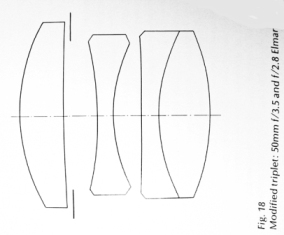
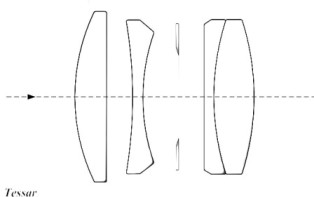
Concerning the formula, the Industar 10 is a Tessar one, with the diaphragm between the two groups of glasses.

The Elmar has a diaphragm just behind the first glass, at least for al the prewar ones. It allows to identify the fake ones!

Jacques.
Reply with Quote Edit Reply Delete Reply
quote:
Originally posted by Alfa2


Before WWII there was probably cooperation with Leitz but russians could not produce such good glass as germans did. So they had to simplify their optical constructions.


I have never heard of such cooperation, mostly western designs were "borrowed" without any licensing.

Milo, this is a very nice discovery! What year was the Tylor-Hobson made?

Best regards,
Vlad
Reply with Quote Edit Reply Delete Reply
The Taylor and Hobson was first released in 1920. (Perhaps for motion picture cameras) LTM versions appear on the Reid after the war.

I will post some references from the books about this lens tomorrow. Both have been published shortly after the war.

I also know about the Industar-10 and the Elmar. Even the elements have a different shape and dimension.
Reply with Quote Edit Reply Delete Reply
quote:
Originally posted by Lenny
That's interesting too. So what kind of type was Industar-10?


Exactly, it is how Jacques has written. All Elmars have diaphragm behind first element of the lens while all Industar 10 have diaphragm behind second one. Reason is because first element in Elmar refracts light more than first element in Industar 10. This is because russians could not produce such type of the glass which was used in first element of Elmar.
Above information I have read in monthly magazine "Fotogafia" from 50's.

quote:
Originally posted by Vlad
I have never heard of such cooperation, mostly western designs were "borrowed" without any licensing.


Now let's go to history.
After WWII within the scope of war contribution all german patents were no longer valid and one could copy their products without any limitations. Only one patent was still valid for one industry area. In motorization it was VW Beetle. In photography it was absolutely not important construction.
Above information comes from guy who worked almost 30 years in Camara Museum i Krakow.
It seems to be truth. Let's look at first Canon or Minolta camera. But russians used to copy products and than they copied not only those free patent german construction.

Little bit more history. There was strong military cooperation between Germany and USSR in 20's and first half of 30's.
Of course it is not confirmed information about cooperation Leitz - FED. That is why I have used word "probably". I have to look for this information.
Reply with Quote Edit Reply Delete Reply
Hi Vlad!

There was a bilateral cooperation between Germany and USSR, thanks to the treaty of Rapallo (1922). At least, until 1933. After, it's another story...

Though somewhere in the 30s, Makarenko himself wrote about a German delegation from Leitz coming to visit the factory and show a IIIa Leica. So, probably around 1936. Before, in the 1932/34 years, it seems really difficult to conceive and produce the Fed 1a in such a limited time, even if it is a Leica copy, just with drilling machines as past...

Between the official story and the real one, there can be miles or more... About lenses, I just thought the 2/50 Fed was a Summar copy. The track of the Taylor-Hobson is exciting!

Amitiés. Jacques.
Reply with Quote Edit Reply Delete Reply
The Taylor-Hobson f2 from 1920 is just a simplified Summar from 1933. Summar is the name of the lens, the formula was called Biotar.

- First there was the Double-Gauss from 1888, 4 elements with 8 round surfaces in 4 groups.
- Developed from this Double-Gauss was the Planar from 1896, 6 elements with 12 round surfaces in 4 groups, the inner lens pairs were cemented.
- Developed from this Planar was the Taylor-Hobson from 1920, 6 elements with 7 round surfaces in 4 groups, asymmetry was added.
- Developed from this Taylor-Hobson was the Biotar from 1927, 6 elements with 12 round surfaces in 4 groups.
- After WW2 they changed the name from Biotar into Planar again.

In the wikipedia I read that the Taylor-Hobson was commercially unsuccessful.
https://en.wikipedia.org/wiki/Double-Gauss_lens
Since the Fed 50/2.0 has the same formula as the Taylor-Hobson I guess the FED 50/2 was inferior to the Summar, that might be a reason why it wasn't continued after the war. But still, the Fed 50/2.0 looks so sexy.
Reply with Quote Edit Reply Delete Reply
quote:
Originally posted by Lenny


Since the Fed 50/2.0 has the same formula as the Taylor-Hobson I guess the FED 50/2 was inferior to the Summar, that might be a reason why it wasn't continued after the war. But still, the Fed 50/2.0 looks so sexy.


I don't understand what you mean, Lenny. Once more, the Summar and the Fed 2/50 were lenses of the past, in 1950. The Summar had been replaced by the Summitar just before the war, and none of these lenses was coated at that time... If they are sought after now, it's for a question of rendering, acute and with low contrast at the same time.

As for a grading between lenses, I confess I am unable to decide which is the best, only by looking at diagrams. The quality of the camera, of mount, of the balsam, the composition of glass are certainly most important too. And concerning the real condition of the factory at the end of the war, I just remember that there were no novelty until 1955. To compare with KMZ: during these ten years, the listing of novelties would be too long...

As for the Biotar, I remember it's a lens developed by Zeiss in the thirties for prewar SLR (Exakta and Praktiflex). The Sonnar formula was too protruding for the mirror, hence the use of an evolution of the double gauss. After the war, we find again this 2/5,8cm Biotar at KMZ's (the Helios in m39 and m42 mounts) and always by Zeiss in m42 mount for the first Contax SLR.

Sorry for these explanations, a bit OT, specially to you, Milo. Now, I shut up...

Jacques.
Reply with Quote Edit Reply Delete Reply
Thank you all for the great response. I shall translate a part from H. M. Dekking's book. And I shall try to answer most of the questions.

quote:

A typical example is the Taylor-Hobson F2 (fig 73.) which is curious for two reasons. First, the designer Lee managed to keep three of the ten surfaces flat in the final design. Which has many effords for the manufacturing and control. Second is the fact that only two types of glass where used. A work of art because in most cases the amount of elements is equal to the amount of glass types used.


One thing that must be considered too, is that optical designers where late to conclude that it had already been possible to make a succesfull double Gauss for years with existing glass types. At the time the Leica and Contax where in developtment, the focus lay on improving the Triplet and Tessar type of design. (even the Sonnar was eventually based on the three element design)

http://www.klassik-cameras.de/Biotar_en.html

Better developtment was however possible with the Double Gauss type which is still used today.

Alas I do not have the second book of Cox where the quote of commercial succes as refered in the Wikipedia article about the Taylor and Hobson is mentioned. It might not have been a succes in Photograpy but it was succesfull in the motion picture industry: http://www.cookeoptics.com/t/history.html#003

Then I remembered this: http://ussrphoto.com/forum/topic.asp?TOPIC_ID=1683

I wish I had never sold this lens. I can't compare them now... although the covering of field should be smaller.

I also found this Fed lens test/comparison:

http://www.rangefinderforum.com/forums/showthread.php?threadid=128344

Back to Fed in Kharkov. Is there anything known about the staff responsible for the development and production of the optics? Did they develop and produces the lenses themselves, or where they designed elsewhere like Leningrad?
Reply with Quote Edit Reply Delete Reply
Thanks Milo, the test with the bank note is amazing.
Is there a passport known with a Fed 50/2.0? They always mention the resolution there.
And the Jupiter-8 is disappointing, it should be more expensive to produce than the Fed 50/2.0.

I think that early in 1938 all russian lenses were calculated by GOI or calculations were checked by GOI, as we talked about this topic recently.
Reply with Quote Edit Reply Delete Reply

Amazing results in RFF! The 2/50 Fed would perform better than a Jup 8! Either they mixed the results, or the Jup was very bad. Of course, it's only a test. But I have some experience in using these two lenses, and in ordinary conditions, the Jup (8 and 3) are more contrasted than the Fed. Normal as this last one is not coated.

There is another difference between the Fed and the Summar: the diaphragm. Round hole for Fed, beautiful hexagonal one for the Summar which is said to have a slight different rendering (swirling bokeh) for that reason in some conditions. For me, the difference is very tiny...

About the exact part of Fed factory, the GOI calculated all the lenses, and checked them. The JLP is affirmative on this point. But where were these lenses produced? By whom? In Kharkov? I should be glad to know more...

Reply with Quote Edit Reply Delete Reply
Great explanation about the Elmar on Wikipedia.

quote:

It is sometimes thought that The Leitz Elmar 50/3.5 was a Tessar copy or clone. This is not the case. Although the lenses appear similar in layout, there is a lot more to the design and performance of a lens than simply the layout of the glass elements. The position of the stop, the optical characteristics of the glasses used for each element, the curvature of each lens surface, and the negative format which the lens is designed to cover, are all vital to the performance of the lens, and in the Leica lens these were all different from the Tessar. When the Leica was being developed Oskar Barnack tried a 50mm Tessar, but because it had been designed to cover only the 18x24mm field of a cine frame he found the coverage of the Leica 24x36mm format to be inadequate. The lens designed by Max Berek for the Leica rangefinder camera was a modified Cooke Triplet with five elements in three groups, the third group being three cemented elements, with the aperture stop in the first air space. This lens, called the Elmax, gave good coverage of the 24x36mm format and was used until improved optical glass allowed the third group to be simplified to a cemented pair and then lens was renamed the Elmar. It was not until Zeiss Ikon were developing the Contax camera to compete with the Leica that the Tessar was redesigned to cover a 24x36mm negative.

https://en.wikipedia.org/wiki/Tessar

The Fed 50/3.5 has nothing to do with the first Elmar developed from a Cooke Triplet because that Elmar was earlier in time. The Contax came out in 1932. Fed copied the Elmar Tessar.
Reply with Quote Edit Reply Delete Reply
quote:
Originally posted by Jacques M.


Amazing results in RFF! The 2/50 Fed would perform better than a Jup 8! Either they mixed the results, or the Jup was very bad. Of course, it's only a test. But I have some experience in using these two lenses, and in ordinary conditions, the Jup (8 and 3) are more contrasted than the Fed. Normal as this last one is not coated.


I thought about that too Jacques, maybe those Jupiter-8 in the test were not ok. We need more tests to confirm this and comparisons at f4 too.
Still sad to me that Fed didn't produce a coated Fed 50/2 (Taylor-Hobson) after the war because it should be cheaper to produce than a Jupiter-8 (Sonnar).

Reply to Topic

Forum code enabled