USSRPhoto.com

Forums / Collectors and Users Open Forum

just arrived in my collection

1023 posts in this thread showing replies 61-80 of 1022
Reply with Quote Edit Reply Delete Reply
I have just checked that on Aidas's site: this # 5298 should be the real type B1.
Really, that classificator is much more convenient than a paper one...

Amitiés. Jacques.

Sorry Juhani: confusion of words in my previous messages. For me, brushed chrome=galvanized (or machined) opposed to plain chrome.
Blasted English!
Reply with Quote Edit Reply Delete Reply
I have one more galvanized FED-1 with No.6921, but already with accessory shoe (definitely 1b). It is very strange for me, that neither Princelle nor SSK-book tells anything about galvanized FED-1b.

Regards, Alexander
Reply with Quote Edit Reply Delete Reply
The same confusion here. I also hace a galvanized camera, #2969.
This camera has the same top inscription of a 1b and also the second style viewfinder, rectangular with the step, not notched. Other than those two features all else is exactly as a 1a. By the serial number I would say I have a 1a but the inscription and viewfinder confuse me.

There seems to be a number of variables with both 1a and 1b cameras.

Steve
Reply with Quote Edit Reply Delete Reply

For me, I discover things I had never heard of!
Alexander, your n° 6129 is a 1b (engraved YCCP)galvanized? So, a second one? Astonishing! (The shoe can have been added, as for some 1a).

Steve, your n° 2969 is another mystery. As you say, there seems to be a great variability between 1a and 1b. Difficult to imagine how the factory used their spare parts.

Thanks for all these novelties. Some more cameras to look for, now! Big smileBig smile

Amitiés. Jacques.
Reply with Quote Edit Reply Delete Reply
Hi Steve,

Princelle classifies Fed cameras after the engraving. If we add the second type of rangefinder, and if we follow him, no doubt, your camera is a 1b. Of course, if we only follow the serial number...
About the shoe, the first 1b don't have one (mine, n° 7122 is a regular Big smile 1b without shoe).

Another thing is the lens: what is the serial number? Is it a "one turn" or a "half turn"? The first ones were made for the 1a and the first 1b.

It would be very interesting to speculate about the making of your camera: how can it be "out of the rule" at that point (serial number and galvanization)?

All that is most exciting! But as you see, nothing new...

Amitiés. Jacques.

Reply with Quote Edit Reply Delete Reply
Hi friend ...
I suggest :
To be the most precise possible when to classify our cameras:
It would be necessary not to use any more the word "galvanized" .
The process employed here (and what I learnt in "60's",when I was technical student) is called "scratching": it allowed an excellent precision of finish of surface a time when we did not still use grindstones ot chrome for finish.
The tool employed for this work is called "hand scraper".

So, According with the philosophy of JL Princelle, we can see there, in the irregularities of the drawing on the metal, a touching signature of those who made these cameras
--------------------------------------------------------------------
For those who want to know more about it, look here: in particular look at the aspect obtained on flat surfaces of machines (precision, approximately : 2 to 3 microns)

http://www.usinages.com/le-grattage-t1158-135.html

Reply with Quote Edit Reply Delete Reply

Of course you are right Alain. And we already talked of scratching together. By the way, which metal is scratched on our Feds?

Anyway, even not galvanized, these scratched 1b are the first I see!

Amitiés. Jacques.
Reply with Quote Edit Reply Delete Reply

Yes, Alain, I agree. "Galvanized" is a chemical treatment of a metal surface and these FEDs are finished with a physical action that may be called "scratched" or more accurately, "burnished finish" or "given a circular patterned finish, lightly inscribed into the metal, using a machine tool".

Probably this finish (which varies greatly in individual patterns and characteristics from camera to camera) was made using a type of hand-held machine tool with rough filing stone attached to the end, much the same as one of the attachments seen on modern "dremel" tools, and which was used at FED for finishing and smoothing the rough edges off other parts during production.

Maybe to make it simple in conversation and writing "burnished finish" would be more accurate.


Regards, Bill

Reply with Quote Edit Reply Delete Reply
It was an hand tool.
I had such a tool in hand in the past (Tugsten steel made whith long handle (about 40 cm handle)
whith 3 rondish sharp hedges.
Whith it , we scrap chrom interiors cylinders on motor engines.
On our camera , metal is hard brass. Surface is hard chrome , no doubt, but you know , it is very difficult to have a clean flat surfaced brass under chrome. So the chrome finish is bad if you do not polish , a long time , the brass surface befaore chrom process.

My opinion is : in the factory they do not know how to do for a soft matt or bright chrome surface as well as they saw on Leica patterns. May be an ingeneer said " try to scrap the chrome as well as you do on FED drill machines"(do not forgot : machine tools making FED drill went from Ostereich at this time (read Makarenko text)whith this nice industrial surface look.

My friends, it was just for having an entertaining conversation about these enigmatic Fed!
Alain
Reply with Quote Edit Reply Delete Reply
Hi Alain,

I believe that much of this scratched or burnished finish was done with machine tools, although probably in small places on the top plate and the sides of the plates, such as around the viewfinder stepped window, they may have also used hand tools.

Of course the factory had machine tools, even at the beginning. It was 1934 ... electricity was available ... and they had electric drills to use which could take different drill bits with wire brushes and grinding stones on them. Othe parts of the early FEDs are buffed and polished by machine.

Here are some photos of my FED No. 1227 (the bottom plate) which show clear signs of having been finished with a drill-like machine, probably with a small circular wire brush attachment (in my own opinion) ;-)


http://www.ussrphoto.com/UserContent/1332010_IMG_1246.jpg


http://www.ussrphoto.com/UserContent/1332010_IMG_1254.jpg


http://www.ussrphoto.com/UserContent/1332010_IMG_1263.jpg


http://www.ussrphoto.com/UserContent/1332010_IMG_1272.jpg


http://www.ussrphoto.com/UserContent/1332010_IMG_1282.jpg


http://www.ussrphoto.com/UserContent/1332010_IMG_1285.jpg


Regards, Bill

Reply with Quote Edit Reply Delete Reply
OK Alain ... I will look for the Delta for you here in the US! Sometimes I see these Zenit-E cameras at the flea markets I go to.

Here is what arrived for me today ... Fed Stereo Lens No. 47 and this one is the first version, probably made in Poland.

This one comes with a FED Berdsk (Serial No. 180403), just as the one on page 109 of Princelle, lens No. 44 is also on a Berdsk.

So, maybe these early versions were all put on FED Berdsk cameras for some reason ... (or is it possible that the early ones are a real product of FED, made in the late 1940s and so put on the Berdsk model? ... probably they are just fakes, butmaybe worth thinking about!)

Regards, Bill


http://www.ussrphoto.com/UserContent/1532010_IMG_1288.JPG


http://www.ussrphoto.com/UserContent/1532010_IMG_1290.JPG

Reply with Quote Edit Reply Delete Reply

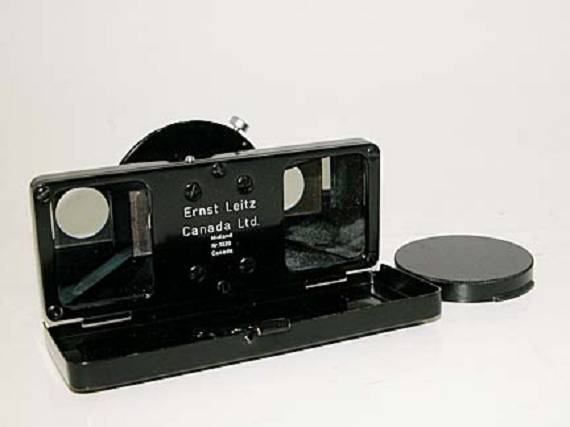
So far, I don't think anyone has seen a nozzle or prism unit for the FED Stereo Lens. That is one of the reasons that even the first version is considered to be fake. The nozzle brings the distance of the two images to be similar to the distance of the human eye and so produces a true stereo illusion. Without the nozzle you will not have as much of a stereo effect ... maybe almost none. When I get time I will try taking photos with this one I have and see what happens.

Maybe there can be some chance that the FED Stereo lenses were made in a small quantity and the nozzle was never made, but it is doubtful since nozzle / splitters were made years later for the KIEV and Zorki (although without a double lens ... just using a normal lens).

Regards, Bill

Reply to Topic

Forum code enabled