USSRPhoto.com

Forums / Collectors and Users Open Forum

Kiev III - A and B markings - Round 2

33 posts in this thread showing replies 1-20 of 32
Reply with Quote Edit Topic Delete Topic
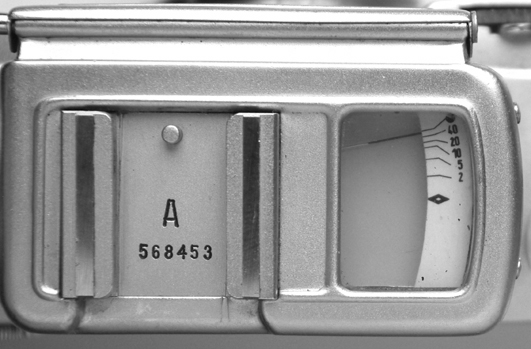
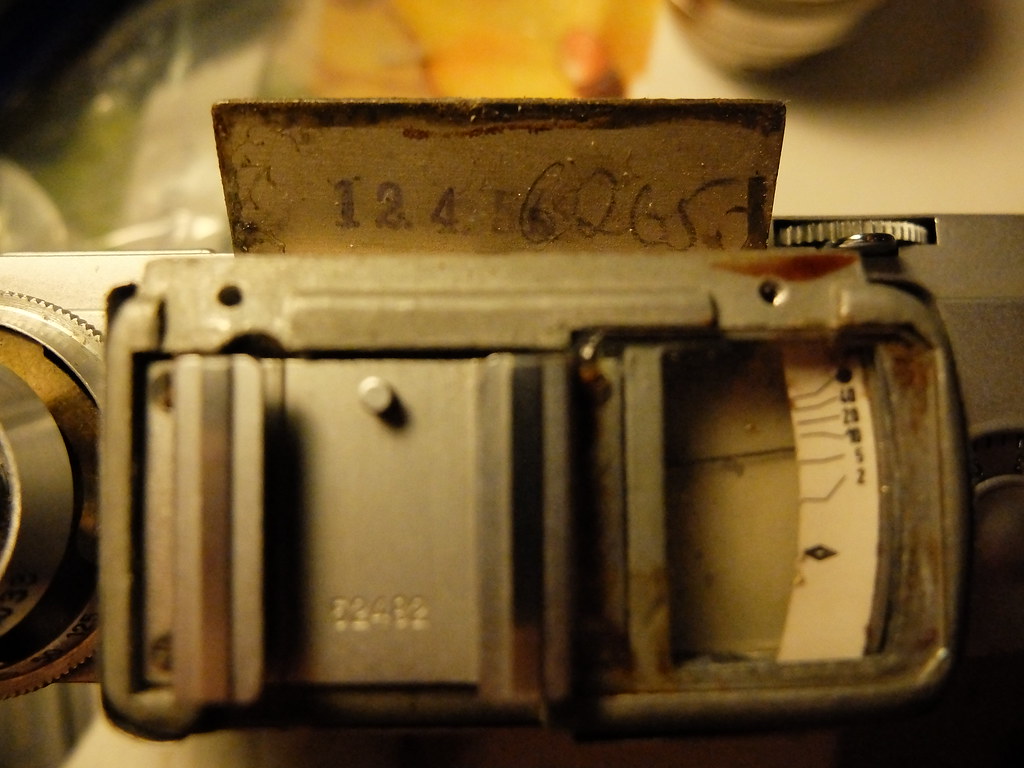
So i got an email from Anatoliy Zilbert. According to him he has information about the mysterious markings A and B(Russian Б) above the serial # on the shoe of the camera.

here are the two original pages:

http://www.bar90.ru/index.php?page=shop.product_details&flypage=tpflypage.tpl&product_id=566&category_id=205&option=com_virtuemart&Itemid=53

and

http://www.bar90.ru/index.php?page=shop.product_details&flypage=tpflypage.tpl&product_id=565&category_id=205&option=com_virtuemart&Itemid=53

According to this if I understand this correctly these letters indicate the class of exposure meter. "A" means it's Class A of the meter according to GOST specification and "Б"(B) means it's Class B according to GOST specifications. And these cameras were made mostly for internal USSR consumption.

Thoughts?

Vlad.
Reply with Quote Edit Reply Delete Reply
He sent me a follow-up email with these exerpts from various light meter manuals:

Фотоэкспонометра «Свердловск-5».: "Точность экспонометра по ГОСТ 9851—68 — класс Б".
Фотоэкспонометра «Свердловск-4».: "Экспонометр настроен по ГОСТ 9851-79 класс А с экспонометрическими постоянными...."
Фотоэкспонометр "Ленинград-10": "Экспонометр отвечает требованиям ГОСТ 9861-68 к экспонометрам высшего класса А"
Фотоэкспонометр "Ленинград-8": "Экспонометр соответствует ГОСТ 9861-79, по точности - классу Б"

Lightmeter "Sverdlovsk-5": "Precision of lightmeter per GOST 9851-68 - Class B(Б)"
Lightmeter "Sverdlovsk-4": "Precision of lightmeter per GOST 9851-79 Class A with metering specs...."
Lightmeter "Leningrad-10": "Precision of lightmeter per GOST 9861-68 for lightmeter of highest Class A"
Lightmeter "Leningrad-8": "Precision of lightmeter per GOST 9861-79, with precision of Class B (Б)"

So we can see that how Anatoliy arrived to this conclusion going by this system the A and Б stamps on Kiev III can describe the same meter classification.

Cheers,
Vlad.


Reply with Quote Edit Reply Delete Reply
So !
This long lasting mystery is probably solved.
Good news!
And thanks to Anatoliy and Vlad.

BUT, may I ask another question : what about "square" and "sharp" A ?
Sorry for asking again…
(As I was fired the last time I evoked this problem, I erased all my posts about it Blush)
Cheers,

Michel.
Reply with Quote Edit Reply Delete Reply
Hi Juhani,

If I understand your post, you mean that "B" are more common than "A".

I'm not so sure : I have a (very) small database of Kievs III, including "A", "B" and "square A".
I see that on a survey of 46 cameras, only 17 are "B" ( and all of them from 1954) and 29 are "A" or "square A".
Of course, 46 cameras is not statiscically significant, but nevertheless I think that "B" are more uncommon than "A" at least in private collections or eBay.

Any comment ?

Best regards,
Michel.
Reply with Quote Edit Reply Delete Reply
<quote>This long lasting mystery is probably solved.<quote>
Not to fast yet Smile
The two last digits in GOST numbering are a year of issue. As you can see the year of GOSTs above are 1968 and 1979, much later then Kievs with A and B was produced. And what about Kievs without letters? I would expect that by GOST (Government Standard) rules all the cameras with light-meeter should have some kind of letter. Other way cameras with letters should be some way different from standard cameras without letter.
I like the idea, I hope that it uncover the mystery, but IMHO more prove needed.
Reply with Quote Edit Reply Delete Reply
Good point! But I would assume once GOST was implemented when these Kievs were made, the classification would be the same no? Maybe they found out later that they don't have to stamp these on every model, so they stopped? I can ask Anatoliy if there are earlier examples.

Vlad.
Reply with Quote Edit Reply Delete Reply
GOSTs have to be revised after some time. This means that GOST for tolerance of light meters may exist in 1954(production year of the lettered cameras) and then GOST was revised in 1968 and 1979. So letter may belongs to meter, not to the camera, but that also means that all Kiev 3 from some period in 1954 have to had this letters. Is it coincide with our database?
P.S. GOST-ghost something spooky and mysterious, like in real live it was. Smile Smile Smile
Reply with Quote Edit Reply Delete Reply
I have two Kiev 3a with ' A ' above the number - both 1956 .
Is there any significance to this ?
I bought them because I like the uncluttered accessory shoe .

dee
Reply with Quote Edit Reply Delete Reply
I have two Kiev 3a with ' A ' above the number - both 1956 .
Is there any significance to this ?
I bought them because I like the uncluttered accessory shoe .

dee
Reply with Quote Edit Reply Delete Reply
quote:
Originally posted by uwittehh

Michel,

by the way, look at the different meter scales. They are the same on A engraved Kievs, but different on the B engraved one :-)

Ulrich

http://fotos.cconin.de

Hello, my 1954 kiev III 'B' camera has the same scale like Michel's 'A' Kiev III...
Reply with Quote Edit Reply Delete Reply
I know this is an old thread, but the cameras we are dealing with are also old, so let me try re-open it. maybe we got new knowledge by now?

I have Kiev III with a "B", from 1954, it happened to have an original papers, manual and passport.
I carefully examined both, not a word or mentioning about the serial number letters.

So, let's say Arsenal cared about meter accuracy and grades, so much that they went through a hassle of engraving a letter on the accessory shoe. So it meant something reasonably important.

Should something this important be mentioned in the documents that came with the camera? If not, why bother? I know, the USSR was not following common sense all the time, but defense factories and their engineers did make sense.

A long shot would be to check the pricing for the Kiev III with A and B. I, unfortunately did not find any price on mine.

At some point I thought that maybe A and B has something to do with the DIN and GOST on the meters, but that does not work. In 1954 both A and B were in GOST.

Yuri


quote:
Originally posted by jed

quote:
Originally posted by uwittehh

Michel,

by the way, look at the different meter scales. They are the same on A engraved Kievs, but different on the B engraved one :-)

Ulrich

http://fotos.cconin.de

Hello, my 1954 kiev III 'B' camera has the same scale like Michel's 'A' Kiev III...

Reply with Quote Edit Reply Delete Reply
Hi, the only way really would be to dismantle and see if there is any difference in construction of the meter. I believe until the mid-50's Zeiss meter components were being used up alongside Arsenal produced copies. The Zeiss meter cells generally had a cellophane wrapping to protect the Selenium, and were not soldered but captured in a metal frame, to which the wire was soldered. I believe there were fundamental differences in the design of the Zeiss and Arsenal moving coil meter units. Maybe the A or B relates to the type of cell and moving coil fitted?
Cheers,
Steve
Reply with Quote Edit Reply Delete Reply
Steve, I like this theory. I am not ready yet to take the cameras apart, but who knows.. maybe I will if this bothers me bad enough.
Having different "moving coils" would explain the markings.

It is safe to suggest that A and B are related to the meter, since they only exist on the Kiev III (metered camera) and does not exist on Kiev II.

Another point that supports your theory - this letter carries some information, so who is the target of this information? Probably not the user, since the manuals do not cover this. This leaves service people, so they would know what parts to order or what procedure to follow for repair, and that they would not mix the "coil", variable resistor, and the Selenium cell between the Zeiss and Arsenal types. All 3 parts (and maybe more, like the front plastic diffuser) have to be from the same design type.


quote:
Originally posted by SteveA

Hi, the only way really would be to dismantle and see if there is any difference in construction of the meter. I believe until the mid-50's Zeiss meter components were being used up alongside Arsenal produced copies. The Zeiss meter cells generally had a cellophane wrapping to protect the Selenium, and were not soldered but captured in a metal frame, to which the wire was soldered. I believe there were fundamental differences in the design of the Zeiss and Arsenal moving coil meter units. Maybe the A or B relates to the type of cell and moving coil fitted?
Cheers,
Steve

Reply with Quote Edit Reply Delete Reply

Hi,

Interesting but what about Kiev III without A or B ? Also I own a 1952 Kiev III with a 'DIN' meter and the selenium part is of Ukrainian manufacture (see date stamped :)

Reply to Topic

Forum code enabled